What's inside
As an Amazon Associate I earn from qualifying purchases. This post may contain affiliate links at no extra cost to you.
Our Top Picks

Short answer: choose by exposure, not color
For a transparent deck stain, redwood and western red cedar are both workable, naturally durable softwoods. Neither automatically holds a clear-looking finish longer. The wood’s grade, age, exposure to sun and rain, and the stain’s maintenance schedule matter more than the species name.
Redwood is often the better pick when you want a more uniform, reddish appearance and can pay more for select, heartwood-rich boards. Cedar is usually the practical value choice: it is widely available, lighter, and performs well when the deck is kept clean and recoated before the finish wears through. For either species, choose a penetrating, UV-protective stain rather than a film-forming clear coat.
As an Amazon Associate we earn from qualifying purchases at no extra cost to you.


Red cedar vs. redwood at a glance
| Factor | Western red cedar | Redwood |
|---|---|---|
| Typical appearance | Light brown to reddish brown; can vary between boards | Often a stronger red-brown; color varies by grade and heartwood content |
| Natural durability | Durable heartwood; sapwood is less resistant to decay | Durable heartwood; sapwood is less resistant to decay |
| Availability and cost | Common in many regions; often the lower-cost option | Availability and price depend heavily on region; often costs more |
| Working properties | Light and easy to cut; soft surface dents readily | Also light and easy to work; can dent and scratch |
| Transparent-stain outlook | Good with clean, dry, evenly prepared boards | Good with clean, dry, evenly prepared boards |
| Main buying concern | Check for sapwood, knots, and mixed board color | Check for sapwood, knots, and a price premium that may not improve finish life |
What matters when buying the boards
Both woods contain naturally durable heartwood, but a species label does not guarantee every board is heartwood. Pale sapwood is generally less decay-resistant. Ask for heartwood or all-heartwood decking where it is available, and inspect the boards rather than assuming a clear grade means uniform color or durability. Grades describe appearance and defects; they are not a substitute for checking the product’s treatment and intended use.
Buy from one lot if possible. Mixing bundles can produce obvious shifts in color and grain once a transparent stain is applied. Transparent products show the wood, knots, and weathering; they will not hide mismatched boards. Redwood may give a stronger red tone, but it can still vary substantially board to board. Cedar is not necessarily pale or uniform.
If both options are in good condition and the price gap is significant, cedar is a sensible buy. Paying extra for redwood can make sense for a particular look or local availability, but do not assume the premium means fewer recoats or a longer-lasting finish.
Pick a stain that protects without making a film
“Transparent” can mean different things on the label. A truly clear sealer adds little or no pigment, so it offers limited protection against UV fading and graying. A transparent or lightly tinted penetrating stain adds some color while leaving the grain visible. That small amount of pigment usually provides better UV screening than a colorless sealer.
For an exposed deck, compare penetrating exterior deck stains intended for horizontal surfaces. A semi-transparent product will change the color more, but often offers more pigment and better UV protection than a nearly clear finish. Follow the label’s coverage, drying, and recoat instructions; formulations vary. A thick varnish or other surface film is more likely to crack, peel, and require extensive removal on boards that face rain, sun, and foot traffic.
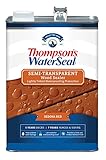
Browse transparent penetrating exterior deck stains by intended use and label directions, not just by the word “clear.” If you prefer a little more UV protection, compare lightly tinted transparent deck stains. Test the product on a spare board or inconspicuous area: the result changes with wood color, age, and preparation.
Preparation makes or breaks the finish
New decking may have mill glaze or a smooth, compressed surface that limits stain penetration. Let the wood dry as the stain maker requires, then sand only as needed to open the surface and remove raised grain. A common starting point is 60- to 80-grit on decking; finer sanding can burnish softwood and reduce absorption. Do not round over board edges unnecessarily, and remove all dust before coating.
For weathered boards, clean off dirt, mildew, and any failing finish with a deck cleaner suitable for the wood and stain. Rinse thoroughly and allow the deck to dry. Check moisture with a meter if available and follow the product’s maximum moisture limit; many exterior stains call for wood around 15% moisture or lower, but the label takes precedence. Staining damp boards can lead to poor penetration, blotchy color, or premature failure.
Apply a thin, even coat in the temperature and weather window specified on the can. Work a few boards at a time and keep a wet edge to avoid lap marks. Do not leave puddles or a glossy excess on top; wipe or back-brush as directed. More stain is not more protection if it cannot soak in.
Plan for upkeep and common failures
Transparent finishes need inspection more often than opaque coatings because they contain less pigment. On a sunny, uncovered deck, check after the first season and at least once a year afterward. When water stops beading, color fades, or boards begin to gray, clean the surface and assess whether it needs a maintenance coat. The actual interval can range from roughly one to three years, depending on sun, rainfall, traffic, product, and application.
Watch high-wear zones first: stair treads, board ends, and areas near doors. Those can lose protection before shaded or covered sections. If the stain peels, do not simply apply another coat over it. Remove loose material, identify whether a film-forming product was used, and prepare the surface according to the new stain’s instructions. Peeling often points to a coating that could not penetrate, wet wood, excess application, or incompatible old finish—not a failure unique to cedar or redwood.
A practical buying decision
Choose redwood if its color suits the project, the boards are sound and heartwood-rich, and the local price is acceptable. Choose western red cedar if it is cheaper or easier to source; with careful selection and preparation, it can take a transparent deck stain just as successfully. In both cases, spend effort on dry, clean boards and a suitable lightly pigmented penetrating finish. Those choices will usually matter more than paying extra for one species.
0 Comments