RP Woodworks

  • Home
  • Top Picks
  • Reviews
  • Projects
  • Tools
  • Woodworking Techniques
  • About

Woodworking Techniques

Core techniques: joinery, gluing, clamping, cutting and measuring for cleaner, stronger work.

Woodworking Techniques

CNC Project Ideas: Wood Projects Matched to Router Size and Skill

Choose CNC Project Ideas by Cutting Area, Stock Size, and Skill The best CNC project ideas are sized to your machine’s usable cutting area and matched to your stock thickness, router bits, and experience level. For a first project, choose a sign or small tray that fits comfortably inside the Read more
By RP Woodworks Editorial Team, 1 weekOctober 6, 2026 ago
Woodworking Techniques

CNC Wood Projects: Ideas by Skill Level, Material, and Machine Size

The best CNC wood projects are the ones matched to three things: your machine’s work area, the thickest stock your bits can reach, and whether you’re cutting all the way through or just carving the surface. A 300×180 mm desktop machine and a 4×4 ft router both count as “CNC,” Read more

By RP Woodworks Editorial Team, 1 weekOctober 6, 2026 ago
Woodworking Techniques

How to Repair a Wood Split Caused by a Screw (Even in Thin Teak)

To repair a wood split caused by a screw, even in thin teak, back the screw out, degrease the crack with acetone, work glue into it (thin CA glue for a hairline crack, slow-cure epoxy for anything wider or anything that lives outdoors), clamp it gently until cured, and re-drill Read more

By RP Woodworks Editorial Team, 1 weekOctober 4, 2026 ago
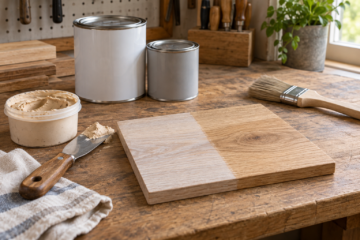
AI-generated editorial illustration of wood fillers and finishing prep
Woodworking Techniques

How to Apply Paste Wood Filler Without Cloudy Residue

Why Paste Filler Turns Cloudy Cloudy residue from paste wood filler is not dust. It is filler binder and pigment that has dried on the surface instead of inside the pores. It happens for three reasons: you left too much filler on top, you let it dry too long before Read more

By , 3 weeksSeptember 25, 2026 ago
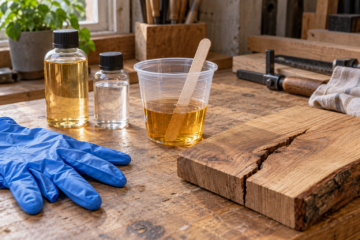
AI-generated editorial illustration of wood epoxy
Woodworking Techniques

How to Fill Small Voids in Live-Edge Wood

Live-edge slabs look great until you notice the small knots, worm holes, bark inclusions, and hairline cracks that come with them. These voids are rarely structural, but if you leave them open they collect dust, snag cloth, and telegraph through your finish. For holes from pinhole size up to about Read more

By , 3 weeksSeptember 25, 2026 ago
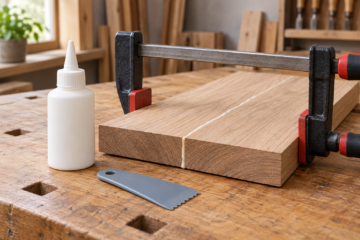
AI-generated editorial illustration: wood glue bottle beside an edge-glued board assembly and spreader.
Woodworking Techniques

How to Bond Wood Veneer Without Bubbles

Why Veneer Bubbles in the First Place Bubbles are not air you trapped while laying the sheet down. They are almost always one of three things: uneven glue film, insufficient or uneven pressure during cure, or movement from moisture and heat. Wood veneer is only 0.6mm to 1.5mm thick. Any Read more

By , 3 weeksSeptember 25, 2026 ago
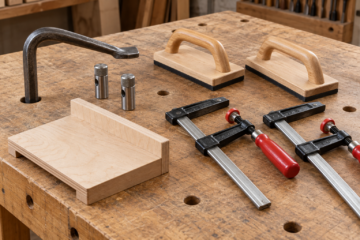
AI-generated editorial illustration of woodworking workholding set
Woodworking Techniques

How to Use Cauls to Keep Edge-Glued Panels Flat

Why Edge-Glued Panels Bow During Glue-Up An edge-glued panel doesn’t cup after it dries because the wood moved. It cups while the glue is still wet because clamp pressure is uneven. Bar clamps and pipe clamps apply force in a single plane, right at the edge of the boards. If Read more

By , 3 weeksSeptember 25, 2026 ago
AI-generated editorial illustration: wood glue bottle beside an edge-glued board assembly and spreader.
Woodworking Techniques

How to Choose PVA Glue Open Time for Large Panels

What Open Time Actually Means Open time is the window after you spread PVA glue where it remains wet enough to make a strong bond. Assembly time is the total time from when you start spreading to when the joint must be closed and clamped. Most yellow PVA labels list Read more

By , 3 weeksSeptember 25, 2026 ago
AI-generated editorial illustration: wood glue bottle beside an edge-glued board assembly and spreader.
Woodworking Techniques

How to Glue End Grain for Stronger Furniture Repairs

Gluing end grain is the weakest joint in furniture repair, and it’s where most DIY fixes fail. End grain acts like a bundle of straws — it wicks liquid glue deep into the fibers before the glue can form a film, leaving a starved, crumbly joint that snaps with hand Read more

By , 3 weeksSeptember 25, 2026 ago
AI-generated editorial illustration: wood glue bottle beside an edge-glued board assembly and spreader.
Woodworking Techniques

How to Select Wood Glue for Outdoor Joinery

What “Outdoor” Actually Demands From Glue Indoor glue only needs to hold wood together. Outdoor glue has to hold wood together while the wood moves, gets wet, dries, freezes, bakes in sun, and gets wet again. That cycle is what destroys most joints, not the initial load. Wood swells across Read more

By , 3 weeksSeptember 25, 2026 ago

Posts pagination

1 2 … 7 Next
Recent Posts
  • Best Portable Power Station for Home Backup in 2026
  • Best Touchscreen Winter Gloves in 2026
  • Best Stud Finder for Plaster Walls in 2026
  • Best Smart Thermostat for Heat Pump in 2026
  • Best Rechargeable Heated Gloves in 2026
Recent Comments
No comments to show.
Archives
  • October 2026
  • September 2026
Categories
  • Clear Coats & Topcoats
  • Cold Weather Clothing
  • Cordless Drills
  • Finish Problems & Fixes
  • Finish Problems & Fixes
  • Garage Organization
  • Gift Guides
  • Grain Filling & Sealing
  • Guides
  • Heated Clothing
  • Heated Gloves
  • Home Safety
  • Laser Levels
  • Leaf Vacuums & Mulchers
  • Oils & Waxes
  • Outdoor Lighting
  • Painting & Priming
  • Painting & Priming
  • Portable Power Stations
  • Power Tools
  • Sanding & Surface Prep
  • Shop Setup & Safety
  • Smart Home Security
  • Smart Thermostats
  • Staining & Dyes
  • Staining & Dyes
  • Stud Finders
  • Tool Troubleshooting
  • Tools
  • Travel Clothing
  • Winter Boots
  • Winter Gloves
  • Wood Finishing
  • Wood Species & Lumber
  • Woodworking Techniques
Hestia | Developed by ThemeIsle