What's inside
As an Amazon Associate I earn from qualifying purchases. This post may contain affiliate links at no extra cost to you.
Our Top Picks
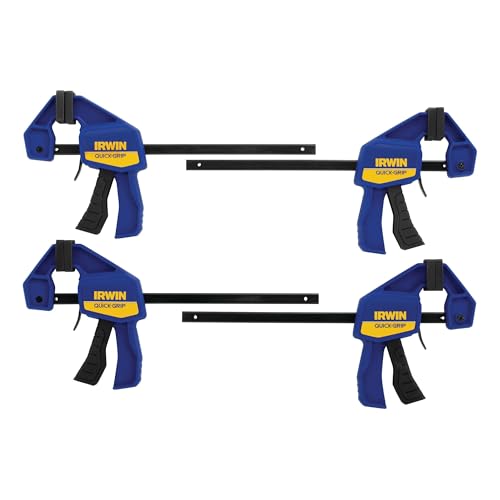 IRWIN Quick-Grip 1964758 One-Handed Mini Bar Clamp 44 Count (Pack of 1)21 x 8 x 2.5 Inches1 poundsCheck on Amazon

What Open Time Actually Means
Open time is the window after you spread PVA glue where it remains wet enough to make a strong bond. Assembly time is the total time from when you start spreading to when the joint must be closed and clamped. Most yellow PVA labels list both, and the difference matters on large panels.
A typical standard PVA like Titebond Original lists 4-6 minutes open time and 10-15 minutes total assembly time at 70F and 50% relative humidity. That is measured on a closed joint with a moderate spread rate, usually about 6 mils. On an open surface with a roller or brush, water evaporates faster and the real working time is shorter. If the glue skins over, turns hazy, or feels tacky instead of wet and slippery, you have lost it. Clamping a skinned joint traps a dried film that will not crosslink properly and creates a weak, starved glue line that can crack open months later.
As an Amazon Associate we earn from qualifying purchases at no extra cost to you.

Why Large Panels Break Your Timing
A small glue-up is forgiving. You spread two edges, bring them together, and clamp. A large panel — a dining table top, kitchen island, or 40-inch wide door — forces you to spread glue on 5 to 10 edges, align boards, check for bow, and get cauls and clamps in place. Even with help, that sequence easily takes 8 to 15 minutes.
With standard PVA, the first joints you glued are already losing water by the time you spread the last one. You end up clamping some joints wet and some joints half-dry, which leads to uneven squeeze-out, open seams that need re-gluing, and extra stress on the clamps as you try to close joints that have already started to grab. Long panels also have more wood movement. If you rush assembly to beat the clock, you are more likely to misalign boards, skip grain matching, or clamp with a twist.
The failure mode is not dramatic at first. The panel looks fine, but one or two glue lines starve. After the first seasonal change, those lines show as hairline cracks or slight ridges you can feel after finishing.
How Much Open Time Do You Actually Need?
Estimate your realistic assembly time, then add a margin. Time yourself on a dry run without glue. Include spreading, aligning, checking flatness with a straightedge, and tightening clamps.
| Panel Size / Complexity | Realistic Assembly Time | Recommended Open Time | Suitable PVA Category |
|---|---|---|---|
| Small panel, 2-4 boards, 24″ wide, pre-staged clamps | 5-8 minutes | 5 minutes | Standard yellow PVA |
| Medium panel, 5-6 boards, 30-36″ wide | 8-12 minutes | 10-12 minutes | Extended open PVA |
| Large panel, 7+ boards, 40-48″ wide, or with cauls | 12-20 minutes | 15-20 minutes | Extended open PVA |
| Complex lamination, curved forms, or solo glue-up | 15-25 minutes | 20+ minutes | Extended open PVA or consider PVA alternatives |
If your dry run takes 9 minutes, do not buy a glue rated for 5 minutes open time and hope for the best. You need at least 10-12 minutes of true open time, and more if your shop is warm or dry.
Shop Conditions Change Everything
Label numbers assume 70F and moderate humidity on maple. Your shop is rarely that.
Temperature has the biggest effect. At 85-90F, open time can drop by 30-40%. At 55-60F, it extends but cure time doubles and you risk a weak bond if the glue chalks. Low humidity and airflow from fans or dust collection also pull water out of the film faster. A thin spread with a small roller dries faster than a heavier bead spread with a silicone brush.
Wood species matters too. Ring-porous woods like red oak and ash absorb water quickly and shorten open time by a minute or two. Dense, closed-grain woods like hard maple or cherry keep glue on the surface longer, which extends open time slightly but also requires more careful clamping pressure to avoid a thick glue line. End grain and MDF edges soak up PVA fast — size them with a thinned first coat if you need extra time.
If you work in an unheated garage or a hot summer shop, you cannot trust the bottle. Test a scrap piece: spread glue, wait in one-minute increments, then close the joint and check for a continuous, translucent squeeze-out. If the squeeze-out is pasty or broken, you waited too long.
PVA Types Compared for Panels
Not all PVAs are the same. For large panels you are choosing mainly between standard yellow, extended open, and Type II/III crosslinking PVAs.
| Glue Type | Typical Open Time at 70F | Total Assembly Time | Clamp Time | Trade-offs |
|---|---|---|---|---|
| Standard Yellow PVA (Type I) | 4-6 minutes | 10-15 minutes | 30-60 minutes | Lowest cost, fast tack, good for small work. Too short for large panels. |
| Extended Open Yellow PVA | 12-20 minutes | 20-30 minutes | 60-90 minutes | Best choice for large panels. Slower tack, longer clamp time. |
| Type II Crosslinking PVA | 5-8 minutes | 10-15 minutes | 60 minutes | Moderate water resistance. Open time similar to standard, not ideal for wide glue-ups. |
| Type III Crosslinking PVA | 8-10 minutes | 15-20 minutes | 60-90 minutes | Waterproof, longer open than Type II, but still shorter than true extended formulas. Needs 24h for full cure. |
For interior furniture panels that will not get wet, a dedicated extended open time PVA glue is usually the most practical option. It gives you a 15-20 minute open window without switching to a completely different chemistry like plastic resin or epoxy. Type III glues such as Titebond III offer a little more working time than standard PVA plus waterproofing, but if you do not need waterproofing you are paying more for less open time than a true extended formula.
Do not chase waterproof ratings unless you need them. A table top that lives indoors does not need Type III. Save the longer cure and higher price for cutting boards, exterior doors, or shop projects that will see moisture.
Techniques to Buy More Working Time
Choosing the right glue is half the battle. The other half is how you apply it.
First, do a full dry assembly. Pre-stage clamps, cauls, and a damp rag. Number your boards and mark clamp positions with tape so you are not adjusting during the clock. Second, use a method that keeps glue wet. A small notched spreader or silicone glue brush roller kit that lays down a consistent, slightly heavier film will outlast a thin roller coat. Apply to one surface only for maximum open time; double-spreading shortens the window.
Work in sub-assemblies if your glue is borderline. Glue three boards, then glue two sets of three, then glue the two halves. Each step stays inside the open time, and you get a flatter result with less frantic clamping. The trade-off is an extra 30-60 minutes of clamp time.
Avoid the temptation to add water to extend open time. Thinning PVA more than 5% weakens the bond and increases shrinkage. If you need significantly more time than an extended PVA offers, switch chemistry to plastic resin glue (urea formaldehyde) with 30+ minutes open time or a slow-set epoxy. Both have longer working times and are less sensitive to heat, but require more precise measuring and longer clamping.
What to Buy for Your Shop
If you build panels occasionally and your shop stays around 65-75F, keep two bottles: a standard yellow PVA for general work and an extended open formula for any glue-up wider than 30 inches or with more than five joints. The cost difference is small, typically $2-4 more per quart, and the extended bottle lasts 12-18 months if stored above 50F and not frozen.
If you work alone, in a warm shop, or on wide table tops, the extended open PVA is the cheaper insurance. Rushing a panel with standard glue to save a few dollars often costs you a re-glue, wasted lumber, and hours of sanding out an uneven seam. For most interior furniture and cabinetry, a long-open yellow PVA used with staged clamps and sub-assemblies will give you clean, gap-free joints without moving to slower, more expensive systems.
Before a critical glue-up, check the date code on the bottle and do a 5-minute test joint on scrap from the same species. If the glue skins in your actual conditions before you can comfortably assemble, you have your answer — get the longer open time.

0 Comments