What's inside
As an Amazon Associate I earn from qualifying purchases. This post may contain affiliate links at no extra cost to you.
Uneven wood joints are where glue choice matters most. If two boards meet with small gaps, a standard PVA wood glue may leave a weak glue-starved joint. Gorilla-style polyurethane glue appears to solve that problem because it expands as it cures, but expansion is not the same as dependable structural gap filling. The best choice depends on how uneven the joint is, whether you can close it with clamps, and how much moisture the finished project will see.
As an Amazon Associate we earn from qualifying purchases at no extra cost to you.


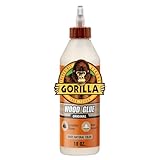

Our Top Picks
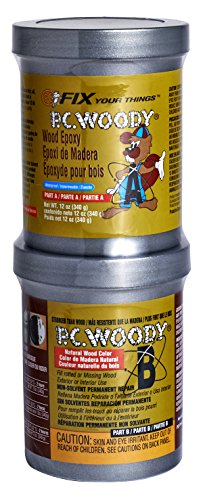 PC Products PC-Woody Wood Repair Epoxy Paste12 oz2.75 x 2.75 x 5.75 inches0.75 poundsCheck on Amazon

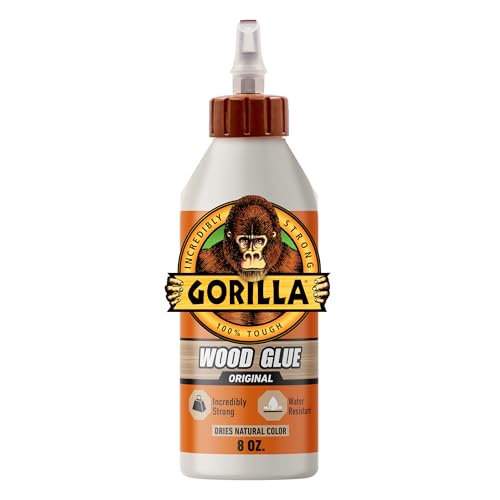

What the glues actually do
PVA wood glue is the familiar white or yellow adhesive sold as interior wood glue. It bonds by soaking into the wood fibers and drying into a hard polymer film. It works best when the mating surfaces touch closely. A joint with gaps wider than roughly 1/32 inch is already outside its ideal working range, especially if the gap runs along much of the joint.
Polyurethane glue is activated by moisture. It foams and expands while curing, which lets it occupy visible voids. That foam is useful for filling space, but the cured foam itself is relatively weak and brittle compared with solid wood or a tight PVA glue line. The strongest polyurethane joints still have wood-to-wood contact and a thin adhesive layer. Do not treat the expansion as permission to skip fitting the joint.
Which is better for uneven joints?
| Factor | PVA wood glue | Polyurethane glue |
|---|---|---|
| Best joint fit | Tight, close-fitting surfaces | Close-fitting surfaces with occasional small voids |
| Gap-filling ability | Poor; gaps reduce strength | Fills visible gaps, but expanded foam is not a strong filler |
| Clamping | Usually straightforward | Required; expansion can push parts apart |
| Cleanup | Water while wet; scrape or sand when dry | Messy; cured glue must be cut or scraped away |
| Moisture resistance | Depends on grade; exterior types resist more water | Generally good moisture resistance once cured |
| Open working time | Often about 5–10 minutes | Commonly about 10–20 minutes, depending on product and temperature |
For a joint that is merely uneven because of saw marks or a slight bow, PVA is usually the better buy. It is easier to spread, easier to clean, and generally produces a stronger result when the clamps can pull the boards together. A thicker-bodied gap-filling PVA wood glue can tolerate minor imperfections, but it still cannot bridge a substantial open space like epoxy or a properly fitted wooden insert.
Polyurethane makes sense when the joint cannot be made perfectly tight, the assembly may encounter damp conditions, or the materials are difficult to bond with ordinary PVA. It can also bond wood to some nonporous materials, although the manufacturer’s label should confirm that use. It is not the automatic choice for every rough joint.
How much unevenness is too much?
Use a straightedge and feeler gauge, or simply hold the joint up to a bright light. If the gap is a hairline that disappears under moderate hand pressure, glue and clamps can usually handle it. If you can see a continuous gap of 1/16 inch or more, improve the joint first. Plane, sand, rout, or recut the edge until the boards meet over most of their length.
A polyurethane glue line that expands into a 1/8-inch void may look filled after trimming, but much of that material is foam with limited load-bearing ability. On a shelf, table apron, chair rail, or structural frame, that is a poor substitute for a tight joint. For isolated gaps that cannot be avoided, use an appropriate two-part epoxy wood filler or redesign the joint so the gap is mechanically supported.
Using PVA on an imperfect joint
Start by flattening the mating edges. Sanding with a power sander can round the edges, so use a shooting board, hand plane, or sanding block backed by a flat surface. Stop around 120 to 150 grit for most glue joints. Very smooth polishing is unnecessary, but torn fibers and burn marks should be removed.
Apply an even film to both surfaces when the fit is questionable. Assemble immediately, slide the boards slightly to distribute the glue, then clamp until the joint closes. Moderate pressure is enough; excessive pressure can squeeze out nearly all the adhesive. Check the joint after tightening and wipe away squeeze-out with a damp cloth before it dries. Typical clamp time is 30 to 60 minutes, but leave the assembly undisturbed for at least several hours. Heavy loading is safer after 24 hours.
Using polyurethane without making a mess
Polyurethane needs moisture, but the surfaces should not be dripping wet. Lightly mist one side with water, or wipe it with a damp cloth, then spread a thin coat of glue. Too much water or adhesive creates more foam and more cleanup without improving the bond.
Dry-fit the parts and prepare clamps before opening the bottle. Apply less glue than you think you need; expansion can be several times the original volume. Clamp firmly enough to prevent movement, but do not rely on hand pressure. Squeeze-out usually appears as brown or tan foam. Let it cure fully, then cut it away with a sharp chisel or scraper. Trying to wash cured polyurethane off your skin or tools is frustrating, so wear gloves and protect the bench.
Check the bottle’s shelf life and storage instructions. Moisture in the air can shorten the life of an opened polyurethane bottle, causing thickened glue or a blocked nozzle. A small bottle is often cheaper overall than discarding a half-used large one.
The practical buying decision
Choose PVA for indoor furniture, cabinets, boxes, and trim when you can bring the joint faces together. It is the cheaper and cleaner option, and it is usually stronger in that situation. Choose polyurethane for minor unavoidable gaps, damp locations, or unusual materials, provided the joint is still mechanically sound.
If the joint has a large, continuous gap, neither ordinary PVA nor expanding polyurethane is the right repair. Fix the wood fit, add a spline or mechanical fastener, or use an adhesive specifically designed for gap filling. Adhesive cannot compensate for badly prepared joinery.
0 Comments