Staining & Dyes
Osmo Polyx-Oil vs Rubio Monocoat: Which Hardwax Oil Fits Your Project?
Osmo Polyx-Oil vs Rubio Monocoat compared on coats, cure time, upkeep and repairs, with a table and picks for tables, floors, furniture and repairs.
Choosing and applying wood stains, dyes, toners and color washes for even, predictable color.
Osmo Polyx-Oil vs Rubio Monocoat compared on coats, cure time, upkeep and repairs, with a table and picks for tables, floors, furniture and repairs.
Ten pre-stain conditioner listings for pine compared by base, size and pack, from Minwax to Varathane and kits, with a scrap-board plan against blotching.
Yes, you can stain pine to look like hickory in color, but not in grain: stain can shift pine toward hickory’s warm tan and light brown tones, yet it cannot add hickory’s open pores, its bold cream-and-brown streaks, or its hardness. With good blotch control, a layered color approach, and Read more
Yes, diluting stain with the right thinner makes it lighter, because each wipe leaves less pigment and dye on the wood. Thinning doesn’t change the color itself, though. Thinned red mahogany is still red mahogany, only weaker, and more of the wood’s own color shows through it. Thinner also dilutes Read more
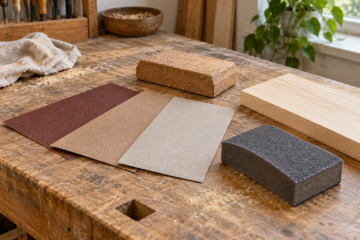
Raising the grain before staining is the extra step that separates a blotchy, rough finish from a smooth, even one. When water-based stain, dye, or topcoat hits raw wood, it swells loose wood fibers that were crushed flat during sanding. Those fibers stand up, dry hard, and leave the surface Read more
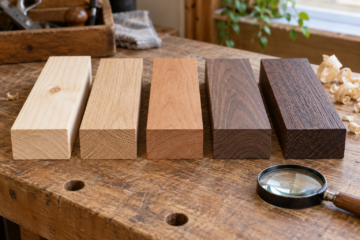
A decorative louver looks simple — a frame with angled slats — but wood choice makes or breaks it. The wrong species will blotch under stain, warp after one summer, or split when you pin the slats. The right one will take stain evenly, hold its shape, and stay stable Read more
Best Wood for a Stained Dining Table Apron A dining table apron needs to do two jobs: support the top and look good from normal viewing height. For a stained apron, the best wood is usually straight-grained, stable, and capable of taking stain evenly. The right choice depends on whether Read more
A bench seat takes more abuse than almost any other furniture surface. People slide across it with jeans rivets, drop bags and shoes on it, and stand on it to reach a high shelf. If you want it to stay flat, resist dents, and take stain evenly, wood choice matters Read more
Choosing the right wood matters more than the label on the black dye. A dye colors the wood fibers instead of leaving a heavy pigment layer on top, so it produces a cleaner, more transparent black. It also reveals the species’ grain, pores, and uneven absorption. Some woods turn deep Read more
A shoe bench needs wood that can handle sitting, kicked-off shoes, dirt, and occasional wet soles without looking worn after a few months. For a stained bench, the best choice is usually a close-grained hardwood with predictable color and enough hardness for daily use. Oak is the practical default, but Read more