What's inside
As an Amazon Associate I earn from qualifying purchases. This post may contain affiliate links at no extra cost to you.
A decorative louver looks simple — a frame with angled slats — but wood choice makes or breaks it. The wrong species will blotch under stain, warp after one summer, or split when you pin the slats. The right one will take stain evenly, hold its shape, and stay stable with thin 1/4″ to 3/8″ slats and narrow rails.
Unlike a painted louver where you can hide filler and use poplar or MDF, a stained louver has nowhere to hide. Grain, color, and finish absorption are all visible. Here’s what actually works, based on how each wood machines, stains, and holds up indoors vs. outdoors.
As an Amazon Associate we earn from qualifying purchases at no extra cost to you.



Our Top Picks
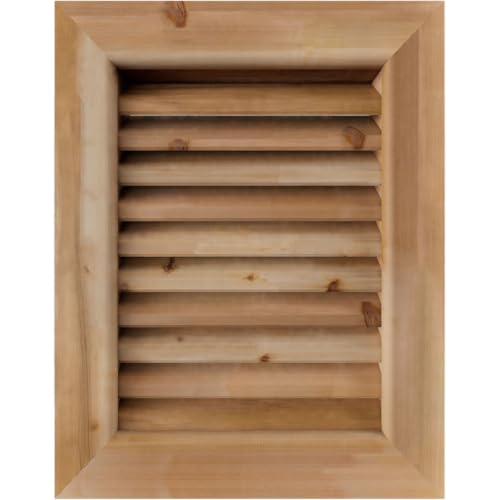 Ekena Millwork GVWVE12X2201SFUWR Vertical Gable Vent Gable Vent3 x 17 x 27 inches15.27 poundsCheck on Amazon
 15"W x 47"H Americraft Two Equal Louver Exterior15-in. W x 47-in. H47 x 15 x 1 Inches26.08 PoundsCheck on Amazon
 Ekena Millwork RWL12X042UNP Exterior Real Wood Pine Louvered12-in. W x 42-in. H1 x 12 x 42 inches16.8 poundsCheck on Amazon
 1/2 pt Minwax 13407 Clear Pre-Stain Wood Conditioner1/2 Pint3 x 3.25 x 3 inches0 PoundsCheck on Amazon


What Matters in a Louver Wood
Four properties matter more than anything else for stained louvers:
1. Stain uniformity: Tight, diffuse-porous woods like maple blotch. Open-grained woods like oak take stain well but need filling if you want a smooth look. The sweet spot is a wood with even density and moderate grain.
2. Dimensional stability: Louver slats are thin and cross-grain. Woods with high movement in service — like soft maple or poplar — will cup or twist. Look for low tangential shrinkage and straight grain. Quarter-sawn stock is worth the premium for slats.
3. Workability at small scale: You’ll rip dozens of slats, rout louvers mortises or staple slats into a groove, and sand end grain. Woods that splinter or fuzz (soft pines) or dull tooling quickly (white oak) add hours.
4. Rot and UV resistance (exterior): If the louver is on a gable vent, soffit, or exterior decoration, interior hardwoods like alder and soft maple will fail in 2-3 years without serious maintenance, even under stain + varnish.
Weight is a secondary factor. A 24″ x 36″ decorative interior louver in white oak can weigh 9-11 lbs, while the same in cedar or Spanish cedar is 5-6 lbs. That matters if it’s mounted high with only trim screws.
The Best Woods for a Stained Decorative Louver
These five consistently produce the best stained results without requiring expert-level finishing tricks.
| Wood Species | Stain Result | Stability for Thin Slats | Best Use | Cost (4/4 lumber, approx.) |
|---|---|---|---|---|
| White Oak (quarter-sawn) | Excellent – even, highlights ray fleck | Very good, low movement | Interior or exterior with proper topcoat | $9 – $14 / bd ft |
| Spanish Cedar | Excellent – takes light to dark stain evenly | Excellent, lightweight, rot resistant | Exterior decorative gable/soffit louvers | $12 – $18 / bd ft |
| Alder | Very good with conditioner, mimics cherry/walnut | Good if kiln-dried to 6-8% | Interior only, best value for dark stains | $5 – $7 / bd ft |
| Mahogany (Genuine or Sapele) | Excellent – rich, no blotching | Very good, stable | High-end interior/exterior | $14 – $22 / bd ft |
| Western Red Cedar | Good – best with medium/walnut tones | Very good, very light | Exterior, rustic/natural stain | $6 – $10 / bd ft |
White Oak is the overall best for most people. It stains more predictably than red oak, doesn’t turn pink under golden oak or honey stains, and its tyloses make it far more water-resistant than red oak. If you want a medium to dark brown stain on an interior wall louver, HVAC return cover, or room divider, quarter-sawn white oak gives you that Arts & Crafts look without blotching. Use an oil-based wood stain and it will be even on the first coat. Downsides: it’s heavy and it will raise grain, so sand to 180 grit and wipe with water or denatured alcohol before final sanding.
Spanish Cedar is the pro choice for exterior stained louvers. It’s not a true cedar — it’s a lightweight mahogany relative — so it machines cleanly, holds mortises without splitting, and is naturally rot and insect resistant. It stains uniformly from natural/colonial maple down to dark walnut. At 24-28 lbs/cu ft vs. 47 lbs for white oak, you can build a large 3′ x 5′ gable louver that one person can still lift. The drawback is price and availability; you’ll likely need a hardwood dealer, not a big box store.
Alder is the honest budget pick for interior stained louvers. Clear alder is soft (590 lbf Janka) but mills beautifully and, with a pre-stain wood conditioner applied 10-15 minutes before staining, will take dark walnut, espresso, or cherry stains without the splotchiness you get on pine or maple. Don’t use it for exterior. It has essentially no decay resistance, and slats will swell and stick if humidity swings more than 15%.
Sapele/Mahogany stains better than almost anything. If you want a deep, even reddish-brown without fighting blotch, Sapele (often sold as African mahogany) is more stable and cheaper than genuine Honduran mahogany. It’s hard enough for crisp slat edges and doesn’t need conditioner. Watch for grain interlock on Sapele — climb-cut with a router or you’ll get tear-out on the slat ends.
Western Red Cedar works when you want a natural, semi-transparent stained look outdoors. It won’t give you a true dark walnut without looking muddy because its base color is so variable (pale tan to dark brown heartwood). Keep the stain in the cedar/cinnamon range, and it’s excellent. Use heartwood only for exterior; sapwood rots quickly.
Woods to Avoid or Use With Caution
Radiata Pine / White Pine: Cheap and available as 1x material, but terrible for staining. Resin pockets cause uneven absorption and yellowing, and soft earlywood dents when you sand slats. If you must use pine, use a gel stain rather than liquid, and expect a rustic, uneven result. For an interior louver that will be stained dark, alder costs only slightly more and looks far better.
Poplar: Great for paint, bad for stain. Green/purple heartwood and gray streaks don’t disappear under stain — they turn muddy. It also has very uneven density, so it blotches badly.
Hard Maple / Soft Maple: Both are notorious for blotching with pigment stains, even with conditioner. If you want a light honey or natural stain on maple, use a dye stain or tinted finish instead of an oil pigment stain. For beginners, it’s not worth the hassle on a louver with 20+ slats to get right.
Red Oak: Not a bad wood, but for louvers it has two strikes: it’s open-pored (requires grain filler if you want a smooth film finish) and its pink undertone clashes with many modern brown/gray stains. White oak is usually only $1-2 more per board foot and finishes better.
Whitewood / SPF Spruce: Construction lumber is wet (often 15-19% moisture), prone to twisting as it dries, and fuzzy to sand. A louver built from SPF will often warp within months indoors as it equalizes to 7-9%.
Finishing Tips for Even Stain on Louvers
Even with the right wood, louver finishing fails in predictable ways. Do this sequence:
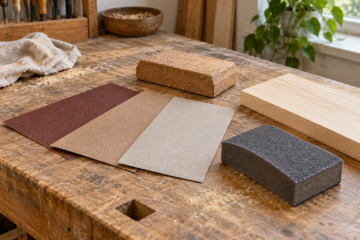
Sand correctly, then break edges: Sand everything to 150 or 180 grit, no finer before staining. Going to 220+ on oak or mahogany can actually prevent stain from taking and leave you with a pale, washed-out color. Break all sharp slat edges with 220 lightly by hand — sharp edges won’t hold finish and stain will look darker on them.
Condition only the blotch-prone woods: Alder, pine, and maple need a pre-stain conditioner. White oak, Spanish cedar, mahogany, and cedar do not — conditioner on those will just make the stain lighter and uneven. Test on offcuts from the same board, not scrap from another species.
Stain before assembly if possible: Pre-stain and pre-finish slats and the inside of the frame grooves before glue-up. It’s the only way to avoid unstained lines when the wood moves seasonally and to avoid pooling stain in the corners where slats meet the stiles. Leave your glue surfaces masked with tape or scrape them clean for wood glue — stain under glue kills the bond.
Choose the right topcoat: For interior decorative louvers, a water-based polyurethane is fine and won’t amber the stain much. For any exterior louver, even under a deep overhang, use an exterior spar varnish with UV inhibitors. A standard interior poly will crack and peel outdoors within one year. Plan on 3 coats on all sides, including the back and slat ends. End grain absorbs 2-3x more finish; seal it well or moisture will enter there first.
Failure mode to watch: Louvers finished only on the face will cup. If you flood stain and varnish on the front and leave the back raw, moisture exchange is uneven and thin slats will bow. Finish both sides equally, even if the back won’t be seen.
What to Buy by Project Type
For an interior stained wall louver or return-air cover on a budget: Buy clear alder. Condition, stain with a dark walnut or espresso, and topcoat with satin poly. Cost will be 40% less than oak and the color will be more uniform than pine.
For an interior louver where grain is the feature: Buy quarter-sawn white oak or Sapele. Both stain evenly and the figure makes the simple louver look intentional and high-end. This is where spending more on wood actually shows.
For an exterior decorative gable or soffit louver that will be stained: Buy Spanish cedar if you can source it, otherwise select tight-knot western red cedar heartwood. Don’t try to save money with pine or poplar outdoors — the slats are too thin to survive without decay resistance, and you’ll be rebuilding it. If you want a dark stain outside, Spanish cedar or Sapele will hold that color; cedar will not without looking painted.
If you already have a wood on hand, make a test board with 3 slat offcuts: one with stain only, one with conditioner + stain, and one with stain + topcoat. View it in the room’s light after it dries — wet stain is always 1-2 shades darker than the final finish. That 20-minute test saves you from stripping a finished frame.
0 Comments