What's inside
As an Amazon Associate I earn from qualifying purchases. This post may contain affiliate links at no extra cost to you.
A shoe bench needs wood that can handle sitting, kicked-off shoes, dirt, and occasional wet soles without looking worn after a few months. For a stained bench, the best choice is usually a close-grained hardwood with predictable color and enough hardness for daily use. Oak is the practical default, but maple, beech, ash, walnut, and pine can all work when their limitations are understood.
As an Amazon Associate we earn from qualifying purchases at no extra cost to you.


Our Top Picks
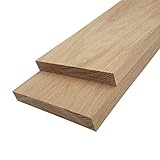
 Barrington Hardwoods Red Oak Lumber Board3/4" x 2" x 48"100 x 100 x 50 Centimeters5 poundsCheck on Amazon
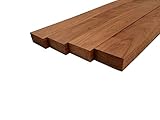
 Barrington Hardwoods Domestic Variety Pack 5 Walnut3/4" x 2" x 12"12 x 2 x 0.75 inchesCheck on Amazon


Best overall: red or white oak
Oak is the safest recommendation for most stained shoe benches. It is strong, widely available in boards and panels, and accepts oil-based and water-based stains consistently after proper preparation. Its open grain gives the bench visible character rather than a flat, painted appearance.
Red oak is usually less expensive and stains readily. It has a pinkish or salmon cast that shows through light brown stains. White oak costs more, but it is denser, more water-resistant, and has a less reddish natural color. White oak is the better choice for an entryway that sees damp shoes or frequent cleaning.
Oak’s main drawback is its open pores. A dark stain can collect heavily in the grain, creating a blotchy or very contrasty surface. If you want an especially smooth finish, apply a compatible grain filler before staining, or choose maple instead.
Wood species compared
| Wood | Stain performance | Durability | Best use |
|---|---|---|---|
| White oak | Even, attractive, medium to dark colors | Excellent | Best all-around premium bench |
| Red oak | Easy to stain, strong grain and warm color | Very good | Value-focused hardwood bench |
| Hard maple | Light, subtle grain; dark stains can turn uneven | Excellent | Modern, smooth-looking designs |
| Beech | Even surface, pale natural color | Very good | Paint or light stain |
| Walnut | Usually needs only clear finish; dark stains hide character | Excellent | High-end natural appearance |
| Pine | Blotches easily without conditioner | Fair | Budget or painted benches |
When pine is good enough
Choose pine if the bench is inexpensive, temporary, painted, or used by children where dents are not a major concern. It is easy to cut and commonly sold in wide boards. It also costs much less than hardwood.
The problem is uneven absorption. Soft earlywood can become much darker than the dense latewood, while knots may remain noticeably darker or bleed resin into the finish. For a stained pine bench, sand to 180 grit, remove dust, and apply a pre-stain wood conditioner before the stain. Test the complete process on an offcut first. Conditioner improves consistency but can also make the final color lighter, so the test board matters.
Clear pine is a better staining candidate than construction lumber. Avoid boards with large knots, pith, twisting, or deep planer marks. Kiln-dried furniture-grade pine costs more than framing lumber but saves time and produces a better result.
Maple, beech, and walnut trade-offs
Hard maple is very hard and resists dents, making it excellent for a bench top. Its tight grain creates a clean, contemporary look. However, maple often stains unevenly, especially with dark colors. A gel stain or a dye-based colorant can produce better control than a penetrating stain.
Beech is another stable, pale hardwood. It has a fine texture and is often less expensive than maple. It can move with changes in humidity, so allow boards to acclimate indoors for at least several days before building. Beech is a strong option for a painted bench because its smooth surface requires less grain filling than oak.
Walnut is durable and attractive enough to finish clear. Staining walnut usually wastes its natural color and can make the surface look muddy. If you want a dark bench, use walnut with a clear protective coat rather than forcing oak or maple to imitate it. Walnut is costly, so it is rarely the economical choice for a large bench.
Choose boards and glue carefully
For a seat, use a solid panel at least 3/4 inch thick; 1 inch is preferable for a long bench or a design with widely spaced legs. A glued-up hardwood panel is fine, but join the edges straight and keep the panel flat while the glue cures. Avoid relying on end grain alone for structural joints.
Use a quality interior wood glue for a dry indoor entryway. If wet shoes, salt, or muddy floors are common, a water-resistant Type II glue is a sensible upgrade. Glue squeeze-out must be removed before staining; dried residue seals the wood and leaves pale stripes. Scrape it while rubbery, then sand the area level.
Sanding and staining the bench
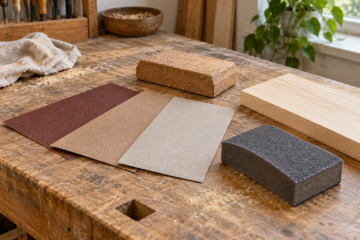
Start with 100 or 120 grit only when the board has milling marks or scratches. Otherwise begin at 150 grit and finish at 180 grit. Sanding much finer than 180 or 220 grit can close the surface and reduce stain absorption. Always sand through the grits rather than jumping directly from coarse paper to fine paper.
Ease sharp edges with a light pass of 180-grit paper. A tiny roundover is more comfortable than a crisp edge and is less likely to chip. Vacuum the bench, then wipe it with a clean, slightly damp cloth if using a water-based finish. Let the surface dry fully before staining.
Test stain on an offcut cut from the same board. Leave it for the manufacturer’s stated time, wipe it consistently, and apply the intended topcoat. A stain color shown on a label is not a reliable prediction for red oak, pine, or maple.
For broad surfaces, a penetrating wood stain gives a natural appearance but can emphasize differences between boards. Gel stain stays nearer the surface and is easier to control on maple or pine. Do not leave excess stain pooled in corners; it may remain soft or wrinkle under the topcoat.
Protect the stained surface
Stain adds color, not meaningful protection. Apply at least two coats of a clear finish rated for interior wood. Water-based polyurethane dries quickly, stays relatively clear, and produces less odor. Oil-based polyurethane adds warmth and generally gives more working time, but it ambers pale woods and requires longer drying periods.
Lightly sand between coats with 320-grit paper only after the finish has cured enough not to gum up the abrasive. Do not sand through the color on corners. For a heavily used bench, three thin finish coats are more dependable than one thick coat. Let the final coat cure according to its label before placing shoes or sitting on it; dry to the touch does not mean fully hardened.
What to buy
For the best balance of price, strength, and predictable staining, buy red oak. Choose white oak when moisture resistance and a more refined appearance justify the extra cost. Choose maple or beech for a pale, modern bench, pine for a budget or painted project, and walnut when the wood itself is meant to be the feature.
0 Comments