What's inside
As an Amazon Associate I earn from qualifying purchases. This post may contain affiliate links at no extra cost to you.
Our Top Picks
 Varathane Total Control Smoke Gray Gel StainHalf Pint (Pack of 1)2.88 x 2.88 x 2.97 inchesCheck on Amazon
 1/2 pt Minwax 13407 Clear Pre-Stain Wood Conditioner1/2 Pint3 x 3.25 x 3 inches0 PoundsCheck on Amazon


Choosing a Wood Species for Pale Gray Stain
Pale gray stain is less forgiving than medium brown or walnut. It leaves much of the wood visible, so the species, grain pattern, sanding, and even the board’s growth rate affect the final color. A good pale gray should look intentionally weathered, not dirty, blue, or uneven.
For most interior projects, white oak is the safest choice. Ash is a close alternative with a slightly more open, linear grain. Maple produces a cleaner and quieter surface but can look nearly painted with some products. Pine is inexpensive and widely available, but it is also the most likely to blotch.
As an Amazon Associate we earn from qualifying purchases at no extra cost to you.


| Wood species | Appearance under pale gray | Blotch risk | Best use |
|---|---|---|---|
| White oak | Visible cathedral grain; warm gray with natural variation | Low | Floors, doors, cabinets, furniture |
| Ash | Bold, straight grain; cool and crisp | Low to moderate | Wall panels, furniture, shelving |
| Hard maple | Very fine grain; even, pale gray surface | Moderate | Cabinet parts and modern furniture |
| Poplar | Muted grain; may show green or brown mineral streaks | Moderate | Paint-grade trim and low-cost test pieces |
| Pine | Strong contrast between earlywood and knots | High | Budget wall boards and rustic projects |
| Red oak | Prominent grain with pink or orange undertones | Low | Existing trim when replacement is impractical |
Best Overall: White Oak
White oak accepts gray stain predictably and has enough grain contrast to keep a pale color from looking flat. Its natural tan undertone usually warms a gray stain slightly, which is useful if you want a livable finish rather than a cold, blue-gray surface. Quarter-sawn white oak gives a straighter, more refined pattern; plain-sawn boards show stronger arches and cathedral grain.
White oak is a strong choice for dining tables, built-ins, cabinet doors, and interior doors because its hard surface resists dents better than softer woods. The trade-off is cost. If the project is a large wall or ceiling, the price difference from pine can be substantial. White oak also makes every sanding mark visible under a light stain, so preparation matters.
Ash and Maple: Cleaner, Cooler Alternatives
Ash looks similar to oak in a pale gray finish, but its grain is often more open and directional. It tends to read cooler and brighter, making it useful for Scandinavian-style furniture, slat walls, and shelving. Fill the pores only if you want a smoother, less textured surface; an unfilled finish preserves ash’s pronounced grain.
Hard maple has a tight, subtle grain and can produce the most uniform appearance of the common domestic species. It is a good choice when you want pale gray without dramatic stripes. However, maple’s dense, unevenly absorbent surface can create cloudy or patchy color. A dye or gel stain often gives better control than a thin penetrating stain. Maple is also harder to sand and can burnish if you press too hard or use dull abrasive paper.
When Pine or Poplar Makes Sense
Pine is the cheaper option, and it is perfectly reasonable for painted-style wall boards, small shelves, and rustic furniture. Choose clear, knot-free boards when possible. Knots and resin pockets often stay darker than the surrounding wood, while soft earlywood absorbs more stain and turns noticeably deeper. Those variations are part of the look, but they are not defects you can reliably eliminate.
For pine, sand fresh boards through 120 grit, then stop at 150 grit unless the stain maker specifies otherwise. Apply a wood pre-stain conditioner or use a gel stain. Conditioner can reduce blotching, but it may also make the final color lighter and less saturated. Always test the complete schedule on an offcut.
Poplar has a relatively calm grain and is inexpensive, but its green, gray, or purple mineral streaks can remain visible beneath pale stain. It is usually a better candidate for paint than transparent gray stain. Use it when you want a subdued background and can accept natural color variation.
Red Oak and Existing Wood
Red oak is not the ideal new wood for a neutral pale gray because its pink and orange undertones can push the stain toward mauve, tan, or muddy brown. Still, it can be the practical choice when matching existing flooring or trim. Test a gray with a slight blue or green bias on the actual wood, then judge it after the clear coat has dried. The finish often adds warmth and depth.
Do not assume sanding will remove the undertone. Sanding changes surface absorption, but it does not change red oak into white oak. If the color remains wrong, use a tinted sealer or an opaque wood finish rather than adding more coats of transparent stain.
Preparation and Application
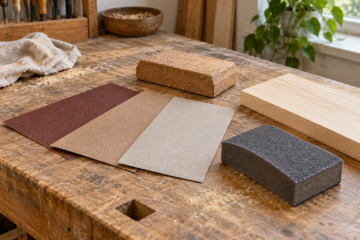
Start with clean, flat wood. Remove mill marks with 80 or 100 grit only when necessary, then progress through 120 and 150 grit. For most interior stain, stopping at 150 or 180 grit provides enough absorption. Sanding to 220 grit can polish the surface and cause light spots, especially on maple and pine.
Break sharp edges lightly with the same final abrasive. Stain collects on end grain and rounded edges, making them much darker than the face. On end grain, apply a thin coat of finish or sanding sealer, let it dry, and sand lightly before staining if you need a closer color match.
Use a gray interior wood stain made for the type of finish you plan to apply. Water-based products dry quickly and often preserve a cooler gray; oil-based stains usually add amber warmth and give more open working time. Do not leave excess stain on the surface while it dries. Wipe consistently with clean rags, following the grain.
After the stain has dried according to the label, protect it with two or three thin coats of clear finish. A water-based polyurethane generally keeps pale gray closer to its original color. Oil-based polyurethane adds amber, which may be attractive on white oak but can turn a cool gray beige. Scuff-sand between coats only as directed, commonly with 320 grit, and remove all dust before recoating.
Test Before Committing
Make a sample at least 12 by 18 inches using the same species, sanding sequence, stain, and clear coat. One small sample is not enough if the project includes both face grain and end grain. Apply the stain at the same spread rate you will use in the room, then inspect it in daylight and warm artificial light.
Common failures include dark lap marks from overlapping partly dried stain, pale edges caused by over-sanding, and blue-gray color caused by pairing a cool stain with naturally cool ash or maple. If the result is too dark, wiping harder after application may help only while the stain is still wet. Once dry, sanding back can create uneven absorption. It is usually safer to adjust the stain color or use a tinted topcoat on a new test board.
For the most predictable pale gray, buy white oak. Choose ash for a cooler, more linear grain, maple for a restrained modern surface, and pine only when its lower price or rustic variation matters more than perfect uniformity.
0 Comments