What's inside
As an Amazon Associate I earn from qualifying purchases. This post may contain affiliate links at no extra cost to you.
A translucent color wash lets the grain show through while shifting the wood’s overall color. The species matters as much as the stain: open pores, strong grain contrast, resin, and uneven absorption can all change the result. For a first project, choose a light-colored wood with a fairly even surface, then test the finish on an offcut from the same board.
As an Amazon Associate we earn from qualifying purchases at no extra cost to you.


Our Top Picks
 1/2 pt Minwax 13407 Clear Pre-Stain Wood Conditioner1/2 Pint3 x 3.25 x 3 inches0 PoundsCheck on Amazon


What makes a good species for a wash
Look for pale, consistent wood without heavy knots or dramatic changes between earlywood and latewood. A wash can make grain more visible, but it can also exaggerate blotches, scratches, and glue residue. Softwoods tend to absorb color unevenly; diffuse-porous hardwoods such as poplar and maple usually give a more controlled starting point, though neither is guaranteed to color uniformly.
“Translucent wash” can mean several things: diluted water-based paint, a tinted wood stain, or a pigment mixed into a clear finish. These behave differently. Paint washes leave more pigment on the surface and can mute grain; dye penetrates and preserves more detail; pigmented stains settle in pores and may emphasize open grain. Confirm that the product is suitable for your planned topcoat, and follow its label for thinning and drying.
Wood species compared
| Species | Typical wash behavior | Best use | Main drawback |
|---|---|---|---|
| Poplar | Light base; usually takes color readily, but can show green or brown streaks | Painted furniture and test pieces | Color variation can appear through pale washes |
| Maple | Fine, closed grain; can take dye evenly, but stain may blotch | Small, smooth projects with careful prep | Blotching and sanding marks are easy to see |
| Birch | Pale and fine-grained; often takes pigment unevenly | Light washes after a compatible conditioner or sealer test | Cloudy patches on broad panels |
| White oak | Open pores and prominent grain; color settles into pores | Grain-forward, rustic finishes | Wash can look striped or much darker in pores |
| Pine | Strong contrast between soft earlywood and dense latewood | Casual, visibly grained finishes | Earlywood can go dark and blotchy |
| Basswood | Very pale, fine, and generally uniform | Small decorative pieces and controlled color tests | Soft surface dents and fuzzy sanding are common |
Best starting choices
Poplar is a practical, affordable choice for painted furniture and shop projects. It is easy to find, sands without much effort, and its relatively quiet grain works well under a diluted paint wash. The catch is its own color: greenish or brown streaks may remain visible under a pale blue, white, or pastel wash. Choose clear, straight boards when appearance matters, and check the whole piece before buying.
Basswood is a good option for small items when you want the wood itself to stay pale. It has little pronounced grain to compete with the color, but it dents easily. Sand gently and remove dust carefully; aggressive sanding can leave a fuzzy surface that catches pigment. For wide tabletops or high-wear furniture, its softness may be a bigger drawback than its color behavior.
Maple can produce a clean, refined look, especially with a dye-based wash, but it rewards disciplined preparation. Uneven sanding or a stain that sits on the surface can create blotches. Make a sample using the same sanding schedule as the final piece before committing. A water-based wood dye is worth testing when you want stronger color with visible grain and less pigment buildup in pores.
Species that need more care
Birch is pale and widely available, but its reputation for blotching is deserved. On a large flat panel, a diluted pigment wash may dry with cloudy areas, particularly if the surface has been sanded unevenly. A compatible wood conditioner or washcoat can reduce absorption differences, but it can also reduce color strength. Test the entire sequence—including topcoat—on scrap rather than assuming conditioner will solve every problem.
Pine is inexpensive and easy to find, so it can be perfectly fine for a low-cost project where a rustic result is acceptable. Its soft earlywood absorbs more finish than the harder latewood, creating stripes or dark patches. A thin wash can make that contrast stronger. If you want a very even pastel finish, poplar is usually an easier buy; if visible bands are part of the look, pine may be the better value.
White oak is not a poor choice, but it gives a different effect. Its large pores collect pigment and read darker than the surrounding wood, so a wash tends to emphasize grain rather than create a uniform tint. Use it when that contrast is intentional. A fine-grained hardwood is a better match for a quiet, even color.
Prep and application that prevent failures
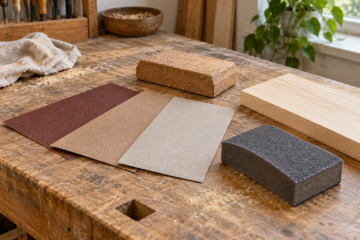
Sand flat surfaces through about 150 or 180 grit for many water-based washes; going much finer can reduce absorption and make the color lighter or less even. Follow the coating maker’s directions if they specify a different grit. Sand with the grain, use a light touch on edges, and remove glue squeeze-out completely. Glue is especially troublesome: even a thin smear can repel stain and show up as a pale patch.
Raise the grain before applying a water-based color if the finish system allows it. Wipe the bare wood lightly with a damp cloth, let it dry fully, then knock down the raised fibers with the final grit. Apply the wash in thin, consistent passes and keep a wet edge on large panels. Do not keep brushing an area as it begins to dry; that often leaves lap marks. If a test sample dries too dark, dilute the wash or shorten its contact time only if the product instructions allow it.
Always test a complete sample with the intended topcoat. Water-based clear finishes can change the color less than oil-based finishes, which often add amber warmth. A wash that looks right when dry may shift after sealing. For broad color control, compare a pre-stain wood conditioner or washcoat on scrap against an untreated sample before using it on the project.
What to buy for your project
For an even, grain-visible wash, start with clear poplar or basswood for small work, and consider maple if you are prepared to make samples and control absorption. Pick pine when price and availability matter more than uniformity, or white oak when pronounced pores are part of the design. Buy one extra offcut or board for testing; that is usually cheaper than sanding back a finished panel. If you are choosing a ready-to-use coating, look for a translucent wood stain labeled for your wood and topcoat type, and test its color at the actual application rate.
0 Comments