What's inside
As an Amazon Associate I earn from qualifying purchases. This post may contain affiliate links at no extra cost to you.
Best Wood for a Stained Dining Table Apron
A dining table apron needs to do two jobs: support the top and look good from normal viewing height. For a stained apron, the best wood is usually straight-grained, stable, and capable of taking stain evenly. The right choice depends on whether the apron will match the tabletop, contrast with it, or simply provide a durable painted or stained frame.
As an Amazon Associate we earn from qualifying purchases at no extra cost to you.


Our Top Picks
 1/2 pt Minwax 13407 Clear Pre-Stain Wood Conditioner1/2 Pint3 x 3.25 x 3 inches0 PoundsCheck on Amazon
 Varathane Water-Based Ultimate Satin PolyurethaneHalf Pint (Pack of 1)3 x 3 x 3 inches0.64 poundsCheck on Amazon


Best overall: red oak
Red oak is the safest all-around choice for a stained dining table apron. It is widely available, reasonably priced, strong enough for typical table construction, and easy to machine with ordinary woodworking tools. Its open grain accepts oil-based and water-based stains readily.
The main drawback is its pronounced grain. Dark stains can make red oak look busy, particularly on a wide apron. A coat of wood grain filler before staining will produce a smoother appearance, but it adds labor. Without filler, expect a textured surface that may be desirable on a rustic or farmhouse table.
Red oak also tends to show pink or reddish undertones under medium-brown stains. Test the complete finishing schedule on scrap from the same board before committing to the apron.
Best for matching a hardwood top
If the tabletop is made from a particular species, using the same wood for the apron is normally the easiest way to achieve a coherent finish. Even then, boards from different parts of the tree can stain differently. A quarter-sawn white oak apron may not match a flat-sawn white oak top, and a clear-coated maple apron can look much lighter than an aged maple top.
| Wood species | Stain behavior | Advantages | Limitations |
|---|---|---|---|
| Red oak | Very receptive; strong grain and red undertones | Affordable, strong, easy to find | May look coarse or blotchy with dark colors |
| White oak | Even, with attractive open grain | Stable, durable, high-end appearance | Usually costs more; tannins can react with some finishes |
| Hard maple | Light and dense; can stain unevenly | Clean grain and excellent wear resistance | Often blotches; difficult to darken evenly |
| Cherry | Darkens naturally and can blotch with pigment stain | Rich color and fine grain | More expensive; color changes substantially with light |
| Poplar | Uneven, often green or gray under stain | Cheap and easy to work | Better painted than stained |
White oak for a premium apron
White oak is an excellent choice when the apron will be visible and the budget allows it. Its grain is attractive under clear finish and works especially well with medium brown, smoked, or natural-looking stains. It is harder and generally more rot resistant than red oak, although rot resistance is rarely important inside a dining room.
White oak can contain tannins that react with iron particles, leaving dark marks. Avoid steel-wool residue and use clean, nonmetallic brushes or synthetic abrasive pads. If you plan to use a water-based finish, sand carefully and remove dust thoroughly; raised grain is common after the first coat.
When maple or cherry makes sense
Hard maple is a good material for a light-colored apron or a table that will be painted. Its fine, closed grain sands smooth with little effort, but that same density makes conventional penetrating stains unpredictable. Dark pigment can sit unevenly, creating pale and dark patches. A compatible pre-stain conditioner may reduce the problem, but it does not make maple behave like oak.
Cherry produces one of the best-looking natural finishes. It starts light salmon or pink and deepens to a richer reddish brown with age and sunlight. Use a clear finish or a very light dye if you want to preserve that change. Heavy pigment stains can make cherry muddy and hide the grain. Cherry is a sensible choice when the tabletop is cherry, but it is rarely the economical choice for a hidden structural apron.
Woods that are poor staining choices
Poplar is inexpensive and stable, which makes it useful for painted aprons. Under stain, however, it can turn green, gray, or uneven brown. It is acceptable for a distressed look, but not the best foundation for a refined stained table.
Pine is also cheap, but its soft earlywood absorbs stain much faster than its harder latewood. The result is often dark stripes and blotches. If pine is the only practical option, use a pre-stain wood conditioner, choose a lighter gel stain, and test several samples. Pine is fine for a rustic table where variation is part of the design.
Do not use construction lumber for a finished apron unless it has been dried, acclimated, and carefully sorted. It commonly contains twist, cup, knots, and excessive moisture. Those defects can telegraph through a dark finish and make the apron difficult to fit.
Preparing wood before staining
Mill the apron parts square and let them acclimate in the workshop for at least several days. Indoor furniture lumber should generally be around 6% to 8% moisture content. Keep long aprons flat while they acclimate; a board that moves after assembly can pull against the tabletop or open joints.
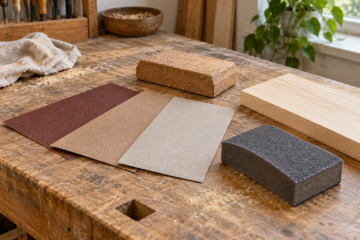
Sand through 120, 150, and 180 grit. For most aprons, stopping at 180 grit gives stain enough surface texture to bond while leaving a smooth touch. Sanding much finer than 220 grit can reduce absorption and create a lighter, uneven color. Ease exposed edges with one or two light passes so they do not absorb an excessive amount of stain and turn noticeably darker.
Remove glue squeeze-out completely. Dried glue in a corner or along an end grain will resist stain and appear as a pale, shiny patch. A sharp scraper is safer than aggressive sanding, which can create a shallow depression that still shows after finishing.
Staining and finishing choices
For oak, a penetrating oil-based stain is forgiving and gives strong color, while a water-based stain dries faster and preserves a lighter, cleaner appearance. Gel stain is useful on pine, maple, and other woods that absorb unevenly, though it can look painted if overworked.
Apply stain to a sample that includes both face grain and an end-grain edge. Follow the product’s stated wiping time; leaving stain on for an extra ten minutes can make a large difference. Two thin coats of finish are usually safer than one heavy coat. A durable tabletop finish is not strictly necessary on an apron, but the apron still benefits from a washable coating such as water-based polyurethane or an oil-based wiping varnish.
Use the cheaper wood when the apron is mostly hidden, will be painted, or is separated from the top by a strong visual design. Choose red oak for value and predictable staining, white oak for a premium visible frame, and the same species as the tabletop when an exact-looking match matters most.
0 Comments