What's inside
As an Amazon Associate I earn from qualifying purchases. This post may contain affiliate links at no extra cost to you.
For stained closet shelving, the best wood is usually poplar, maple, or red oak—not the cheapest construction lumber. The right choice depends on whether you want a smooth, furniture-like finish, a visible grain pattern, or the lowest practical cost. Shelves also need enough thickness and support to avoid sagging under folded clothes, shoes, and storage bins.
As an Amazon Associate we earn from qualifying purchases at no extra cost to you.

Our Top Picks
 1/2 pt Minwax 13407 Clear Pre-Stain Wood Conditioner1/2 Pint3 x 3.25 x 3 inches0 PoundsCheck on Amazon
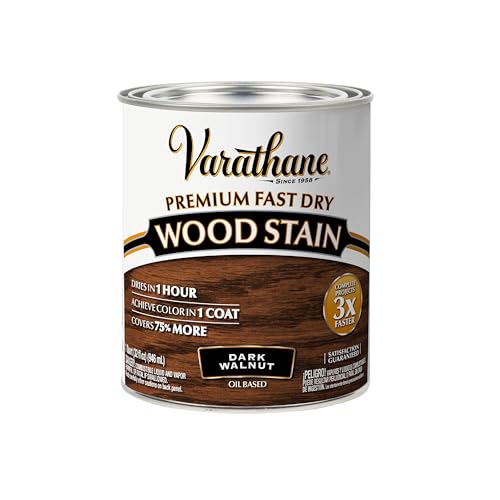
 Varathane Total Control Dark Walnut Gel StainHalf Pint (Pack of 1)2.88 x 2.88 x 2.97 inchesCheck on Amazon

Best wood species for stained closet shelves
Hardwoods are more predictable than softwoods when you plan to stain the shelves. They have fewer knots, flatter surfaces, and less resin to interfere with the finish. For most projects, 3/4-inch hardwood plywood with a matching solid-wood edge is the most practical construction. Solid boards work well for short shelves, but wide solid panels cost more and can move seasonally.
| Wood | Appearance after staining | Strength and stability | Best use |
|---|---|---|---|
| Red oak | Strong, open grain; accepts medium and dark stains readily | Strong, but its open grain needs careful sanding | Traditional closets and visible grain |
| Hard maple | Fine, subtle grain; light stains can look clean and modern | Hard and durable; relatively stable | High-end shelves and light finishes |
| Poplar | Very smooth grain; often turns greenish or blotchy with brown stain | Stable and easy to work | Paint, or carefully tested darker finishes |
| Birch plywood | Fine grain; can look attractive but may blotch | Stable and widely available | Budget-friendly plywood shelves |
| Pine | Pronounced knots and uneven color; often blotchy | Soft and prone to dents | Low-cost shelves with a rustic finish |
The best all-around choice
Red oak is the safest choice when you want a clearly stained wood finish and do not want to spend maple prices. It is available as plywood, solid boards, and iron-on or solid-wood edge banding. Oak accepts oil-based and water-based stains well, although its large pores remain visible. That is part of its appearance, not a defect.
Use 3/4-inch red oak plywood for the shelf panel and glue a 1-by-2-inch oak front edge to it. The thicker front edge reduces visible sag and gives the shelf a finished appearance. For shelves longer than about 30 inches, add a center support or use a thicker front nosing. A shelf that is 36 inches wide and loaded with books or shoe boxes is much more demanding than one holding folded shirts.
Hard maple is better if you want a pale, refined finish and a harder surface that resists dents. It is less forgiving to stain, though. Dark stains can look uneven on maple unless you use a compatible conditioner, gel stain, or carefully controlled dye. Maple plywood can also be expensive, so it makes the most sense when the closet is prominent or the finish is part of the design.
When poplar or pine makes sense
Poplar is an excellent shelf material if you intend to paint. It machines easily, has few knots, and sands smooth without much effort. For stained shelving, however, its green and gray undertones can produce an unattractive brown color. Test the exact stain on an offcut before buying enough material. Poplar is cheaper than maple and can be a reasonable choice for a tinted clear coat or a very dark, deliberately uniform finish.
Pine is the budget option. It is fine for a guest closet, a rental, or shelves that will hold lightweight clothing. Expect dents, resinous knots, and uneven stain absorption. Choose kiln-dried, straight boards, or use pine plywood with a solid front edge. A pre-stain wood conditioner can reduce blotching, but it cannot make pine look like oak. If you want a rustic result and can accept variation, pine is often good enough.
Plywood versus solid wood
For closet shelves wider than about 10 inches, plywood is usually the better engineering choice. Its cross-laminated layers resist seasonal expansion and contraction, so long shelves are less likely to cup. Use cabinet-grade plywood with a real hardwood face veneer. Avoid construction plywood unless the surface will be painted; its voids, rough patches, and thin face veneers can show through stain.
Solid wood offers a more authentic edge and can be sanded repeatedly, but it expands across its width as humidity changes. Do not glue a wide solid shelf tightly between two walls. Leave roughly 1/8 inch of total clearance on a shelf around 24 inches wide, then cover the gap with trim or let the side supports hide it. Narrow strips move less and are easier to manage.
Surface preparation and staining
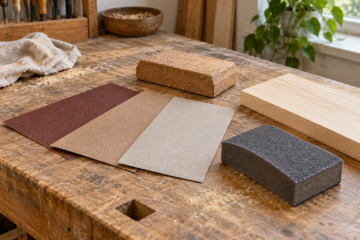
Sand hardwood surfaces through 120, 150, and 180 grit. Stop at 180 or 220 grit; polishing the surface much finer can reduce stain absorption and create a lighter, uneven color. Sand with the grain, especially on the visible front edge. Remove dust with a vacuum and a clean, slightly damp cloth. Avoid soaking the wood, since raised grain will require another sanding pass.
Before staining the entire project, test the stain, conditioner, and topcoat on a scrap from the same board or plywood sheet. Different parts of a tree can absorb color differently. Water-based stains dry quickly and produce less odor, while oil-based stains generally give longer working time and a warmer appearance. Use a gel wood stain when working with blotch-prone maple, pine, or birch, but expect it to obscure more grain than a penetrating stain.
Apply stain in manageable sections, keep a wet edge, and wipe off excess according to the product directions. Heavy deposits in corners can remain tacky for days. After the stain dries fully, protect the shelves with two or three thin coats of polyurethane, water-based floor finish, or another compatible clear finish. Lightly sand between coats with 320 grit if the label permits.
Glue and edge details
Use a quality interior wood glue for attaching solid-wood edging. Spread a thin, even film and clamp until the glue has set. Do not rely on glue alone to join a shelf to drywall. Fasten shelf standards, cleats, or brackets into studs, or use properly rated anchors where studs are unavailable.
Apply stain before installation when possible, but leave glue-joint areas clean if you still need to attach edging. Dried glue on the face prevents stain from penetrating and creates pale spots. Scrape squeeze-out while it is rubbery, then sand lightly without rounding the front edge.
What to buy
Choose red oak plywood for the best balance of price, appearance, and easy staining. Choose maple when a smooth, light-colored finish and better dent resistance justify the added cost. Choose poplar for painted shelves, and pine only when its lower price or rustic character matters more than uniform color. In every case, a solid front edge, adequate support, and careful test pieces will affect the result more than choosing a premium stain.
0 Comments