What's inside
As an Amazon Associate I earn from qualifying purchases. This post may contain affiliate links at no extra cost to you.
A stained entryway console needs wood that looks good under stain, stays flat, and can handle the occasional bag, key, or wet umbrella. The best choice for most projects is a straight-grained hardwood with a reasonably even surface. Oak is the safe default, while ash, walnut, cherry, and maple each suit a different look and budget.
Softwoods such as pine can work, especially for a painted or rustic console, but they are less forgiving under stain. Their uneven density often produces dark blotches, dents, and visible sanding marks. The wood species matters, but careful sanding and a compatible conditioner or washcoat matter almost as much.
As an Amazon Associate we earn from qualifying purchases at no extra cost to you.


Our Top Picks
 TRIBEWOOD Solid Wood Console Table for Entryway11.81 x 62.99 x 31.5 Inches22.7 poundsCheck on Amazon
 TRIBEWOOD Solid Wood Live-Edge Console Table for Entryway63-Inch11.61 x 62.99 x 31.5 inches30.8 PoundsCheck on Amazon
 1/2 pt Minwax 13407 Clear Pre-Stain Wood Conditioner1/2 Pint3 x 3.25 x 3 inches0 PoundsCheck on Amazon
 Varathane Water-Based Ultimate Satin PolyurethaneHalf Pint (Pack of 1)3 x 3 x 3 inches0.64 poundsCheck on Amazon


Best wood species for a stained console
| Wood | Appearance after staining | Workability | Best use |
|---|---|---|---|
| Red oak | Strong grain; accepts medium and dark stains well | Easy to machine and sand | Best all-around value |
| White oak | Quieter grain than red oak; rich brown tones | Easy, though harder on tools | Higher-end modern or traditional consoles |
| Ash | Open grain similar to oak; lighter overall | Easy to work | Light, natural, or muted stains |
| Hard maple | Very subtle grain; can stain unevenly | Hard and prone to burning | Contemporary pieces with light color |
| Cherry | Warm red-brown that darkens with age | Easy to work | Fine furniture and clear finishes |
| Walnut | naturally dark brown; usually needs little or no stain | Easy, but expensive | Premium consoles and dramatic contrast |
| Pine | Blotchy unless prepared carefully | Very easy and inexpensive | Budget, rustic, or painted builds |
Oak is the best overall choice
Red oak is usually the most practical buying decision. It is widely available as boards, plywood, and edge-glued panels, and it takes oil-based and water-based stains more predictably than pine or maple. Its open pores remain visible, giving a stained console clear character instead of a flat painted look.
Choose red oak when you want a traditional furniture appearance and need to control cost. White oak costs more, but its tighter-looking grain and cooler brown color suit modern interiors. White oak also pairs well with clear water-based finishes, which preserve a lighter natural tone.
Avoid mixing red oak solid boards with white oak plywood on the same visible surface. The grain and color can differ enough to look accidental after staining. If a console includes a solid top and veneered panels, buy all visible materials from the same species and test the stain on both.
When walnut, cherry, or ash makes sense
Walnut is the easiest premium option visually because the wood already has a deep, attractive color. A clear finish or a very light brown toner is usually better than a dark stain, which can hide the grain and make the surface look muddy. The downside is price, and wide walnut boards can be difficult to find without defects.
Cherry is smooth, stable, and pleasant to machine. It starts pinkish tan and darkens toward a richer red-brown with exposure to light. Staining cherry dark can exaggerate uneven absorption, so many builders use clear finish or a light gel stain instead.
Ash is a good alternative to oak when you want prominent grain with a lighter base color. It is often less expensive than white oak and takes medium stains well. Use a grain filler only if you want a flatter, less textured surface; otherwise, the open pores are part of its appeal.
Is pine good enough?
Yes, when the console is budget-driven, rustic, or likely to be painted later. A pine top can cost a fraction of a hardwood top, and its lower density makes it easy to cut and sand. The trade-off is durability: pine dents under a dropped object or sharp shoe, and knots can bleed resin through some finishes.
For stained pine, choose clear, kiln-dried boards rather than construction lumber. Construction boards may contain large knots, high moisture, twist, and torn edges. A pre-stain wood conditioner can reduce blotching, but it does not make pine behave like oak.
Test three steps on scrap: conditioner, stain, and topcoat. If the result is still patchy, use a gel stain or apply a thin dewaxed shellac washcoat. A washcoat partially seals the surface, but too much will prevent the stain from penetrating and leave a weak-looking color.
Sanding and surface preparation
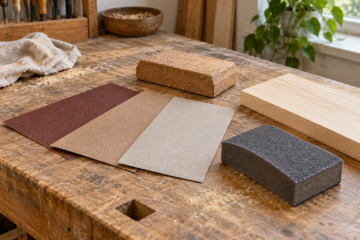
For a new console, start around 120 grit and finish at 180 grit for most hardwoods. Stop at 150 grit on very porous oak or ash if you want stronger stain color. Sanding to 220 grit can burnish the surface and reduce absorption, especially with maple and pine.
Use a random-orbit sander on broad panels, but finish with the grain by hand at the same grit. Remove dust with a vacuum and a clean, slightly damp microfiber cloth. Do not soak the wood or use a tack cloth containing wax; residue can interfere with adhesion.
Ease exposed edges with one or two light passes of 180-grit paper. Sharp edges absorb more stain and finish, creating dark lines that are hard to repair. Break the edge before staining, not after, because sanding through a finished corner exposes bare wood.
Stain and topcoat choices
Oil-based stain usually gives longer working time and emphasizes open grain, but it has a stronger odor and may require overnight drying. Water-based stain dries faster and keeps light woods brighter, though it can raise the grain. If using water-based products, dampen the surface lightly, let it dry, and sand the raised fibers with 220 grit before staining.
For a high-use entryway, protect the stain with two or three thin coats of a water-based polyurethane. Scuff-sand between coats with 320-grit paper after the finish has dried fully. Oil-based polyurethane is also durable and warmer in color, but it can amber pale woods and takes longer to cure.
Apply stain only after confirming the final color on an offcut. The same stain can look dramatically different on pine, oak, and walnut. If you need a reliable, affordable result, choose red oak, sand it evenly to 180 grit, test the stain, and spend more effort on preparation than on exotic lumber.
0 Comments