What's inside
As an Amazon Associate I earn from qualifying purchases. This post may contain affiliate links at no extra cost to you.
The best wood for a stained pantry shelf is usually birch plywood or a straight-grained hardwood such as red oak. Both are stable, widely available, and accept stain more predictably than inexpensive construction pine. The right choice depends on shelf length, budget, and whether you want a rustic or furniture-like appearance.
Pantry shelves do not need exotic wood, but they do need to stay flat under a useful load. Cans, jars, and small appliances are much heavier than dry cereal boxes. A 36-inch shelf loaded with canned food can sag noticeably if it is too thin or lacks a front support.
As an Amazon Associate we earn from qualifying purchases at no extra cost to you.

Our Top Picks
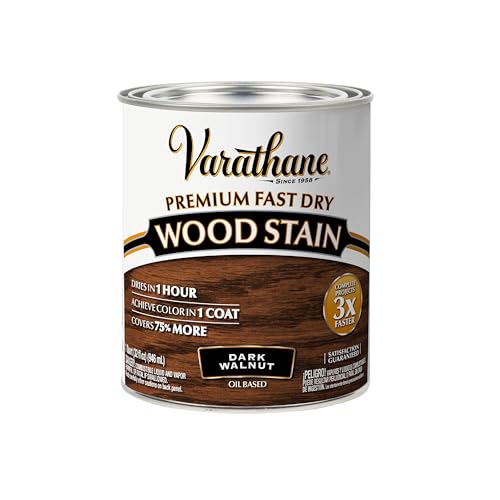
 1/2 pt Minwax 13407 Clear Pre-Stain Wood Conditioner1/2 Pint3 x 3.25 x 3 inches0 PoundsCheck on Amazon
 Varathane Water-Based Ultimate Satin PolyurethaneHalf Pint (Pack of 1)3 x 3 x 3 inches0.64 poundsCheck on Amazon
Best wood choices for a stained pantry shelf
| Wood | Stain results | Strength and stability | Best use |
|---|---|---|---|
| Birch plywood | Even, light color; may need pre-stain conditioner | Very stable; strong for its thickness | Most practical all-purpose shelf |
| Red oak | Bold grain; accepts most stains well | Strong and reasonably stable | Traditional furniture-style pantry |
| Poplar | Blotchy and sometimes greenish under stain | Stable and easy to machine | Painted shelves, not usually stained |
| Pine | Often blotchy, especially with dark stain | Inexpensive but softer and more prone to dents | Budget or rustic shelves |
| Hard maple | Very light; can look uneven with dark stain | Hard and durable | Premium shelves with light stain |
Why birch plywood is the safest choice
Good-quality birch plywood has several thin layers bonded with alternating grain directions. That construction resists cupping and twisting far better than a solid pine board of the same width. It is a strong choice for shelves longer than 30 inches, especially when the pantry has changing humidity.
Choose plywood with at least five layers and a reasonably smooth face veneer. Cabinet-grade 3/4-inch plywood is preferable to rough sheathing plywood. Check the edges before buying; voids in the plies can make edge sanding difficult and leave weak spots.
Birch has a pale, fairly uniform surface, but it is still a diffuse-grain wood that can absorb stain unevenly. A light or medium stain usually looks better than espresso or walnut colors. Test the entire finishing schedule on a scrap cut from the same sheet. A conditioner, washcoat, or gel stain can reduce blotching.
For a clean finished edge, apply iron-on edge banding or glue a solid-wood strip to the front edge. A 1- to 1 1/2-inch hardwood nosing also stiffens the shelf and reduces the visible plywood edge.
When solid oak or another hardwood makes sense
Red oak is easier to stain than birch and gives a strong, obvious grain pattern. It is a good match for oak cabinets or a pantry where the shelves are part of the visual design. Three-quarter-inch oak boards work well at shorter spans, but select boards carefully for straightness and avoid pieces with large knots.
Hardwood shelves cost more, and wide solid boards can move across their width as indoor humidity changes. Do not tightly trap a solid shelf between two walls. Leave roughly 1/16 inch of clearance on each side, or use a design that allows seasonal movement.
Hard maple is hard and wear-resistant, but it is not automatically a better staining wood. Its tight grain can produce a pale, uneven result with dark oil stain. It looks more predictable with a clear finish or a very light dye.
When cheaper pine is fine
Pine is perfectly serviceable for a pantry if the shelves are short, the rustic look is acceptable, and the budget matters more than a uniform stain. It is easy to cut and widely available in 1×12 boards. The trade-off is that pine dents easily and commonly develops dark and light patches under liquid stain.
For pine, avoid choosing the darkest stain as a first attempt. Sand to 150 or 180 grit, apply a compatible wood pre-stain conditioner, then wipe on a thin coat of stain. Gel stain is another practical option because it sits closer to the surface and is less likely to flood soft areas.
Thickness, span, and shelf support
Use 3/4-inch material for most pantry shelves. A shelf 24 inches wide and 30 inches or less between supports is usually reasonable for normal pantry storage. For spans around 36 inches, add a solid front nosing, a center support, or both. Do not rely on a thin 1/2-inch panel for heavy cans unless it has frequent support underneath.
A front strip about 1 1/2 inches tall, glued and nailed or screwed to the shelf edge, greatly improves stiffness. Keep the strip flush with the top surface so jars do not rock. If the shelf is supported by cleats, fasten the cleats into studs where possible; drywall anchors are not a substitute for structural support.
Prepare the wood before staining
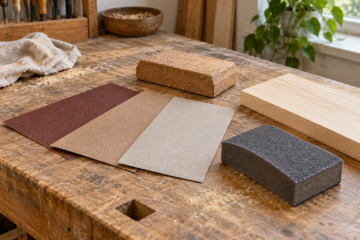
Sand all surfaces evenly. Start around 120 grit if the board is rough, then move to 150 and finish at 180 grit. Sanding one area to 220 grit while leaving another at 120 can produce visible differences in stain absorption. Break sharp corners with a light sanding pass rather than rounding them heavily.
Remove dust with a vacuum and a clean, slightly damp cloth. Do not soak plywood edges. Apply stain to a test piece first, including any edge banding or glued nosing. Glue squeeze-out is a common failure: stain will not penetrate those sealed spots, leaving pale streaks. Scrape dried glue, then sand the area before finishing.
For a pantry, a cured film finish is more useful than stain alone. Stain provides color but little protection from spills, abrasion, or sticky food residue. Apply two or three thin coats of a water-based polyurethane or an oil-based polyurethane, following the label’s recoat time. Lightly sand between coats with 320-grit abrasive when required.
Choose the finish for pantry use
Water-based polyurethane keeps light woods from turning amber and dries faster, making it convenient for a weekend project. Oil-based polyurethane usually gives a warmer color and may level well, but it smells stronger and requires longer ventilation. Either finish must be fully cured before loading the pantry; “dry to the touch” is not the same as fully hardened.
Do not finish only the visible top. Coat the bottom, edges, and especially end grain with the same number of coats. Equal coverage helps reduce uneven moisture exchange and protects against spills that run over the front. Leave the shelves empty until the finish no longer feels tacky or smells strongly of solvent.
For most buyers, 3/4-inch birch plywood with a hardwood front edge is the best balance of price, stability, and appearance. Choose oak when its pronounced grain suits the room. Choose pine when low cost and a casual look matter more than a perfectly even stain.
0 Comments