RP Woodworks

  • Home
  • Reviews
  • Projects
  • Tools
  • Woodworking Techniques
  • About

Finish Problems & Fixes

Diagnosing and fixing blotchy stain, cloudy or sticky finishes, bleed-through, lap marks and peeling.

Finish Problems & Fixes

How to Remove Blue-Black Iron Stains from Wood and Veneer with Oxalic Acid

Blue or blue-black staining on veneer is almost always an iron stain, and oxalic acid is the right fix. Brush a solution of roughly 1 to 2 ounces of crystals per quart of warm water over the whole veneered panel, let it work, then rinse it off thoroughly. Veneer adds Read more

By admin, 1 dayOctober 4, 2026 ago
Finish Problems & Fixes

How to Remove Rubber Rug Backing Stuck to Polyurethane Wood Floors

Rubber rug backing stuck to a polyurethane floor usually comes off without hurting the finish if you start gentle and only step up when you have to: dry-scrape with plastic, then try warm soapy water, then mineral spirits, and only then a citrus-based adhesive remover. Don’t use acetone, lacquer thinner, Read more

By admin, 1 dayOctober 4, 2026 ago
Finish Problems & Fixes

How to Fix Lacquer Blush (White Haze in a Fresh Finish)

To fix lacquer blush, reopen the cloudy top layer so the trapped moisture can escape. Start by giving the piece warm, dry air and some time. If the haze is still there, mist on lacquer retarder or an aerosol blush remover. Sand only as a last resort. Fresh blush usually Read more

By admin, 1 dayOctober 4, 2026 ago
AI-generated editorial illustration of wood paint
Finish Problems & Fixes

How to Seal Knots So They Do Not Bleed Through Paint

Why Knots Bleed Through Paint Knots bleed because they are saturated with resin and pitch. In softwoods like pine, spruce, and fir, the wood around a knot can contain 5 to 10 times more resin than clear grain. That resin is not dry, even if the board feels dry to Read more

By , 1 weekSeptember 25, 2026 ago
AI-generated editorial illustration: wood glue bottle beside an edge-glued board assembly and spreader.
Finish Problems & Fixes

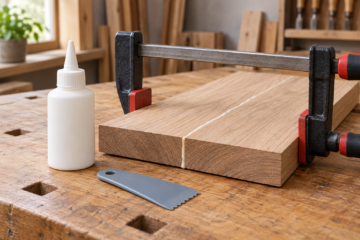
How to Remove Dried Wood Glue Before Finishing

Why Dried Glue Ruins a Finish Dried wood glue doesn’t absorb stain or finish the way wood does. Even a thin, nearly invisible smear of PVA will block penetration and show up as a pale blotch under stain, or as a fisheye or dull spot under clear oil or lacquer. Read more

By , 1 weekSeptember 25, 2026 ago
AI-generated editorial illustration: wood glue bottle beside an edge-glued board assembly and spreader.
Finish Problems & Fixes

How to Prevent Glue Squeeze-Out from Staining Bare Wood

Why Squeeze-Out Ruins Your Finish Glue squeeze-out itself doesn’t stain wood. It seals it. Most wood glues, especially yellow PVA like Titebond I, II, and III, soak into end grain and surface pores and dry as a clear plastic film. That film blocks stain, dye, and oil finish from penetrating. Read more

By , 1 weekSeptember 25, 2026 ago
AI-generated editorial illustration of wood epoxy
Finish Problems & Fixes

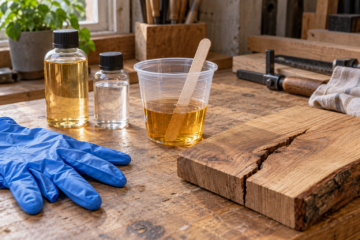
How to Apply Epoxy to Cracked Wood Without Dark Glue Lines

Dark glue lines in epoxy-filled cracks aren’t caused by the epoxy itself. They’re caused by what the epoxy does to the wood around it. Clear epoxy soaks into end grain and micro-fibers along the crack walls, wetting them the same way water darkens wood. If you flood a raw crack Read more

By , 1 weekSeptember 25, 2026 ago
AI-generated editorial illustration: brush applying a clear wood finish to a board beside an unfinished offcut.
Finish Problems & Fixes

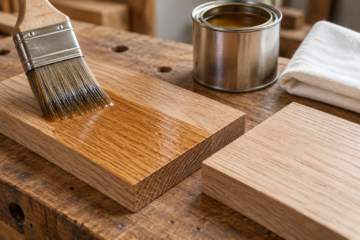
How to Avoid Uneven Sheen on a Large Wood Panel

Uneven sheen on a large wood panel usually comes from uneven absorption, uneven film thickness, or inconsistent rubbing during the final finish. A small sample can look perfect while a 4-by-8-foot panel shows dull stripes, glossy patches, lap marks, and cloudy areas. The solution is not simply “apply another coat.” Read more

By , 1 weekSeptember 25, 2026 ago
AI-generated editorial illustration: brush applying a clear wood finish to a board beside an unfinished offcut.
Finish Problems & Fixes

How to Apply a Clear Finish Without Darkening Pale Wood

Pale woods such as maple, ash, birch, white oak, and holly can change dramatically under a clear finish. The wrong product can add a yellow or amber cast, make the grain look muddy, or darken end grain more than the surrounding surface. If you want the wood to stay close Read more

By , 1 weekSeptember 25, 2026 ago
AI-generated editorial illustration of wood paint
Finish Problems & Fixes

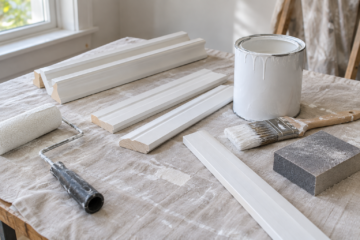
How to Prevent Raised Edges When Painting Wood Panels

Raised edges usually appear where a panel’s face meets its edge, where two boards meet, or where a veneer layer has started to lift. Paint makes the problem more obvious by forming a hard film across a soft or uneven area. As the wood moves, the joint telegraphs through, and Read more

By , 1 weekSeptember 25, 2026 ago

Posts pagination

1 2 … 9 Next
Recent Posts
  • Best Woodworking Clamps: Which Types to Buy and How Many You Need
  • Best Pocket Hole Jigs in 2026: Kreg, Massca and Milescraft Compared
  • Best Dovetail Jigs: Fixed, Multi-Template and Variable-Spacing Options Explained
  • Best Compact Wood Routers: Corded vs Cordless Picks for Edge Work and Trimming
  • How to Repair a Wood Split Caused by a Screw (Even in Thin Teak)
Recent Comments
No comments to show.
Archives
  • October 2026
  • September 2026
Categories
  • Clear Coats & Topcoats
  • Finish Problems & Fixes
  • Gift Guides
  • Grain Filling & Sealing
  • Guides
  • Oils & Waxes
  • Painting & Priming
  • Sanding & Surface Prep
  • Shop Setup & Safety
  • Staining & Dyes
  • Tool Troubleshooting
  • Tools
  • Wood Finishing
  • Wood Species & Lumber
  • Woodworking Techniques
Hestia | Developed by ThemeIsle