What's inside
- What Famowood Wood Filler Actually Is
- Performance by Repair Type
- Sanding and Finishing Performance
- Specs and Comparison: Famowood vs. Common Alternatives
- Decision Matrix: Which Filler Matches Your Situation
- Coverage and Cost Per Repair Calculation
- Durability and Ownership Realities
- Limitations and When Another Filler Wins
- How to Get the Best Result With Famowood
- FAQ
- What Famowood Wood Filler Actually Is
- Performance by Repair Type
- Sanding and Finishing Performance
- Specs and Comparison: Famowood vs. Common Alternatives
- Decision Matrix: Which Filler Matches Your Situation
- Coverage and Cost Per Repair Calculation
- Durability and Ownership Realities
- Limitations and When Another Filler Wins
- How to Get the Best Result With Famowood
- FAQ
As an Amazon Associate I earn from qualifying purchases. This post may contain affiliate links at no extra cost to you.
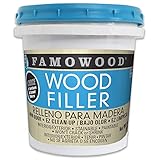
Famowood Wood Filler is best for small to medium stainable repairs like nail holes, shallow cracks, and grain defects where you need a hard, sandable fill that takes stain and finish like real wood, but it is not the right choice for deep structural repairs, flexible exterior joints, or large voids where a two-part epoxy filler will hold up better.
As an Amazon Associate we earn from qualifying purchases at no extra cost to you.


Our Top Picks


What Famowood Wood Filler Actually Is
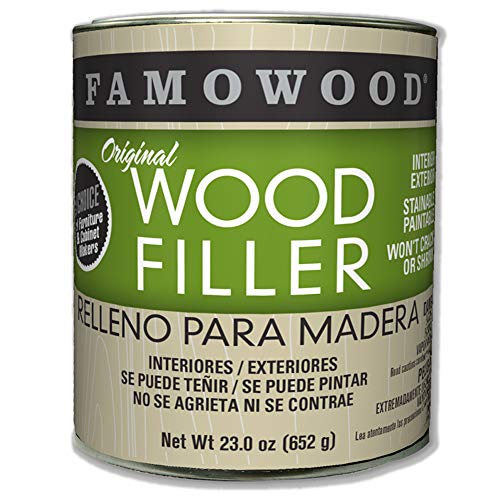
Famowood Original Wood Filler is a solvent-based filler made with real wood flour and an acetone carrier, not a lightweight vinyl spackle. That formulation is why it behaves so differently from latex or water-based fillers. It goes on with a putty-like consistency, hardens through solvent evaporation, and cures to a dense, wood-like solid that can be drilled, planed, sanded, and stained.
Famowood also sells a Latex Wood Filler version, which is water-based, low-odor, and easier to clean up. This review focuses on the Original solvent-based formula, which is the product most woodworkers mean when they search for famowood wood filler, because its finishing performance is superior to the latex version. If you need quick indoor touch-ups without ventilation, the latex version makes sense. If you need the best stain match and hardness for fine furniture or trim, choose the Original.
Performance by Repair Type
Nail Holes and Pin Holes
This is where Famowood excels. For 18- to 16-gauge brad and finish nail holes, it packs cleanly without shrinking back into a dimple after drying. Because it dries hard rather than rubbery, you can overfill slightly, let it cure 15-30 minutes depending on depth and temperature, and sand flush without the filler gumming up or pulling out of the hole. It also holds stain far better than vinyl-based fillers, especially in natural, oak, and walnut tints. For painted trim, any filler will work, but for clear-coated or stained trim, Famowood leaves a less obvious repair.
Cracks and Checks Under 1/4 Inch
For hairline cracks, grain checks, and small splits in hardwood, Famowood provides good adhesion and a crisp edge that does not feather or crumble when sanded. The key is application in thin layers. Deep cracks should be filled in 1/8-inch to 1/4-inch lifts, allowing each lift to flash off before adding the next. A single deep fill can trap solvent underneath, which extends dry time and can cause pinholes or shrinkage in the center. For cracks that move seasonally, such as those in wide flat-sawn boards, any rigid filler can eventually hairline crack again. That is not unique to Famowood.
Larger Voids, Knots, and Edge Damage
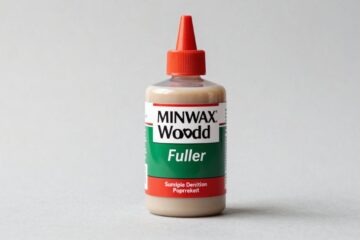
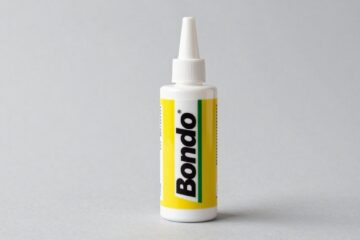
For repairs larger than about 1/2 inch wide and 1/4 inch deep, such as missing corners, large knot holes, or routed-out defects, Famowood is usable but not ideal. It will fill the void, but large masses cure slower, shrink more, and are more prone to cracking than a two-part epoxy wood filler. Epoxy fillers like Minwax High Performance Wood Filler or Bondo Wood Filler cure by chemical reaction, remain structurally strong in thick sections, and resist re-cracking. If the repair must support screws, bear weight, or survive outdoor exposure, an epoxy is the more durable option.
Sanding and Finishing Performance
Sanding is a clear strength. Once fully cured, Famowood sands to a fine, powdery dust and feathers cleanly without the soft, fuzzy edge that latex fillers leave. It does not clog sandpaper as quickly as vinyl fillers and responds well to 120-grit leveling followed by 180- to 220-grit finishing for stain prep.
Stainability is better than most competitors, but still not identical to surrounding solid wood. Because the filler is denser and less porous than long grain, it tends to absorb stain slightly lighter and more uniformly. To get the closest match:
- Choose a Famowood color slightly lighter than your target wood species, then tint with oil-based stain after curing if needed. Going too dark initially makes it impossible to lighten.
- Seal the surrounding wood with a thin wash coat of shellac or sanding sealer before staining the repair if you are trying to prevent the filler from staining much darker than the wood.
- Always test stain on a scrap sample with the same filler fill and sanding sequence. Famowood offers colors including Natural, Pine, Oak, Ash, Maple, Walnut, Red Oak, Cherry, and Mahogany.
For clear finishes, lacquer, polyurethane, and Danish oil adhere well. Water-based topcoats also adhere, but raise grain around the repair more than on the filler itself, so final sand after the first topcoat with 320-grit helps level the transition.
Specs and Comparison: Famowood vs. Common Alternatives
Product listings rarely explain how these fillers differ once they are in the shop. This table compares what matters for application and ownership.
| Feature | Famowood Original (Solvent-Based) | DAP Plastic Wood-X (Solvent-Based) | Minwax High Performance (2-Part Epoxy) | Timbermate Water-Based |
|---|---|---|---|---|
| Base / Carrier | Acetone, real wood flour | Acetone/heptane, wood fibers | Polyester resin + hardener | Water, wood flour |
| Available Sizes | 3.25 oz stick, 6 oz tube, 12 oz (pint), 24 oz (quart) | 3.25 oz, 6 oz, 16 oz, 32 oz | 12 oz, 32 oz, 1 gal kit | 8 oz, 32 oz, 4 kg |
| Dry to Sand (1/8″ fill at 70F) | 15-30 minutes | 20-45 minutes | 10-20 minutes after mixing | 30-60 minutes |
| Shrinkage in Deep Fill | Low to moderate, layer for 1/4″+ | Low to moderate, layer for 1/4″+ | Very low, single pour to 1″+ | Moderate, requires multiple layers |
| Stainability | Very good, takes oil stain | Good, slightly less uniform | Poor, does not absorb stain; must paint or tint | Very good, excellent color range |
| Odor / Cleanup | Strong solvent odor; acetone cleanup, needs ventilation | Strong odor; acetone cleanup | Chemical odor; acetone before cure | Low odor; water cleanup |
| Best For | Stained interior furniture, trim, cabinets | General interior repairs, doors/trim | Structural, exterior, large voids, rot repair | Interior fine grain filling, low-VOC shops |
Decision Matrix: Which Filler Matches Your Situation
Use your project type, finish, and workspace to choose quickly rather than comparing brands in the abstract.
| Your Situation | Best Choice | Why |
|---|---|---|
| Stained hardwood furniture, nail holes and small cracks, well-ventilated shop | Famowood Original | Hardest, most stainable finish in thin repairs |
| Painted cabinets or MDF, any shop, want easy water cleanup | Timbermate or latex filler | Low odor, easy sanding, paint hides stain mismatch |
| Large knot, chipped edge, or screw must bite into repair | Two-part epoxy (Minwax High Performance / Bondo Wood Filler) | Structural strength and no shrinkage in bulk |
| Exterior door, window sill, or rot-prone area | Two-part epoxy | Water resistance and flexibility better than solvent fillers |
| Small apartment or no ventilation, quick interior touch-up | Famowood Latex or Timbermate | Low odor, soap and water cleanup, safer indoors |
| You need to fill open grain over a large surface (oak pores) | Grain filler, not wood filler | Wood filler is too thick and will not level across pores |
Coverage and Cost Per Repair Calculation
Famowood cans list weight, not coverage, which makes it hard to budget. Here is a practical estimate for the Original formula.
A 12 oz (pint) can of Famowood Original contains roughly 20-22 cubic inches of workable filler. A typical 18-gauge brad hole filled proud and sanded flush uses about 0.02 to 0.03 cubic inches. A 6-inch long, 1/8-inch wide, 1/8-inch deep crack uses about 0.09 cubic inches.
Worked example: If you have 100 nail holes (0.025 cu in each = 2.5 cu in) plus 15 linear feet of 1/8 x 1/8 inch cracks (180 inches x 0.0156 sq in = 2.8 cu in), total fill is about 5.3 cubic inches. One 12 oz can covers that with material left over, even after waste on the putty knife. For general market ranges in 2026, expect a pint to run roughly $15 to $22 and a quart $24 to $35, making the cost per nail hole repair well under $0.25 in material. Once opened, shelf life is the real cost driver, not coverage.
Durability and Ownership Realities
What wears out first is not the cured repair but the filler in the can. The acetone carrier evaporates quickly every time the lid is off. If the can thickens to a stiff paste, it will not level or bond well. Keep the rim clean, close the lid immediately after scooping, and store upside down briefly to create a better seal. Thin only with a small amount of acetone, not water or paint thinner, and only enough to restore a creamy peanut-butter consistency. Over-thinning weakens hardness and increases shrinkage.
Common mistakes to avoid:
- Applying below 50F or in high humidity. Cold slows evaporation and can trap solvent, leaving a soft center that later sinks.
- Sanding too early. If the filler still smells strongly of acetone or feels cool to the touch, it is not fully flashed. Sanding then rolls the edges and leaves a concave fill.
- Using a single thick application for a deep void. Layering prevents internal shrinkage voids and speeds total cure time.
- Spreading over dust or finish residue. Famowood bonds best to bare, dry wood. Wipe with a vacuum and a dry tack cloth. Do not use a damp rag right before application because the solvent system does not tolerate moisture under the fill.
Cleaning tools requires acetone while the filler is still wet. Once cured, it must be scraped or sanded off. Nitrile gloves and a respirator with organic vapor cartridges are recommended in enclosed shops, and cross-ventilation is essential.
Limitations and When Another Filler Wins
Famowood’s limitations come from being a rigid, evaporative filler. It does not flex with wood movement, so wide exterior joints that expand and contract will eventually show a hairline at the joint line. It is not rated as a structural filler, so it should not be used to rebuild load-bearing sections of stair treads, chair legs, or window sills subject to standing water. It also cannot be used to fill over 1/2-inch deep in one lift without risk of cracking.
Choose Timbermate or another water-based filler if you prioritize low odor and infinite tints for interior work where hardness is less critical. Choose a two-part epoxy if you need strength in depth, exterior durability, or the ability to mold and shape a missing profile. For painted work where stain match does not matter, the cheaper latex filler will perform adequately and is easier to live with.
How to Get the Best Result With Famowood
For the cleanest repair, work in this order: Sand the surrounding area to 120-grit and remove dust. Stir the filler thoroughly – the wood flour settles. Apply with a flexible putty knife, pressing firmly into the defect to eliminate air, then leave it slightly proud. Let it cure until acetone odor is faint and the surface is uniformly hard. Sand flush starting with 120-grit on a flat block, then finish with 180- to 220-grit before staining. If the color is too light, apply oil-based stain, let it dwell 2-3 minutes on the repair, then wipe. Seal and topcoat as normal.
FAQ
Can you stain Famowood to match any wood species?
It is among the most stainable fillers available, but it will never absorb stain exactly like surrounding long grain. You will get the closest match by choosing a close base color, sanding to the same grit as the surrounding wood, and testing stain on scrap before committing to the project.
Is Famowood waterproof for exterior use?
The cured filler is water-resistant and can be topcoated for exterior trim, but it is not intended for ground contact, rot repair, or areas with prolonged water exposure. For exterior structural repairs, a two-part epoxy wood filler is more reliable.
How do you keep Famowood from drying out in the can?
Minimize open time, clean the lid channel before closing, and add a few drops of acetone only if it has thickened. Storing in a cool, stable temperature helps. Once the filler becomes crumbly and will not thin smoothly, it should be replaced.

0 Comments