What's inside
As an Amazon Associate I earn from qualifying purchases. This post may contain affiliate links at no extra cost to you.
A window stool is a high-visibility surface that gets sunlight, condensation, plant pots, and the occasional wet glass. For a stained finish, the best stock is straight-grained, stable, and easy to sand—not simply the hardest wood you can buy. For most projects, clear poplar is the value choice if you plan to use a dark or opaque-looking stain, while cherry, white oak, and walnut make more predictable choices when the grain itself should show.
As an Amazon Associate we earn from qualifying purchases at no extra cost to you.


Our Top Picks
 EWWS12 Colonial Windowsill 3-1/2" W x 3/4" Stool.42 inches42 x 3.5 x 0.75 inches1.68 poundsCheck on Amazon
 1/2 pt Minwax 13407 Clear Pre-Stain Wood Conditioner1/2 Pint3 x 3.25 x 3 inches0 PoundsCheck on Amazon
 Varathane Total Control Dark Walnut Gel StainHalf Pint (Pack of 1)2.88 x 2.88 x 2.97 inchesCheck on Amazon
 Varathane Water-Based Ultimate Satin PolyurethaneHalf Pint (Pack of 1)3 x 3 x 3 inches0.64 poundsCheck on Amazon
What matters in a stained window stool
First, distinguish a stool from the apron below it: the stool is the horizontal ledge that projects into the room. It needs enough thickness and support to resist bending, but the wood species mostly affects appearance, movement, and how evenly the stain takes. A typical interior stool is about 3/4 to 1-1/4 inches thick; wider projections or long unsupported spans may need thicker stock or support underneath.
Wood moves as humidity changes. A wide board can cup or open a joint if it is installed tight against the jambs or fastened in a way that prevents seasonal movement. Choose kiln-dried stock, acclimate it indoors for several days, and leave a small fitting allowance at the ends. Before cutting, inspect for twist, knots, end checks, and grain that runs sharply across the stool’s width.
Best species for a stained stool
| Wood | Stain behavior | Best use | Main trade-off |
|---|---|---|---|
| Cherry | Usually even; darkens naturally with light | Warm, refined furniture-style finish | Costs more and changes color over time |
| White oak | Strong grain; takes many stains well | Durable, visible grain and medium-to-dark tones | Open pores remain visible; heavy grain can dominate |
| Walnut | Rich color; often needs little stain | Dark, natural-looking finish | Higher cost; stain can obscure its natural color |
| Poplar | Can turn blotchy or greenish under stain | Budget projects with dark stain or paint-like finish | Uneven color is hard to correct |
| Soft maple | Can blotch, especially with dark stain | Light or medium color after careful preparation | May need conditioner or a washcoat |
| Pine | Often blotches; knots may bleed resin | Low-cost, rustic work | Soft surface dents easily and color is less predictable |
Which wood to buy
White oak is the safest all-around pick when you want prominent grain. It is hard-wearing, widely available, and generally takes stain more consistently than pine or poplar. Its open pores produce a pronounced texture, though: a dark stain can make the grain look especially bold. If you want a smooth, quiet surface, choose another species or consider grain filler before finishing.
Cherry is a good choice for a warm, even-looking stool. It normally needs only a clear finish or a light stain, and it deepens with exposure to light. Do not expect a freshly stained sample to stay exactly that color. If matching existing trim is important, compare finished samples in the room rather than relying on a small store sample.
Walnut often looks best with little or no stain. A clear protective finish preserves its natural dark color. Staining walnut darker can make the grain harder to read without adding much benefit, so spend the money on a well-matched board instead of extra color.
Poplar is fine when budget matters and a near-black or very dark finish is acceptable. It is commonly used for painted trim, but its green, gray, and purple streaks can show through transparent stain. If you choose it, test the exact board and stain together before installation. For a stained finish, a pre-stain wood conditioner can reduce uneven absorption on blotch-prone wood, but it may also lighten the final color.
Buy and prepare the board
Buy a board wide enough to cut the stool from one piece if possible. Glue-ups can work, but a seam near a window edge may be obvious after staining. Lay the board flat and sight along both faces. Avoid large knots near the front edge, where a defect is more likely to chip or catch a sleeve. For a long stool, favor straight grain and reject stock that is already cupped; finish will not straighten it.
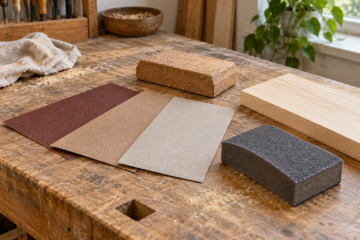
Cut and dry-fit the stool before sanding. Keep the top flat, ease exposed edges with a small roundover or a few passes of sandpaper, and avoid rounding the back edge where it meets the window. Sand progressively, typically from 120 to 180 grit; going much finer can reduce stain absorption and make the color lighter. Remove dust carefully, then test the full finishing schedule on an offcut from the same board.
Stain and protect it
Apply stain evenly and wipe off the excess according to the label. Leaving puddles or a thick, tacky film can cause an uneven surface and slow drying. If the sample turns blotchy, do not simply add more stain. Try a conditioner, a compatible sanding sealer or washcoat, or a gel stain, and retest. A gel wood stain sits nearer the surface and can make color easier to control, but it may look less like a traditional penetrating stain.
For a window stool, stain alone is not protection. Use a clear topcoat rated for interior trim and follow its recoat and cure times. Water-based polyurethane stays relatively clear; oil-based polyurethane adds warmth but can amber lighter woods. Apply thin coats, sand lightly between coats only when the product calls for it, and keep finish out of the joint at the back. A water-based interior polyurethane is a practical option when you want to preserve a pale or neutral stain color.
Do not install a fresh-finished stool while the coating is still soft. Follow the product’s cure guidance before placing pots or cleaning the surface; “dry to touch” does not mean fully cured. If condensation is common, wipe it up promptly and seal all faces, including the underside and cut ends, to reduce uneven moisture uptake.
0 Comments