What's inside
As an Amazon Associate I earn from qualifying purchases. This post may contain affiliate links at no extra cost to you.
Uniform gray stain is harder to achieve than it looks. Gray pigments expose differences in porosity, grain direction, and sapwood, so two boards from the same project can finish noticeably different. The best wood species are relatively stable in color, have consistent pore structure, and do not produce strong yellow or reddish undertones beneath the gray.
For most projects, white oak is the safest choice for a predictable gray result. Hard maple can also work when a smooth, low-grain appearance is wanted, while poplar is an inexpensive paint-grade option that can produce a soft gray after careful preparation. Pine is cheap and widely available, but it is usually the least uniform without conditioner, sealing, or a diluted stain schedule.
As an Amazon Associate we earn from qualifying purchases at no extra cost to you.


Our Top Picks
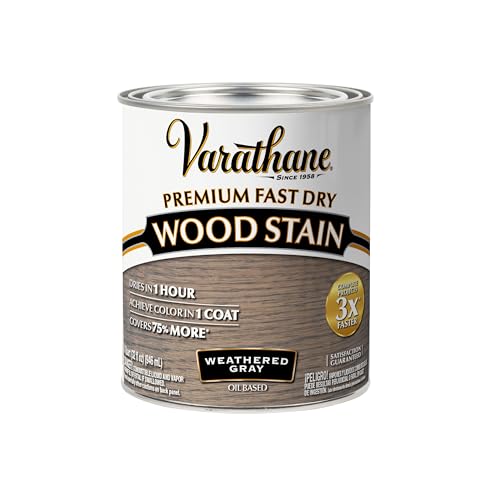
 Varathane Total Control Smoke Gray Gel StainHalf Pint (Pack of 1)2.88 x 2.88 x 2.97 inchesCheck on Amazon

Best wood species for a uniform gray stain
| Wood species | Appearance under gray | Uniformity | Best use |
|---|---|---|---|
| White oak | Neutral gray with visible grain | Very good | Furniture, floors, doors, cabinets |
| Hard maple | Light, smooth, sometimes slightly blue-gray | Good with proper sanding | Modern furniture and cabinets |
| Poplar | Muted gray, with possible green or brown areas | Fair | Paint-grade parts and budget projects |
| Alder | Soft gray with modest grain | Good | Cabinet doors and indoor furniture |
| Pine | Rustic gray with dark knots and blotches | Fair to poor | Casual, reclaimed, or low-cost projects |
| Red oak | Gray mixed with pink, tan, or brown undertones | Good, but less neutral | When a warmer weathered look is acceptable |
White oak: the most reliable overall choice
White oak has open, fairly consistent pores that accept pigment without the severe blotching common in softwoods. Its natural tan color warms gray stain slightly, but the result usually remains neutral enough for furniture, cabinets, and flooring. The prominent grain does not disappear; instead, it gives the gray color definition.
Quarter-sawn white oak produces a more figured appearance, including rays and flecking. Plain-sawn boards look more conventional and are easier to match. For a uniform project, buy boards from the same supplier and, when possible, from the same bundle. Different boards can vary in sapwood content and grain even when they are all labeled white oak.
Use a water-based gray wood stain when you want a cooler, cleaner gray and faster drying. Oil-based stain generally adds more amber to the wood and can make white oak look greige rather than true gray.
Maple and alder for smoother, quieter grain
Hard maple is naturally pale, so it does not fight the gray color with a strong red or orange background. Its tight grain can produce a clean contemporary finish. The drawback is uneven absorption: end grain, sand-throughs, and areas with changing grain direction may become darker than the surrounding surface.
Maple benefits from a careful final sanding, usually to 180 or 220 grit. Sanding much finer than 220 can close the surface and make stain sit on top rather than absorb evenly. A thin coat of sanding sealer or a compatible pre-stain conditioner can improve consistency, but it may also reduce color intensity. Test both methods on scrap before committing.
Alder is softer and more absorbent than maple, but its grain is less visually busy. It is a good middle ground for cabinet parts and furniture where you want some natural texture without the strong cathedral pattern of oak. Alder can still blotch, particularly around knots and end grain, so it should not be treated as automatically uniform.
Poplar and pine: inexpensive, but more variable
Poplar is often the cheapest species that can produce an acceptable painted or stained gray finish. It sands easily and has a subdued grain. Its natural color varies from creamy white to green, gray, and purple, however, and those areas can remain visible beneath a transparent stain. Use poplar when a slightly cloudy, weathered appearance is acceptable or when the project will receive a tinted topcoat.
Pine is a reasonable choice for shelves, wall accents, and rustic furniture, especially when cost matters more than perfect matching. Its earlywood absorbs stain quickly while its dense latewood resists it. Knots can turn very dark, and resin may interfere with drying or cause glossy spots. A pre-stain wood conditioner helps, but it will not make pine look like oak or maple.
For the most even pine result, choose clear, knot-free boards, sand all pieces identically, and apply a thin stain coat. Wipe off excess after the same amount of time—usually two to five minutes. Leaving stain on one board for ten minutes and wiping another immediately is a common cause of mismatched color.
Preparation determines the final color
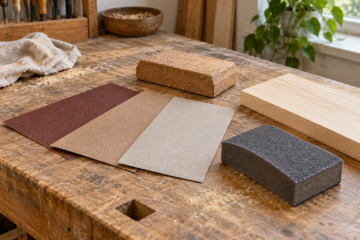
Sand through the grits instead of jumping directly to a fine abrasive. A practical schedule is 100, 120, 150, and finally 180 grit for most furniture. Remove mill marks completely; stain will emphasize them. Break sharp edges lightly with 180-grit paper because exposed end grain absorbs more pigment and becomes a dark stripe.
Vacuum the surface and wipe it with a clean, dry cloth. Avoid soaking unfinished wood with water unless you are deliberately raising the grain for a water-based finish. Dust left in open pores can create dark specks that are difficult to remove after staining.
Make a sample using the actual species, sanding schedule, stain, and topcoat. Apply at least two coats or color variations on a board large enough to show several grain patterns. Gray often changes after the finish dries: an oil finish may add amber, while some water-based finishes can make the color appear cooler. A gray stain sample set is useful when comparing blue-gray, charcoal, and weathered-gray formulas.
Choose the wood for the look, not just the color
If you want visible grain and the best chance of even color, buy white oak. If you want a smoother modern surface, choose hard maple and accept the extra preparation. Alder is a practical cabinet choice, while poplar and pine are fine when the budget is limited and some variation is part of the design.
Finish with a compatible clear coat after the stain has dried fully. For a cooler gray, a water-based polyurethane usually changes the color less than an oil-based finish. Always follow the stain manufacturer’s recoat time; applying clear finish too soon can lift pigment, create streaks, or leave soft patches. Uniform gray comes from matching the boards, preparation, application time, and topcoat—not from the stain alone.
0 Comments