What's inside
As an Amazon Associate I earn from qualifying purchases. This post may contain affiliate links at no extra cost to you.
A natural-looking color wash should tint the wood without hiding its grain. The species matters as much as the stain or paint: open-grained woods absorb unevenly, while tight-grained boards can leave a smoother, more predictable film. The best choice depends on whether you want subtle warmth, a weathered gray, or a pale painted effect.
As an Amazon Associate we earn from qualifying purchases at no extra cost to you.


Our Top Picks
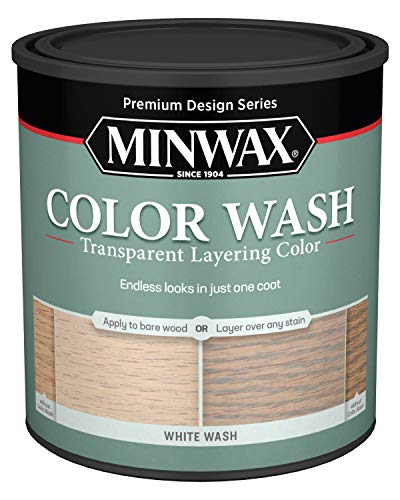 Minwax Color Wash Transparent Layering Color1 Quart (Pack of 1)4.25 x 4.25 x 4.88 inches2.5 PoundsCheck on Amazon
 Minwax 400140000 Wash Transparent Layering Color1 Quart4.25 x 4.25 x 4.88 inches0 poundsCheck on Amazon
 Varathane Less Mess Whitewash Wood Stain & Applicator4 Ounce (Pack of 1)1.75 x 1.75 x 6.5 inches0.25 PoundsCheck on Amazon
 Varathane Water-Based Ultimate Matte PolyurethaneQuart (Pack of 1)9.8 x 5.5 x 6.3 inches2.2 poundsCheck on Amazon


Best species at a glance
| Wood species | How it takes a wash | Best color direction | Main drawback |
|---|---|---|---|
| White oak | Strong grain, fairly even absorption | White, gray, beige, natural brown | Bold grain can dominate pale colors |
| Red oak | Absorbs readily and shows strong pores | Warm white, tan, honey, muted brown | Pink or orange undertones show through |
| Ash | Open grain with a lighter base | White, driftwood gray, pale blue | Can look streaky without careful application |
| Pine | Soft earlywood absorbs more than dense growth rings | Whitewash, cream, light gray | Blotching and yellowing are common |
| Poplar | Fine, subdued grain and fairly smooth surface | Soft white, sage, blue-gray, painted washes | Greenish areas and uneven natural color |
| Beech or maple | Tight grain and low visual contrast | Very subtle white or tinted wash | Can look more painted than wood-grained |
White oak and ash for visible, natural grain
White oak is the safest premium choice for a convincing color wash. Its prominent grain remains visible under thin white, taupe, gray, and beige finishes, and it usually absorbs more evenly than pine. A wash on quartersawn white oak can look especially refined because the ray flecks add variation without requiring a dark stain.
Ash gives a similar open-grained appearance at a lower price in many markets. Its lighter base makes it easier to create a pale finish without using as much pigment. Ash is a good pick for a driftwood or Scandinavian-style wash, but the open pores can catch excess finish. Keep the coat thin and wipe across the grain to avoid filling some pores while leaving others dark.
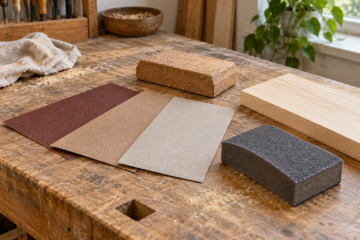
For either species, sand to 150 or 180 grit. Sanding much finer than 180 can reduce absorption and make the wash sit on top in shiny patches. Use a water-based wood wash or whitewash stain when you want a transparent tint and fast drying time.
Red oak for warm washes
Red oak is inexpensive, widely available, and easy to stain, but it is not a neutral canvas. Its pink, salmon, and orange undertones remain visible under light colors. That makes it a good match for warm white, honey, muted tan, and aged brown washes. It is a poor choice if the goal is a clean, cool gray or crisp white.
Red oak’s large pores create strong contrast. A thin wash highlights the grain, while a heavier coat can collect in the pores and look striped. Test the exact finish on an offcut because a color that looks beige on white oak may turn peach or orange on red oak.
Pine when cost matters
Pine is often the cheapest option and is perfectly acceptable for rustic furniture, wall boards, shelves, and mock-ups. It works well with a casual whitewash where variation is part of the look. It is less dependable for a uniform, furniture-grade finish. The soft earlywood absorbs more color than the harder latewood, producing dark bands or blotches.
To reduce that problem, sand evenly to 150 grit, remove all dust, and apply a thin coat of water-based pre-stain conditioner. Let it sit for the time stated on the container, then wipe away excess. Conditioner makes the color more even, but it also reduces penetration, so the final wash may look lighter. On cheap pine, this trade-off is usually worthwhile.
Another option is a diluted water-based paint wash. Mix one part paint with roughly three to five parts water, brush it on, and wipe after 30 to 90 seconds. The more water you add, the more grain remains visible. Do not expect this ratio to work identically with every paint; test first.
Poplar for subtle tinted washes
Poplar has a relatively quiet grain, so it suits a soft painted or tinted effect rather than a dramatic wood-grain finish. It is useful when you want pale sage, blue-gray, cream, or off-white without strong stripes. Poplar can contain green, gray, or purple areas, however, and those natural colors may show through a transparent wash.
Choose poplar when the project will be viewed as painted wood with some grain showing. If the finish must look like a naturally weathered board, white oak or ash usually gives better texture. Poplar is also a good economical substitute for maple when the surface will receive a more opaque wash.
Maple and beech for controlled, subtle color
Maple and beech have tight, relatively closed grain. They do not absorb a thin stain wash as readily as oak, ash, or pine, so the color tends to remain light and even. That is useful for a barely tinted white or gray finish, but it can make a transparent wash look weak.
For these species, use a gel stain, pigmented glaze, or thinned paint rather than repeatedly adding wet coats of penetrating stain. Multiple coats can create lap marks and leave a blotchy film. A matte water-based clear topcoat will protect the color without adding the amber cast associated with many oil-based finishes.
Preparation and application that prevent failures
Start with clean, flat wood. Remove mill marks with 100 or 120 grit, then finish at 150 or 180 grit. Vacuum the surface and wipe it with a clean, slightly damp cloth if the product allows it. Do not use a tack cloth containing wax or silicone; it can interfere with adhesion.
Always make a sample using the same species, sanding schedule, wash, and topcoat. Let it dry for at least 24 hours before judging the color. Wet finishes look darker, and water-based coatings can become noticeably clearer as they cure.
Apply the wash in manageable sections, keeping a wet edge. Brush or wipe with the grain, then remove excess with a lint-free cloth. Lap marks occur when one section dries before the adjacent section is blended. If you need more color, add a second thin coat after the first has dried rather than applying one heavy coat.
Seal only after the wash is fully dry. A matte or satin water-based finish preserves a rawer appearance; gloss makes pores and surface defects more noticeable. For the most natural result, choose the species whose existing grain and undertone already point toward the color you want. The finish should refine that character, not fight it.
0 Comments