What's inside
As an Amazon Associate I earn from qualifying purchases. This post may contain affiliate links at no extra cost to you.
Stained corbels and decorative brackets need to do two jobs: look like finished furniture and stay stable after installation. The best wood depends on whether the bracket is structural, how dark the stain will be, and whether you want visible grain or a nearly uniform color. For most interior trim work, poplar, soft maple, red oak, and alder are the practical choices. Pine can work, but it takes more preparation to avoid a blotchy finish.
As an Amazon Associate we earn from qualifying purchases at no extra cost to you.


Our Top Picks
 Ekena Millwork BKTW01X08X08OLRW Medium Olympic Wood Wood Brackets1.75-in. W x 8-in. D x 8-in. H8 x 1.75 x 8 inches0 poundsCheck on Amazon
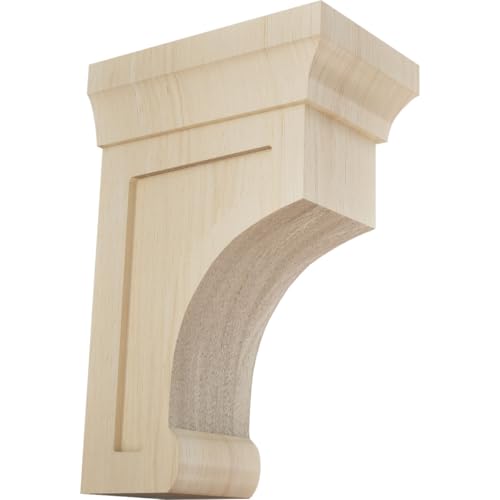 Ekena Millwork BKTW02X04X06GORW Small Gomez Wood Wood Brackets2.5-in. W x 4-in. D x 6-in. H4 x 2.5 x 6 inches2.88 PoundsCheck on Amazon
 Ekena Millwork BKT03X05X07HARW Hamilton Traditional Wood Brackets3-in. W x 5-in. D x 7-in. H0.85 poundsCheck on Amazon
 1/2 pt Minwax 13407 Clear Pre-Stain Wood Conditioner1/2 Pint3 x 3.25 x 3 inches0 PoundsCheck on Amazon

Best wood choices at a glance
| Wood | Stain result | Workability | Best use |
|---|---|---|---|
| Poplar | Uneven; best painted or very dark-stained | Easy to cut and sand | Low-cost decorative brackets |
| Soft maple | Clean, light, and fairly even | Easy, but can burn when routed | Fine-grained stained work |
| Red oak | Strong grain and predictable color | Easy to machine | Traditional oak cabinets and trim |
| Alder | Even, warm, and similar to cherry when stained | Very easy | Cabinet-style corbels |
| Pine | Blotchy unless conditioned | Very easy and inexpensive | Rustic or budget projects |
| Cherry | Rich natural color; often best with clear finish | Machines well | High-end matching woodwork |
Best overall: soft maple and alder
Soft maple is one of the safest choices when you want a stained corbel with a restrained grain pattern. It is harder and more dent-resistant than poplar, but it generally costs less than walnut or cherry. The surface sands smooth, and medium-brown stains produce a clean, contemporary appearance. Use a sharp router bit: soft maple can develop dark burn marks in tight profiles if the bit is dull or the feed rate is too slow.
Alder is similarly easy to shape, with a relatively fine and quiet grain. It accepts brown, honey, and reddish stains more evenly than pine or poplar. It is softer than maple, so it can dent during handling and installation. That is usually not a serious problem for a decorative corbel, but it matters on exposed corners or brackets supporting shelving. Alder is a particularly good choice when the corbels need to match alder cabinets or a warm, lightly stained interior.
For these woods, start with 120-grit paper and finish with 180 grit. Going much finer can partially burnish the surface and reduce stain penetration, especially on dense areas and end grain.
When red oak or cherry makes more sense
Red oak is the practical choice when the surrounding trim is oak. Its open pores create a pronounced grain that remains visible under stain. It also machines predictably and is widely available in boards, blanks, and premade corbels. If you want a smooth, less textured appearance, apply a grain filler before staining. Without filler, the pores will remain obvious under a film finish.
Cherry is attractive enough that a heavy stain is often unnecessary. It darkens naturally with exposure to light, changing from pinkish tan to a deeper reddish brown over time. If the bracket must match older cherry cabinets immediately, test the complete finishing schedule on scrap. A stain that looks correct on new cherry can become too dark after the wood ages.
Both oak and cherry are reasonable choices for brackets that need to carry a modest load, but the attachment method matters more than the species. A decorative corbel should not be expected to support a countertop or shelf by itself unless it is properly sized, fastened into framing, and designed for that load.
When the cheaper wood is fine
Poplar is often the best value for painted corbels and is acceptable for dark-stained decorative work. It is inexpensive, stable enough for interior use, and easy to cut. Its green, gray, or purple streaks can show through light stains, however. A dark walnut or espresso stain may hide much of that variation; a light golden stain usually makes it more noticeable.
Pine is fine for rustic brackets, hidden supports, and projects where the finish is intentionally casual. It is not the best choice for a large, smooth, evenly stained corbel. Soft earlywood absorbs stain quickly while harder latewood resists it, producing stripes and blotches. Knots can also bleed resin through a finish.
If pine is the economical option, choose clear, knot-free stock and use a wood stain pre-conditioner before staining. Test it first: conditioners reduce blotching but can also make the final color lighter. For knots, seal them with two thin coats of shellac-based primer or sealer before applying stain or clear finish.
Wood selection for load-bearing brackets
For a bracket supporting a shelf, mantel, or countertop, avoid selecting wood by appearance alone. Use straight-grained, defect-free stock with no cracks across the narrowest part of the bracket. Hard maple, white oak, and red oak offer better dent resistance than pine or poplar, but a poorly shaped bracket made from oak can still fail.
Pay attention to grain direction in laminated or built-up corbels. Long fibers should run along the main arms and curves whenever possible. Cross-grain sections are vulnerable to splitting around screws. Predrill hardwood with a bit slightly smaller than the screw’s solid shank, and use screws long enough to penetrate the framing without breaking through the visible face.
For a genuinely structural application, use a bracket rated for the load or have the design checked. Glue alone is not a substitute for mechanical fastening into studs, blocking, or a properly installed cabinet structure.
Surface preparation before staining
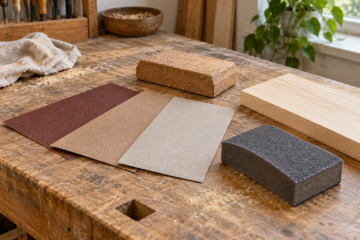
Premade corbels often arrive with machining marks, compressed fibers, and rounded edges that absorb stain differently from flat faces. Sand every visible surface, including the underside and inside curves. Use a folded piece of abrasive or a flexible sanding sponge for profiles rather than forcing a hard sanding block into the detail.
Remove mill marks with 100 or 120 grit, then sand through 150 to 180 grit. Do not skip grits on dense maple or oak. Vacuum the dust and wipe the surface with a clean, slightly damp cloth if the finish manufacturer allows it. Let the wood dry fully before staining. Water-popping—dampening the surface to raise the grain, then sanding lightly after it dries—can deepen color on maple, but it adds a step and must be done evenly.
Use a penetrating wood stain when you want the grain to remain tactile and visible. Gel stain is often easier on pine, poplar, and vertical surfaces because it sits closer to the surface and reduces uneven absorption. Apply thin coats, wipe off the excess, and allow the stated drying time. Heavy residue in carved details can remain soft or wrinkle under the clear coat.
Test the complete finish
Always stain a piece of the same wood with the same sanding schedule used on the corbel. Include the clear topcoat, because it can deepen the color significantly. A water-based clear finish generally stays clearer over pale woods, while oil-based finishes add an amber tone. For frequently handled brackets, choose a durable water-based polyurethane or comparable clear wood finish and apply two or three thin coats, sanding lightly between coats when required.
For most stained decorative brackets, soft maple or alder offers the best balance of appearance, price, and predictable finishing. Choose red oak when matching oak grain, cherry when the wood itself is the feature, and poplar or pine when cost or a rustic look matters more than perfect color uniformity.
0 Comments