What's inside
As an Amazon Associate I earn from qualifying purchases. This post may contain affiliate links at no extra cost to you.
Repairing antique wood furniture is not just a question of which glue is strongest. The right adhesive must suit the joint, the age and value of the piece, and the repairs that may be needed later. Hide glue and PVA are both useful, but they behave very differently. Hide glue is usually the better choice for historically important furniture and traditional joinery. PVA is often the cheaper, easier option for sound repairs on less valuable pieces.
As an Amazon Associate we earn from qualifying purchases at no extra cost to you.


Our Top Picks

Choosing the Right Glue for Antique Furniture
Antique furniture commonly uses mortise-and-tenon joints, dovetails, loose moldings, veneer, and narrow glued blocks. These parts often move slightly as humidity changes. A repair adhesive must bond well without creating a rigid, incompatible joint that damages the surrounding wood.
Before applying any glue, determine why the joint failed. Dried-out hide glue, a loose tenon, split wood, or a joint distorted by previous repairs each requires a different approach. Scrape away loose adhesive, remove dirt and wax, and test-fit the parts dry. If the joint will not close without force, adding stronger glue will not solve the underlying problem.
Hide Glue: The Traditional Restoration Choice
Hide glue is made from collagen and is available as dry granules for heating with water, liquid hide glue in a bottle, and premixed restoration formulas. Traditional hot hide glue is reversible: heat and moisture can soften it, allowing a future restorer to open the joint. That is a major advantage on valuable antiques.
Hide glue also bonds well to old hide glue. In many cases, you can clean a separated joint and reactivate or supplement the original adhesive rather than removing every trace. It dries hard and somewhat brittle, which suits traditional furniture joints because the glue line can break before the surrounding antique wood is torn apart.
For a first repair, a granular hide glue for woodworking gives the most control. Mix it according to the manufacturer’s ratio and heat it in a glue pot or water bath, generally around 140 to 150°F (60 to 66°C). Do not boil it. Excessive heat weakens the glue.
Hot hide glue has a short open time, often less than a minute on a cold joint. Warm the wood when practical, apply glue quickly, and have clamps or cauls ready. Liquid hide glue is easier for occasional repairs, but its added preservatives and liquid formulation can reduce strength and extend drying time. Check its shelf life; old liquid hide glue may remain runny or develop an unpleasant odor.
PVA: Convenient and Strong, With Limits
Polyvinyl acetate, or PVA, is the familiar white or yellow woodworking glue. It is inexpensive, widely available, and easy to use. For a modern reproduction, a utility table, or an antique with a simple clean break, PVA may be entirely adequate.
PVA typically offers a working time of roughly 5 to 10 minutes, depending on the formulation and temperature. Most joints should remain clamped for at least 30 minutes, with full strength developing over approximately 24 hours. Follow the label rather than relying on the shortest advertised clamp time.
The main problem is that cured PVA is difficult to remove cleanly. Heat and moisture may soften some formulations, but not as predictably as hide glue. PVA also does not reliably bond to old hide glue, wax, oily dirt, or a glossy layer of aged finish. If you force PVA into a contaminated joint, it can form a skin around weak material rather than create a sound bond.
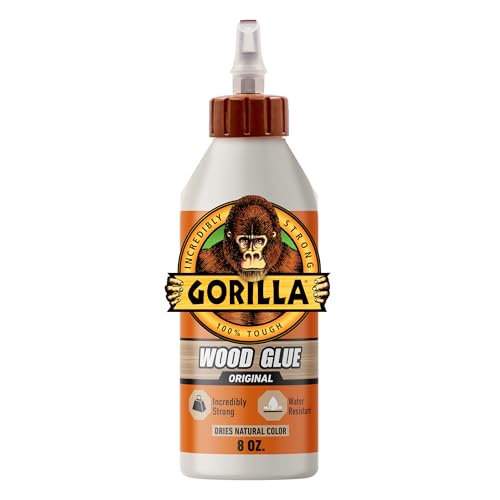
Choose a quality interior woodworking PVA glue for ordinary furniture repairs. Avoid using construction adhesive or instant glue as a substitute. Those products can stain porous wood, become excessively rigid, or make later repairs much more difficult.
Hide Glue vs. PVA at a Glance
| Feature | Hide glue | PVA |
|---|---|---|
| Best use | Antiques, traditional joints, reversible restoration | Clean breaks and practical repairs on less valuable furniture |
| Reversibility | Excellent with heat and moisture | Limited and formulation-dependent |
| Bonding to old hide glue | Usually good after cleaning | Unreliable |
| Working time | Short, especially when hot | Usually 5–10 minutes |
| Equipment | Glue pot or controlled water bath for hot glue | No special equipment |
| Cost and convenience | More preparation and cleanup | Cheaper and easier for occasional use |
A Reliable Repair Process
First, remove the joint from the furniture only as far as necessary. Label parts and take photographs before disassembly. Protect veneer and finished surfaces with paper or thin plastic, but do not trap adhesive against areas that must slide or move.
Use a thin scraper, dental pick, or old chisel to remove loose glue. Do not aggressively enlarge a tight mortise or sand away original wood. A small amount of stubborn hide glue can often remain. For PVA repairs, remove as much of the old adhesive as possible because new PVA needs clean, absorbent wood.
Dry-fit the joint and check for gaps. A joint with a gap wider than about 1/32 inch may need a fitted wood insert, veneer shim, or replacement tenon rather than glue alone. Adhesive is not a gap filler for a structural furniture joint. If the parts are badly distorted, consult a conservator before clamping them flat.
Apply a thin, even coat. Too much glue creates hydraulic pressure and prevents a joint from closing. Assemble the parts, then use padded clamps or a strap clamp. Tighten only until the joint closes; excessive pressure can squeeze out nearly all the adhesive or crush old wood. Wipe fresh squeeze-out with a damp cloth for PVA, but allow hide glue to gel and lift it away with a scraper where appropriate.
When PVA Is the Sensible Choice
PVA is fine when the furniture has little historical value, the joint is clean and freshly prepared, and future reversibility is not a priority. It is also practical for replacing a broken modern molding, repairing a contemporary chair, or reattaching a loose drawer part that will not be exposed to unusual heat or moisture.
For antique furniture with original finish, veneer, rare wood, or visible historical repairs, choose hide glue instead. If the piece is valuable, structurally important, or likely to be sold as an antique, a small glue pot and furniture restoration tools are a reasonable investment. The extra setup is minor compared with the cost of an irreversible repair.
Buying and Working Safely
Buy only as much adhesive as you can use before it ages. Store dry hide glue sealed and dry; store liquid adhesives tightly closed and discard them if the texture, smell, or curing behavior changes. Test any glue on scrap wood or an unseen area, especially when repairing oak, walnut, mahogany, or veneer where staining matters.
In practical terms, use hide glue when reversibility, compatibility with old work, and restoration standards matter. Use PVA when convenience and low cost outweigh those concerns. The best repair is not the one with the highest advertised strength; it is the one that holds the joint securely without making the next repair unnecessarily difficult.
0 Comments