What's inside
As an Amazon Associate I earn from qualifying purchases. This post may contain affiliate links at no extra cost to you.
Our Top Picks
 Thompson’s WaterSeal Semi-Transparent Waterproofing Wood Stain and Sealer1 Gallon6.6 x 4.2 x 10.25 inchesCheck on Amazon

The short answer
For a semi-transparent exterior stain, both redwood and western red cedar are good choices. Western red cedar is usually the better all-around siding and trim material because it is stable, widely available, and takes stain predictably. Redwood can produce a richer-looking finish and is often a strong choice for decks, fences, and exposed outdoor projects, but its quality varies more by grade and source.
The biggest difference is not which species “holds stain” better. It is how the wood moves, how much extractive color it releases, how the surface was milled, and whether the stain is applied before weathering. A cheap, rough redwood board can finish worse than good cedar, while clear, dry redwood can look excellent with a single coat of semi-transparent stain.
As an Amazon Associate we earn from qualifying purchases at no extra cost to you.


Redwood vs. western red cedar at a glance
| Factor | Redwood | Western red cedar |
|---|---|---|
| Natural color | Pink, red, brown, or gray depending on grade and age | Light brown to reddish brown, often more uniform |
| Stain appearance | Can produce a warmer, deeper tone | Usually even and predictable |
| Dimensional stability | Good, but varies with grain and grade | Excellent; low shrinkage and movement |
| Surface hardness | Ranges widely; some grades dent easily | Soft and easy to dent or scratch |
| Extractive bleed risk | Moderate to high, especially with light stains | Moderate to high, especially when wet |
| Typical cost | Often higher, though local pricing varies | Often the cheaper option for siding and fencing |
How semi-transparent stain behaves on each wood
Semi-transparent stain is designed to color the wood without hiding its grain. That makes species and board variation part of the finished appearance. A red-toned stain on redwood may become noticeably orange or burgundy. The same stain on cedar may look lighter, browner, or more yellow.
Redwood’s heartwood can be relatively dense and oily compared with its sapwood. Dense areas may absorb less stain, while end grain and softer sections absorb heavily. This can create dark bands or uneven color. Western red cedar is porous and generally absorbs well, but very soft or weathered cedar can soak up stain quickly and look blotchy if the application is uneven.
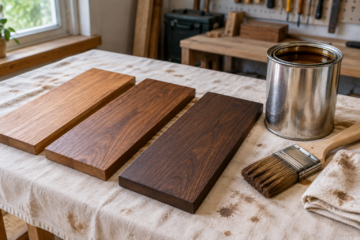
Do not judge a color from a small sample on a smooth, new board. Test the actual stain on scraps from the same project, including a piece with similar grain. Check the sample after it dries for at least 24 hours. Two coats can be dramatically darker than one, and some semi-transparent products are intended for one coat only.
Which species is the better buy?
Choose western red cedar when you want stable siding, trim, privacy fencing, or a relatively predictable stain job at a reasonable price. It is also the sensible choice when the boards will be exposed to damp conditions and appearance matters less than consistent availability. Cedar’s softness means it can dent, but that is rarely a serious problem on vertical siding.
Choose redwood when the project benefits from its natural color, local availability, or higher-grade appearance. It works especially well for visible fences, gates, planters, and some decks. Be selective: clear heart redwood and lower-grade redwood do not finish alike. If the boards contain a lot of pale sapwood, knots, and mixed grain, expect more variation after staining.
The cheaper option is fine when the wood is vertical, reasonably dry, and the goal is basic weather protection rather than a uniform architectural finish. Spending more on clear redwood will not prevent fading. Ultraviolet exposure eventually grays both species unless the stain is maintained.
Select the stain for the exposure
For siding and fences, use a quality semi-transparent exterior wood stain rated for the intended surface. A penetrating oil-based stain often gives cedar and redwood a rich appearance and is easy to refresh, but it can attract dirt and may require mineral spirits for cleanup. Water-based stains dry faster, have lower odor, and can perform well when the wood is properly prepared.
On horizontal decks, use a product specifically labeled for decks or foot traffic. Deck boards receive standing water, abrasion, and sunlight that vertical siding does not. A siding stain may fail quickly on a deck even if it looks good at first.
Choose a color with enough pigment to provide UV protection. Very pale, nearly clear stains generally fade faster and provide less protection than medium-brown or moderately tinted products. If the wood is already gray, use an exterior wood brightener and deck cleaner as directed before staining. Avoid aggressive pressure washing that cuts soft cedar or redwood fibers.
Preparation determines the result
New boards should be clean, dry, and free of mill glaze, dust, and handling grime. Smooth planed lumber may need light sanding with 80- or 100-grit paper, followed by 120 grit if the surface is unusually rough. Do not polish exterior wood with very fine paper; a slightly open surface usually accepts penetrating stain better.
For weathered wood, remove loose fibers and gray material with a stiff nylon brush or careful washing. Let the boards dry thoroughly. A practical target is below about 15% moisture content before staining; follow the stain manufacturer’s limit if it specifies a different number. After rain or washing, drying may take two to four days, sometimes longer in shade.
Replace or reset rusty fasteners before staining. Iron contamination can create dark blue-black marks in cedar and redwood. Use hot-dipped galvanized or stainless steel fasteners. Sand exposed mill marks and remove resin or pitch with a suitable cleaner, but test solvents first because they can spread discoloration.
Application and maintenance
Work in the shade when the air and surface are roughly 50 to 90 degrees Fahrenheit, avoiding rain and heavy dew for the product’s required cure time. Stir the stain; do not shake it. Brush semi-transparent stain into two or three boards at a time, maintaining a wet edge. Back-brush puddles and wipe excess from end grain, where dark stripes commonly develop.
On a large fence or deck, a stain brush or pad applicator gives better control than spraying alone. Spraying can be efficient, but it must be back-brushed so the stain penetrates evenly. Do not apply a second coat unless the label permits it; excess film can become sticky, peel, or crack.
Inspect the finish annually, especially on south- and west-facing surfaces. Recoat when the color is faded and water no longer beads consistently, but before the wood becomes deeply gray or cracked. Cedar and redwood may need maintenance every two to five years, with decks usually requiring attention sooner. Regular light maintenance is easier than stripping a failed heavy coating.
0 Comments