What's inside
As an Amazon Associate I earn from qualifying purchases. This post may contain affiliate links at no extra cost to you.
Our Top Picks


The short answer
Black walnut and American cherry both make attractive oil-finished table surfaces, but they age differently. Walnut starts dark, with strong color variation and often striking grain. Cherry starts lighter and usually deepens toward a warm reddish brown with exposure to light. Choose walnut if you want a darker table now; choose cherry if you are comfortable with a surface that changes noticeably over its first years.
Neither is automatically more durable in everyday use. Both are workable hardwoods, and neither oil finish makes a tabletop proof against standing water, hot cookware, or scratches. The finish and your maintenance habits matter at least as much as the species.
As an Amazon Associate we earn from qualifying purchases at no extra cost to you.


How they compare
| Factor | Black walnut | American cherry |
|---|---|---|
| Typical starting color | Medium to dark brown, sometimes with lighter sapwood | Pale pinkish tan to light reddish brown |
| Color change | Can lighten or lose contrast with light exposure | Darkens and reddens, often noticeably in the first year |
| Janka hardness | About 1,010 lbf | About 950 lbf |
| Grain and appearance | Open, varied grain; dark heartwood and pale sapwood may contrast | Usually finer, more uniform grain; occasional dark gum streaks |
| Typical cost | Often more expensive, especially for wide, clear stock | Often less expensive, though grade and region make a difference |
| Best fit | A table where a dark, varied look is wanted from the start | A table where gradual warming and a calmer grain are welcome |
Hardness figures are useful for comparison, not a guarantee against dents. A dropped mug can mark either surface, and a sharp point can scratch both. For an everyday table, use coasters and wipe spills rather than expecting the wood to take abuse unaided.
Color, light, and matching boards
Cherry’s color shift is the main surprise for buyers. A tabletop kept partly under a runner or centerpiece can develop uneven color if the exposed areas receive more light. Moving objects periodically helps, but it does not stop the change. If you need a stable, uniform color, cherry may frustrate you. Walnut also changes, but its dark appearance can soften and its contrast may diminish rather than deepening in the same way.
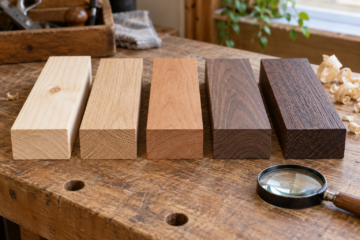
Ask to see the actual boards, not just a small sample. Walnut can contain pale sapwood at the edges, while cherry may have dark mineral or gum streaks. Those features are natural, not defects, but they can look conspicuous across a large surface. For a lower-cost build, a deliberate mix of color can be more sensible than paying a premium to eliminate every variation.
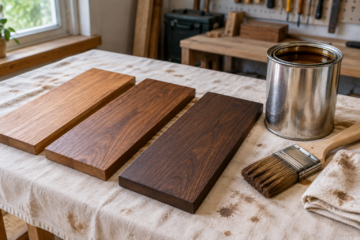
Oil enriches both species and makes grain easier to see, but it also deepens color. Test the exact finish on an offcut from your boards before committing. A sample with one coat may not match a tabletop with several coats, and the appearance can vary between heartwood, sapwood, and streaked areas.
What an oil finish can—and cannot—do
“Oil finish” covers different products. Some are penetrating oils that leave a relatively natural feel; others are oil-varnish blends that build a thin film. Check the label for cure time, food-contact guidance, and maintenance instructions rather than assuming all oil finishes behave alike. A penetrating finish is easy to refresh, but usually offers less resistance to water and staining than a well-built film finish.
On a dining table, the trade-off is practical: a low-build finish is pleasant to touch and simple to repair, but water rings and food stains can appear if spills sit. Wipe liquids promptly, and do not set hot pans directly on the surface. If frequent spills or minimal upkeep are priorities, consider a tougher film finish instead of choosing between walnut and cherry on the assumption that oil alone provides strong protection.
For a straightforward oil application, start with clean, flat wood and sand evenly. A common final sanding range is 180 to 220 grit, but follow the finish maker’s instructions; sanding much finer can reduce absorption for some penetrating products. Remove dust thoroughly, apply a thin coat, and wipe off excess as directed. Pooled oil can stay tacky or cure unevenly. Let each coat cure for the stated period before use, and remember that “dry to the touch” is not always fully cured.
Choosing boards and finish supplies
If you are choosing lumber, compare the price of boards in the width, thickness, and grade you actually need. A cheaper cherry board with visible streaking may be a good buy if you like the character; a low-priced walnut board with a large sapwood edge may require more cutting and leave less usable material. For a tabletop, stable, dry stock and a clean glue-up matter more than chasing a perfectly uniform color.
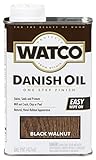
For a repairable, natural-looking surface, browse hardwax oil finishes for tabletops, but check the manufacturer’s cure and maintenance directions. If you prefer a traditional penetrating finish, compare interior penetrating wood oils. Product names can be misleading: a finish sold as “oil” may contain resins and build a film.
Do not use stain to solve a species choice you are unsure about without testing first. Stain can make walnut blotchy or muddy, while cherry’s natural color shift will continue after staining. If a uniform dark surface is essential, make a sample panel from the same lumber and finish it through the complete process before buying enough material for the table.
Which one should you buy?
Choose black walnut when its dark, varied look is the reason for the purchase and the higher lumber cost fits the project. It suits a table where natural contrast is part of the design, provided you are comfortable with sapwood or are willing to pay for more uniform boards.
Choose American cherry if you want a generally quieter grain, a warm color that develops over time, or a more affordable hardwood option. It is not a downgrade for an oil-finished table. Its main drawback is the visible aging: the top may not keep the pale color it had on installation day.
For either species, buy by the finished look of the actual boards, test the oil on an offcut, and treat the surface as wood rather than a waterproof countertop. Those steps prevent more disappointment than choosing one species based on a small hardness difference.
0 Comments