What's inside
As an Amazon Associate I earn from qualifying purchases. This post may contain affiliate links at no extra cost to you.
Our Top Picks
 10pcs Rectangle Wood Boards Natural Pine Wood Rectangle15X4cm5.9 x 1.57 x 0.23 inches0.32 poundsCheck on Amazon
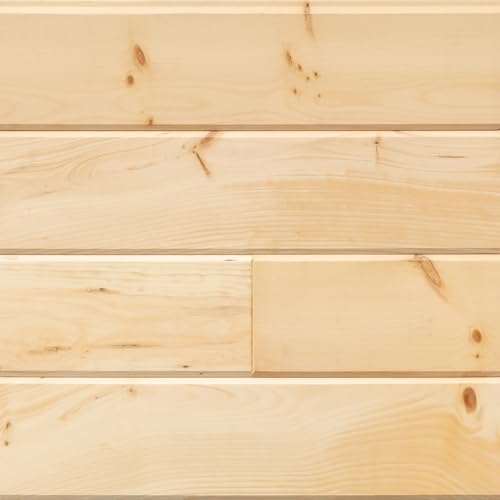

Quick answer
For most indoor projects, pine is the practical choice: it is widely available, usually less expensive, and easy to cut and paint. Cedar is worth the extra cost when its color, aroma, or natural resistance to insects and decay matters—especially in closets, chests, or areas that may get damp. Neither is automatically better for furniture or trim. Board quality, moisture content, preparation, and finish often matter more than the species.
Pine vs. cedar at a glance
| Factor | Pine | Cedar |
|---|---|---|
| Typical cost | Lower; common construction and project boards are easy to find | Usually higher, especially for clear or appearance-grade boards |
| Appearance | Pale, often with visible knots and yellow-brown resin streaks | Ranges from pale to reddish brown, often with pronounced grain and color variation |
| Workability | Easy to saw and sand; soft fibers dent readily | Easy to work, but soft fibers can also dent, crush, or splinter |
| Finishing | Can blotch under stain; resin can bleed through paint | Can also stain unevenly; extractives may interfere with paint adhesion |
| Best fit | Painted trim, shelves, shop projects, and budget furniture | Closet fittings, chests, and projects where cedar’s look or aroma is wanted |
Choose by project, not reputation
Pine is a good buy for painted shelves, simple bookcases, utility cabinets, and practice projects. A clear or knot-free pine board can also work for furniture, but it takes more care to get a uniform stained finish. For load-bearing shelves, use suitable thickness and support rather than relying on the wood name: a long, thin pine shelf can sag, and a cedar shelf is not a fix for undersizing it.
As an Amazon Associate we earn from qualifying purchases at no extra cost to you.


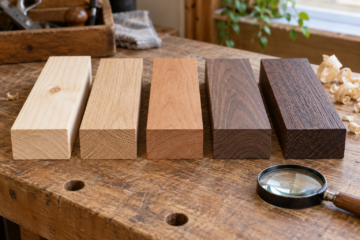
Cedar makes sense when its natural color or smell is part of the design, such as a closet lining or storage chest. Its natural resistance to insects and decay is useful, but it does not make cedar waterproof or immune to mildew. Keep indoor cedar dry, and do not count on its aroma as a substitute for proper pest control. For ordinary painted trim or a workshop shelf, the premium is often unnecessary.
Check the boards before buying
“Pine” and “cedar” cover multiple species and grades, so one board may behave differently from another. Look down the length for bow, cup, and twist; avoid loose knots, checks at the ends, and cracks around knots. A knot that looks secure in the rack can loosen during cutting or later movement. If the finished face matters, choose clear stock or buy extra material so you can cut around defects.
Wood that is too wet can shrink, open joints, or crack after installation. For interior work, aim for roughly 6–10% moisture content, adjusted for your home’s climate. A moisture meter is useful when buying larger quantities or making furniture. Let boards acclimate indoors for several days—longer if they arrive cold, damp, or tightly bundled—and check moisture again before assembly.
Staining and clear finishes
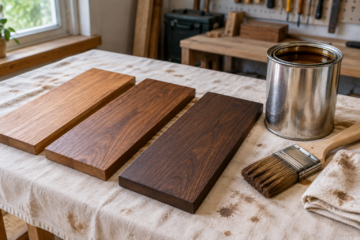
Both woods can show blotching, especially when a dark stain is applied directly to softwood. Pine’s earlywood absorbs more stain than its denser bands, producing a striped or muddy surface. Cedar’s color variation can also become more pronounced under stain. Sand evenly through the grits: for typical interior work, stop around 150 or 180 grit unless the finish maker specifies otherwise. Over-sanding can close the surface and reduce stain uptake.
Test the whole finishing schedule on an offcut from the same board. A compatible pre-stain conditioner or washcoat can reduce blotching, though it may also make the color lighter. Apply stain sparingly and wipe off the excess within the product’s stated time; pooled stain can stay tacky. For a clear finish, choose a product made for interior wood and follow its recoat instructions. A water-based finish generally preserves a paler look, while many oil-based finishes add amber color.
If staining pine or cedar, a wood pre-stain conditioner is worth testing on scrap before committing to the finished piece. It can help, but it cannot make boards with very different grain or color look identical.
Painting and surface preparation
For paint, remove dust and any oily or contaminated residue, then use a primer suited to the wood and the paint system. Pine knots and resin pockets can bleed yellow or brown through ordinary paint, sometimes months later. Seal knots first with a stain-blocking primer; shellac-based products are a common choice for stubborn bleed-through. Cedar extractives can also discolor paint, so use a primer labeled for cedar or tannin staining rather than assuming a standard wall primer will hold.
After priming, check for raised grain, rough fibers, and missed defects. Sand lightly with 180–220 grit, remove dust, and apply the topcoat at the label’s recommended temperature and coverage. Two thin coats usually level better than one heavy coat. A shellac-based stain-blocking primer is a useful option for knot bleed, but provide ventilation and follow the label’s safety directions.
Glue, fasteners, and common failures
For indoor assemblies, ordinary yellow PVA wood glue is generally suitable for both pine and cedar when the joint is close-fitting and clamped according to the label. Cedar’s natural extractives can make some surfaces less receptive to glue, so test an offcut if the wood is especially aromatic or oily. Glue does not compensate for a poor joint, a dusty surface, or boards moving after assembly. Avoid leaving a thick glue film on the face: stain will not penetrate it evenly.
Both species are soft enough for fasteners to split an edge, particularly near knots. Predrill screw holes close to ends, and use corrosion-resistant fasteners if moisture is possible; cedar can react with some metals and leave dark marks. For most dry, painted indoor projects, pine is the economical default. Choose cedar when its appearance or specific properties justify the added cost, and prepare either wood for the finish it will actually receive.
0 Comments