What's inside
As an Amazon Associate I earn from qualifying purchases. This post may contain affiliate links at no extra cost to you.
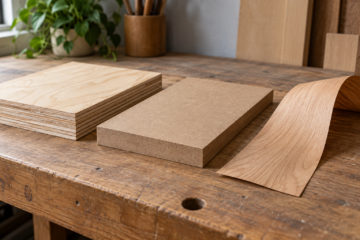
Getting an even dark-walnut look is easier when the wood starts with a similar color and grain. Stain can deepen and shift a surface, but it cannot make pale sapwood, blotchy end grain, and dark heartwood behave alike. For furniture, shelves, and trim, species choice often matters more than buying a darker stain.
As an Amazon Associate we earn from qualifying purchases at no extra cost to you.


Our Top Picks
 Varathane Less Mess Dark Walnut Wood Stain &4 Ounce (Pack of 1)1.75 x 1.75 x 6.5 inches0.25 poundsCheck on Amazon
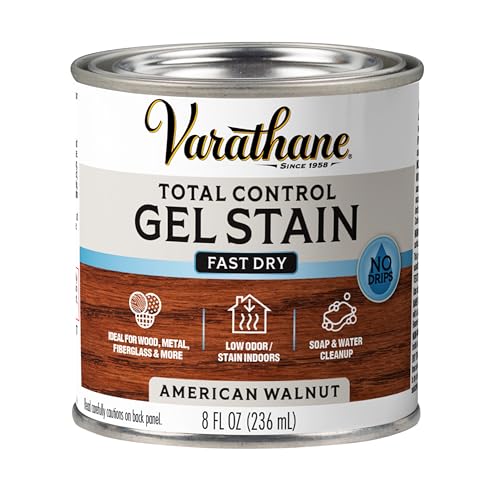 Varathane Total Control American Walnut Gel StainHalf Pint (Pack of 1)2.88 x 2.88 x 2.97 inches0.6 poundsCheck on Amazon
 Varathane Water-Based Ultimate Satin PolyurethaneHalf Pint (Pack of 1)3 x 3 x 3 inches0.64 poundsCheck on Amazon


Best species for the job
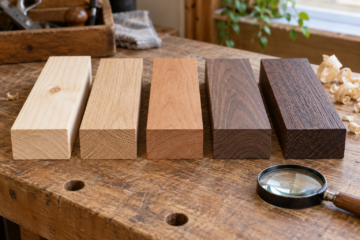
For a convincing walnut-like result, start with poplar, alder, or soft maple, depending on the project and how much preparation you are willing to do. Poplar is inexpensive and widely available, but its green or gray streaks can show through brown stain. Alder has a more consistent, warm base and is usually easier to stain evenly. Soft maple can produce a clean, refined look, though it may blotch without a controlled staining process.
If you want the real appearance and can spend more, walnut is the straightforward choice. A clear finish often gives it the dark brown color people are trying to imitate, while preserving natural variation. Avoid trying to make one board look uniform by applying a very dark stain: it can muddy the grain and make the surface look painted.
| Species | Typical result with dark brown stain | Preparation and trade-offs |
|---|---|---|
| Alder | Warm, fairly even brown | Good all-around choice; test first, especially on boards with knots or color variation. |
| Poplar | Brown with possible green or gray cast | Affordable and easy to machine, but streaks may remain visible under stain. |
| Soft maple | Clean, sometimes uneven brown | Can blotch; use a conditioner, washcoat, or gel stain after testing. |
| Birch | Light brown, often prone to blotching | Common and economical, but needs careful prep and a sample board. |
| White oak | Deep brown with prominent grain | Strong grain texture gives a different look from walnut; stain can emphasize pores. |
| Walnut | Natural dark brown, varied grain | Costs more, but usually needs only a clear finish to show its character. |
Choose by budget and appearance
For painted parts or hidden components, poplar is often the sensible low-cost choice. For visible furniture where an even brown matters, alder is a safer starting point. Birch and soft maple can work, but they are less forgiving if you apply a penetrating stain directly to bare wood. White oak is durable and readily available, but its open pores and bold grain create a more pronounced, sometimes rustic look than walnut.
Price and availability vary by region, so compare the cost of clear, straight-grained boards rather than relying on a species name alone. A board with knots, mineral streaks, or mixed sapwood and heartwood can defeat the goal of an even finish. If appearance matters, buy enough stock to select matching pieces and keep offcuts for tests.
Prepare the surface before staining
Sand evenly through the grits. For most furniture work, start around 120 grit if the surface needs flattening, then move through 150 and finish at 180. On soft woods, stopping at 180 is often enough; sanding much finer can reduce stain absorption and leave the color lighter. Do not skip grits or press harder in one area, since sanding scratches and uneven absorption become especially visible under dark stain.
Remove dust with a vacuum and a clean, dry cloth. If you raise the grain with water, let the board dry fully and lightly sand off the fuzz with the final grit. Apply the same preparation to test pieces as to the finished work. A small sample is not useful if it was sanded differently.
Control blotching and color variation
On birch or maple, try a pre-stain conditioner, a thin shellac washcoat, or a gel stain. These products slow or limit absorption, but they can also make the final color lighter and less clear. Follow the product’s timing instructions: applying stain after a conditioner has dried too long may not give the intended result. Test at least two approaches on scraps before committing.
A pre-stain wood conditioner is worth trying on blotch-prone stock, but it is not a guarantee of uniform color. Gel stain sits closer to the surface and can reduce the contrast between areas that absorb stain differently; the trade-off is less visible grain and a more opaque appearance. Apply thin coats rather than trying to force the desired darkness in one pass.
Apply stain and protect the color
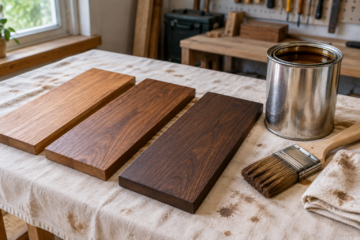
Stir stain thoroughly, including material settled at the bottom, and apply it with a brush or cloth in manageable sections. Wipe off excess consistently, following the label’s recommended dwell time. Leaving stain on longer does not always produce a darker result; on some products it simply leaves a sticky film that is difficult to coat. Keep a wet edge and work in the direction of the grain.
After the stain has dried as directed, test the clear topcoat on a hidden area. Oil-based finishes often add amber warmth, while water-based finishes usually preserve a less yellow appearance. Either can change the perceived color. Use a compatible topcoat, apply thin coats, and avoid heavy sanding through the stain at edges or corners. A water-based polyurethane can help keep a brown stain from shifting warmer, but the actual result depends on the product and the wood.
Mistakes that lead to a poor match
Do not judge color from a wet stain: it will look different after drying and after the clear coat goes on. Do not use one sample to represent several species, and do not assume a darker stain hides defects. Dark color can make glue squeeze-out, fingerprints, sanding swirls, and uneven edges more obvious. Scrape or sand off glue before finishing, since stain will not penetrate a glue spot.
If the project needs a close match across multiple boards, the cheapest reliable fix may be selecting better-matched stock rather than adding more stain. For a budget project where small variations are acceptable, poplar with a tested brown stain is perfectly serviceable. For a polished, consistent walnut-like finish, alder or carefully prepared maple gives you more control; for the most natural result, choose walnut and let the wood do the work.
0 Comments