What's inside
As an Amazon Associate I earn from qualifying purchases. This post may contain affiliate links at no extra cost to you.
For painted interior panels, both butternut and poplar can work well, but they suit different priorities. Poplar is the practical choice: inexpensive, widely available, easy to machine, and usually dependable under paint. Butternut is softer, lighter, and more visually interesting, with a subtle grain that can show through a thin finish or appear around dents and edge damage.
The biggest mistake is treating either species as a perfect substitute for a sheet-good panel. Solid-wood panels move across their width as indoor humidity changes. For large wainscoting, cabinet ends, or wall paneling, use narrow boards, a frame-and-panel design, or a stable plywood core with a wood veneer. If you are buying solid stock, acclimate it indoors for at least three to seven days before cutting, and leave room for seasonal movement.
As an Amazon Associate we earn from qualifying purchases at no extra cost to you.


Our Top Picks
 Aqua Coat Water-Based Clear Wood Grain Filler GelPint3.55 x 3.55 x 4.2 inches1.14 PoundsCheck on Amazon

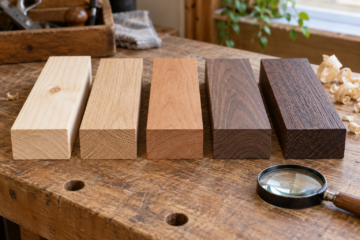
Butternut and poplar at a glance
| Factor | Butternut | Poplar |
|---|---|---|
| Hardness | Very soft; dents easily | Soft, but noticeably tougher |
| Typical color | Pale tan to warm brown | White, gray, green, or purple tones |
| Grain | Open, attractive, and moderately coarse | Usually fine and subdued |
| Paintability | Good after thorough filling and priming | Very good with standard preparation |
| Cost and availability | Often higher cost and less consistent supply | Usually cheaper and easy to find |
| Best use | Decorative panels where a soft, natural character is desirable | Budget-friendly wall paneling, trim, and painted built-ins |
Why poplar is usually the safer painted choice
Poplar is a common paint-grade hardwood for good reasons. It cuts cleanly, accepts glue reliably, and has relatively little natural figure to telegraph through a paint film. It is also easier to find in straight, clear boards and wider glued panels. For a painted wall treatment, that availability can matter more than small differences in wood performance.
Poplar is not uniformly white. Boards may contain green, gray, or purple areas, and those colors can sometimes show through white or light-colored paint. The issue is cosmetic rather than structural. A high-quality stain-blocking primer, especially one formulated for wood tannins and extractives, usually prevents discoloration. Spot-prime unusual dark areas before applying the overall primer coat.
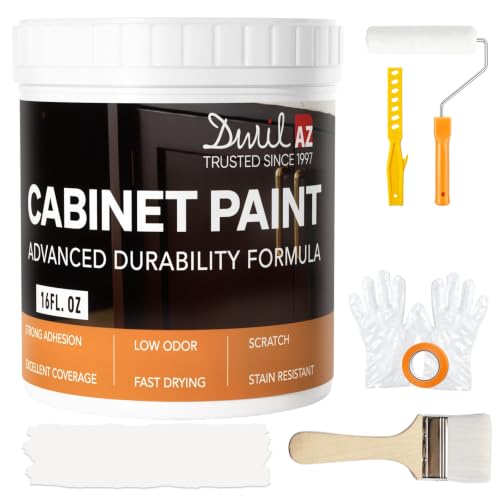
Poplar still dents under hard use, particularly on outside corners and lower wall panels. For a mudroom, playroom, or busy hallway, use a tougher enamel and consider a slightly eased edge rather than a sharp, fragile corner. A painted water-based cabinet enamel is a sensible category for trim and panels because it dries harder than ordinary wall paint.
When butternut makes sense
Butternut is appealing when you want a panel that feels less generic. Its warm brown color and open grain can give painted work more depth, especially beneath cream, gray-green, or muted blue finishes. It is also exceptionally easy to cut and shape with hand tools.
That softness is both its advantage and its main drawback. A fingernail can mark it, and clamps, brad nailers, or a panel leaning against a workbench can leave dents. Butternut also tends to have more visible pores and irregular grain than poplar. If you want a completely flat, uniform painted surface, expect extra filling and sanding.
Butternut is a reasonable upgrade for a decorative dining-room panel, a study, or a feature wall that will not take constant abuse. It is less convincing for lower wainscoting in a family entryway unless you accept a patina of small dents. The cheaper option—poplar—is fine for most painted applications and is often the better buy when the panels will be heavily handled.
Panel construction and movement
Do not glue a wide solid-wood panel tightly into a rigid frame. A panel 24 inches wide can change dimension by roughly 1/8 inch or more over a normal indoor humidity cycle, depending on the board and the local climate. Leave the panel floating in its frame with space at the edges, or use a plywood panel if movement would be noticeable.
For wall paneling, acclimate boards and measure moisture before installation. A general indoor target is about 6% to 8% moisture content, though local conditions vary. Install trim and panels only after wet construction has dried and the room is close to its normal living humidity. Finish all faces and edges, including the back, to slow moisture exchange. Paint is not a vapor-proof barrier, but balanced finishing helps reduce cupping and uneven movement.
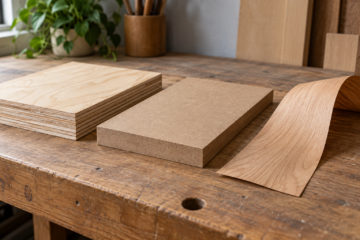
If using sheet goods, MDF is often the smoothest and most stable paint surface, while hardwood plywood provides better screw-holding and impact resistance. For a premium result, poplar or butternut can be used as applied molding over a stable painted panel rather than as the entire wide panel.
Sanding, filling, and priming
Start with boards that are already flat and free of deep planer marks. Sand poplar and butternut through 120 and 150 grit, then stop at 180 grit for most painted work. Sanding much finer than 180 can burnish the surface and reduce primer adhesion. Break sharp edges lightly with a sanding block; a tiny radius holds paint better than a knife edge.
Fill nail holes and small dents with a paintable wood filler. Butternut’s open pores may need a thin coat of water-based grain filler if you want a low-sheen, furniture-like finish. Apply it across the grain, let it dry fully, then sand it level. Do not rely on primer alone to hide deep pores or torn grain.
Use a high-build acrylic primer for general smoothing, or an oil- or shellac-based stain-blocking primer where poplar has purple or green discoloration, or where knots and resinous spots are present. Apply two primer coats when the surface still shows pores or uneven absorption after the first coat. Sand lightly with 220 grit between coats and remove dust with a vacuum and a clean, slightly damp cloth.
The practical buying decision
Choose poplar when price, availability, consistent paint coverage, and resistance to everyday handling matter most. It is the default recommendation for painted interior panels, especially in large quantities. Choose butternut when you specifically want its warm character, lighter weight, or easy hand-tool work—and are willing to fill more grain and repair dents.
Before buying, inspect every board under strong light. Reject pieces with twist, loose knots, severe end checking, or large areas of fuzzy torn grain. For either species, spending more on straight, dry, clear stock usually saves more time than buying a premium paint. A wood moisture meter is useful when installing a large quantity of solid panels, particularly in a new or recently renovated room.
0 Comments