What's inside
As an Amazon Associate I earn from qualifying purchases. This post may contain affiliate links at no extra cost to you.
Our Top Picks
 Varathane Total Control Dark Walnut Gel StainHalf Pint (Pack of 1)2.88 x 2.88 x 2.97 inchesCheck on Amazon
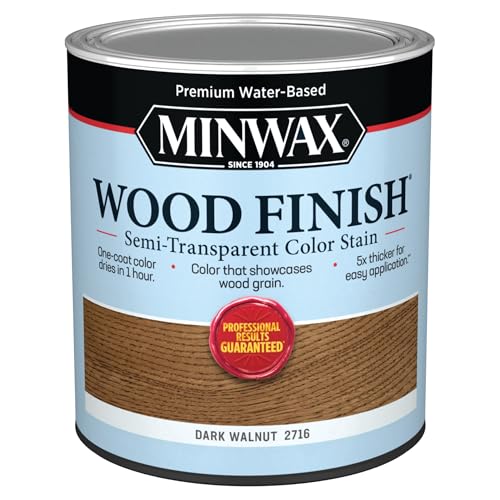 Minwax Wood Finish Water-Based Semi-Transparent Color Stain1 Quart4.32 x 4.32 x 4.92 inchesCheck on Amazon


The short answer
For a dark interior stain, alder is usually the easier choice if you want a relatively even, brown finish with visible wood grain. Poplar can also be stained dark, but its uneven absorption and greenish or gray undertones make the result less predictable. It is often a better buy when the wood will be painted, or when you are willing to test, condition, and possibly adjust the color.
Neither species will look like walnut just because you apply a dark stain. Both are lighter, less dramatic woods, and stain can make blotches and color differences more obvious. Buy a sample board—or test scraps from the actual project—before committing to doors, trim, or a large built-in.
As an Amazon Associate we earn from qualifying purchases at no extra cost to you.


How they compare
| Factor | Poplar | Alder |
|---|---|---|
| Typical cost | Often inexpensive and widely available, especially for paint-grade work | Usually costs more; availability and price vary by region |
| Color under dark stain | Can shift olive, gray, or brown; boards may vary noticeably | Typically warm and brown, though knots and sapwood still create variation |
| Blotch risk | High without careful preparation | Moderate; still worth testing |
| Grain appearance | Usually subtle, with less visual character | Often more visible grain and occasional rustic features |
| Best fit | Paint, budget projects, or controlled finishes proven on samples | Stained cabinets, trim, and furniture where a warm wood look matters |
Color and grain matter more than the stain name
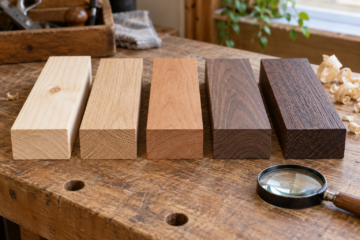
Poplar is a pale hardwood, but “pale” does not mean neutral. Its heartwood can have green, gray, or brown tones, while sapwood is often lighter. A dark brown stain may deepen those differences rather than hide them. A mahogany-colored stain can turn greenish areas muddy; a near-black stain tends to conceal the underlying hue better, but also obscures much of the grain.
Alder is generally more cooperative when the goal is a warm, medium-to-dark brown. Its grain is usually fairly quiet, so it can give a more consistent appearance than strongly figured woods. However, alder can include knots, color streaks, and pale areas. If you want a uniform cabinet finish, select boards for similar color and avoid assuming every piece will match the sample.
Think about the finished surface, not only the wet stain in the can. A clear topcoat often makes both species look deeper and warmer. Test the full system—stain plus the actual finish—because a water-based clear coat may look less amber than an oil-based one.
Which wood should you buy?
Choose alder when the wood will remain visibly stained and you want the better odds of an attractive, warm result without extensive color correction. It is a sensible choice for cabinet face frames, interior doors, furniture, and trim. Pay extra for it when the finished wood grain is part of the design.
Choose poplar when the project is painted, when the material will be hidden, or when keeping the lumber budget down matters more than getting a natural-looking dark stain. Poplar is not automatically a bad staining wood; it is simply less forgiving. It can work well with a tested dye-and-stain schedule, a darker, more opaque color, or a finish that intentionally allows variation.
If you are buying online or from a yard, ask whether the stock is rough or already surfaced and whether color matching is possible. For visible parts, buy extra from the same batch. Mixing boards purchased weeks apart can produce noticeable shifts across a wide run of cabinets or wall trim.
Test before staining the project
Sand a test piece using the same tools and grit sequence planned for the job. For most interior furniture and trim, finish with 180-grit paper; going much finer can reduce stain absorption, while stopping at coarse grits can leave scratches that dark stain highlights. Sand evenly, remove dust, and stain a scrap from each board or at least several representative pieces.
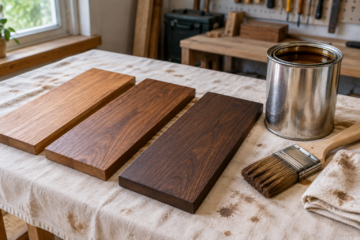
Compare the samples in the room where the project will be installed. Apply the intended topcoat and let it dry before judging the color. A useful test is at least 6 by 12 inches, large enough to show grain and color variation. Small stain swatches can hide the blotching that becomes obvious across a door panel.
On poplar, a pre-stain conditioner may reduce uneven absorption, but it can also make the color lighter and less distinct. Follow the label’s timing directions and test it against an untreated sample. Another option is a thin washcoat—a compatible clear finish diluted according to the finish maker’s instructions—followed by stain. Too much sealer can prevent stain from taking at all.
For a more predictable dark color, consider a wood pre-stain conditioner and test it on the actual wood. If the color needs to be more even than a pigment stain can provide, a wood dye is another option, but dyes can fade more in sunlight and may need a clear protective coat.
Common failures and how to avoid them
Blotches: Uneven sanding, glue residue, and differences in density all affect absorption. Check joints for dried glue, sand through the grits consistently, and avoid spot-sanding one area more aggressively than another. If a test board still blotches, changing stain color alone may not fix it; use a conditioner or a more controlled dye-and-seal approach.
Too-dark, muddy color: Applying extra coats does not always deepen a penetrating stain evenly. Some stains are designed for one coat, and a second coat may sit on the surface, smear, or become tacky. Follow the product directions, wipe off excess within the stated time, and do not try to rescue a bad first coat by piling on more.
Scratches and lap marks: Dark stain makes sanding scratches and overlapping brush or rag marks easier to see. Work in manageable sections, keep a wet edge where the product requires it, and inspect the surface under side lighting before staining. Use a 220-grit sanding paper only for light finish sanding when appropriate; do not skip the earlier grits needed to remove milling marks.
Make the decision on a finished sample
If alder’s tested sample gives you the brown tone and grain you want, the higher material cost can save time spent correcting poplar. If poplar looks good under your chosen stain—or the parts will be painted—there is little reason to pay more for alder. For either species, the reliable purchase is the one you have tested with the exact sanding schedule, stain, and topcoat planned for the job.
0 Comments