What's inside
As an Amazon Associate I earn from qualifying purchases. This post may contain affiliate links at no extra cost to you.
Walnut and cherry can both look excellent under a clear finish that has little sheen, but they do not end up looking the same. Walnut starts dark and varied; cherry starts lighter and tends to deepen toward a warm reddish brown with age. For most furniture, the bigger choice is the wood’s color and grain—not a claim that one species is inherently easier to finish. Both benefit from careful sanding and thin, even coats.
As an Amazon Associate we earn from qualifying purchases at no extra cost to you.


Our Top Picks
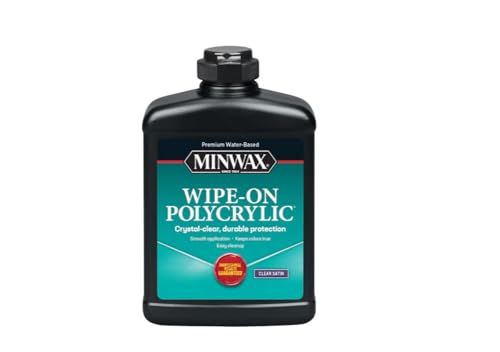
 Varathane Water-Based Ultimate Satin PolyurethaneHalf Pint (Pack of 1)3 x 3 x 3 inches0.64 poundsCheck on Amazon

Quick comparison
| Factor | Walnut | Cherry |
|---|---|---|
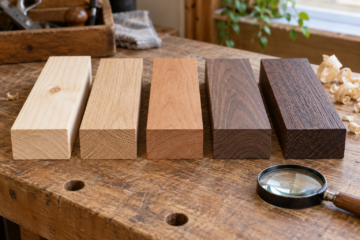
| Starting color | Medium to dark brown, sometimes with pale sapwood | Light pinkish brown, often uneven in tone |
| Color change | Can lighten or shift with light exposure; sapwood remains conspicuous | Darkens noticeably with light and age, often becoming more even |
| Grain | Usually more prominent, with strong variation between boards | Generally finer and quieter, though curly or figured boards occur |
| Low-gloss finish risk | Uneven sheen can show across contrasting grain and sapwood | Scratches and sanding marks can show in broad, smooth areas |
| Best fit | A darker, visibly varied look | A lighter look that will warm and deepen over time |
Choose by color and grain
Pick walnut if you want the furniture to read as brown from day one. Its heartwood can range from chocolate to purplish brown, while pale sapwood may appear in streaks or patches. A clear finish will not hide that contrast. If you dislike it, sort boards carefully or use a darker stain—but staining walnut often sacrifices the natural variation that makes it appealing.
Cherry is the better choice when you want a restrained grain and a lighter starting color. Freshly milled cherry can look pale or pink; exposure to light gradually deepens it. Do not judge a sample after one afternoon near a window. Set a finished offcut aside and compare it with an unexposed piece over several weeks. The change can be substantial, and furniture placed in direct sun may change unevenly.
For either species, view a sample under the room’s actual lighting. A satin finish can make both woods appear richer than bare sanded wood, but it will not make their color predictable or identical.
What a low-gloss clear finish does
“Low gloss” usually means satin or matte, but sheen labels are not standardized across every product. Satin often reflects enough light to reveal grain; matte looks flatter and can make dark walnut seem less deep. A film finish also adds a slight wet look, so compare samples after they are fully dry rather than relying on the label alone.
For a straightforward clear coat, consider a water-based satin polyurethane. It tends to add less amber color than many oil-based finishes, which can suit cherry if you want to preserve its lighter initial appearance. Oil-based polyurethane adds warmth and ambering; that may flatter walnut but push cherry toward a darker, warmer look sooner. Neither choice stops cherry’s longer-term color change.
Another practical option is a matte hardwax oil. It leaves a more natural-looking surface and is often easier to spot-repair than a thick film, but it may need more frequent maintenance on a dining table or other heavily used surface. Follow the product’s cure time before putting objects on it.
Prepare the surface evenly
Sand both woods through a consistent grit sequence. For typical furniture work, 120, 150, and 180 grit is a reasonable progression; stop at 180 or 220 unless the finish manufacturer recommends otherwise. Going much finer can reduce adhesion for some finishes or make stain uptake less even. Use a random-orbit sander on broad faces, then sand edges and profiles by hand with the grain.
Do not let the sander linger in one spot. Cherry is moderately hard but can burnish or develop shiny patches, while walnut’s changing grain can tempt you to over-sand a dark mark that is actually natural color. Before coating, inspect the surface under raking light and remove dust with a vacuum and a clean, dry cloth. A damp wipe can raise grain, especially with water-based finishes; if you use one, let the surface dry and lightly sand the raised fibers before coating.
Both species can show glue squeeze-out as a pale patch under clear finish. Scrape or sand it away before the final grit, and check joints with raking light. Once the clear coat is on, a glue spot is difficult to disguise without sanding back to bare wood.
Apply thin coats and test first
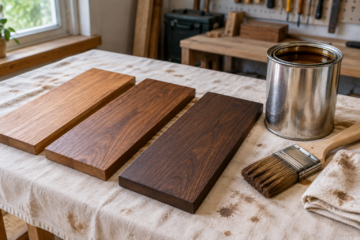
Make a test panel from an offcut that has the same sanding and, if possible, the same heartwood or sapwood as the project. Apply the full finishing schedule—not just one coat—because successive coats can change the color and sheen. For a typical water-based polyurethane, apply thin coats with a suitable synthetic brush or applicator, and lightly sand between coats only as the label directs. Many products call for about 2–3 coats; the can’s instructions take priority.
Matte and satin finishes contain flattening agents that settle in the container. Stir slowly before use and occasionally during application; vigorous shaking can introduce bubbles. A common failure is a cloudy or patchy appearance from uneven stirring, puddles, or applying coats too thick. Keep a wet edge, avoid leaving pools at corners, and do not judge sheen until the finish has dried.
If you want a natural low-sheen look without a film, a clear interior wood oil is another category to test. It is simple to refresh, but it offers less protection against standing water and abrasion than a well-built film finish. For a tabletop that sees spills, a film finish is usually the safer trade-off.
Which one should you buy?
Choose walnut when you want a darker, more graphic piece and are comfortable selecting boards for sapwood and color variation. Choose cherry when you prefer finer grain and accept that the piece will grow darker and warmer with exposure. If budget matters, cherry is often the more affordable option, but prices vary by region, grade, width, and board availability. It is a perfectly good choice for a low-gloss clear finish; there is no need to pay extra for walnut unless its color and grain are what you want.
For either wood, buy enough stock from the same batch to keep the boards reasonably consistent, then finish a representative offcut before committing to the whole project. That small test is the best way to catch unwanted ambering, uneven sheen, or a color shift before it becomes part of the furniture.
0 Comments