What's inside
As an Amazon Associate I earn from qualifying purchases. This post may contain affiliate links at no extra cost to you.
Cherry and maple can both produce a warm, clear finish on cabinet panels, but they get there in different ways. Cherry brings its own reddish-brown color and darkens with age. Maple starts paler and has a tighter, less forgiving surface that can look blotchy if you try to color it with stain. For a clear finish, the practical choice is usually straightforward: choose cherry when you want visible color and character; choose maple when you want a light, even-looking panel.
As an Amazon Associate we earn from qualifying purchases at no extra cost to you.



Our Top Picks
 Varathane Water-Based Ultimate Satin PolyurethaneHalf Pint (Pack of 1)3 x 3 x 3 inches0.64 poundsCheck on Amazon


Cherry vs. maple at a glance
| Factor | Cherry | Maple |
|---|---|---|
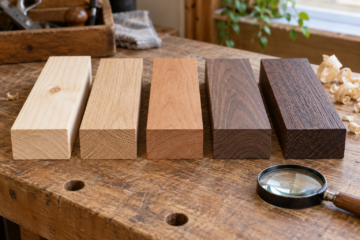
| Natural color | Pinkish tan to reddish brown; darkens with light exposure | Creamy white to pale tan; generally stays lighter under a clear finish |
| Grain and figure | Usually fine, with occasional curl, gum streaks, or small knots | Fine and subtle; hard maple often looks especially uniform |
| Stain behavior | Can blotch, especially with dark stain, but often looks good unfinished under clear coat | Can blotch noticeably; dark or uneven stain is difficult to control |
| Cabinet-panel trade-off | Warm, changing color and more visible natural variation | Bright, clean appearance, but preparation and finishing need care |
| Relative cost | Often pricier than common maple, depending on grade and local supply | Commonly available in several grades; plain stock can be the cheaper option |
Choose cherry for built-in warmth
Cherry is a good fit if you want the cabinet to look warm without applying a colored stain. A clear finish deepens its pink and reddish tones, and exposure to light gradually shifts the wood toward a richer brown. That color change is normal, not a finish defect. It can be quite noticeable: a door kept behind a closed cabinet or shielded by hardware may stay lighter than the surrounding exposed surface.
That aging matters when matching new panels to existing cherry cabinets. A fresh door may initially look pinker and paler than the older casework, then move closer over months or years. Don’t try to force an exact match with a dark stain before testing samples; stain can exaggerate cherry’s uneven absorption and obscure the natural grain. If matching is important, finish a sample with the actual topcoat and compare it with the installed cabinets in the room’s lighting.
Cherry is also less uniform than a perfectly plain panel. Small gum streaks, mineral marks, and changes in grain are part of its appearance. Buy by the visible face and intended layout, not just by the species label. A clear finish will not hide those differences.
Choose maple for a lighter, cleaner look
Maple suits kitchens where you want pale panels that don’t turn strongly reddish. Under a clear finish, it takes on a modest amber or honey cast, especially with oil-based products. Water-based finishes generally preserve a lighter look, though they can raise the grain and may look slightly less warm. Test the exact finish on offcuts: “clear” does not mean colorless.
Maple’s hard, close grain can make it seem easy to finish, but it is unforgiving of sanding scratches and uneven stain. A dark pigment stain may sit unevenly across the face and absorb differently at end grain, joints, or areas sanded more aggressively. If the plan calls for a natural, clear finish, maple is a sensible choice. If it calls for dark brown color, consider a different species or make a substantial sample board before committing.
Hard maple is dense and durable, but it is not automatically the best maple for every panel. Softer maple species can differ in color and hardness, and boards vary by grade. Ask the supplier what species is being sold when consistent color or a close match matters.
Match the wood to the panel construction
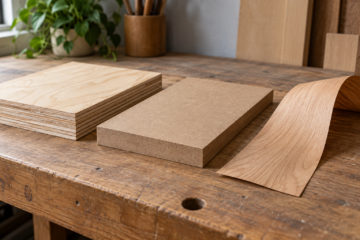
For flat cabinet doors, veneer plywood is often more stable and economical than a solid-wood panel. A cherry- or maple-veneered panel gives the desired face appearance while reducing the risk of seasonal movement across a wide door. Check that the exposed veneer is thick enough for the planned sanding; a thin face can be damaged quickly by aggressive machine sanding.
For a solid-wood panel, allow it to move across its width as humidity changes. A floating panel in a frame needs clearance in its grooves rather than glue along all four edges. Gluing a wide solid panel rigidly into the frame can cause a split or a bowed door. The same movement rule applies to both species; neither cherry nor maple is exempt.
Prepare and finish without blotches or scratches
Start with flat, clean faces and sand evenly. For most cabinet panels, work through 120 and 150 grit, then stop around 180 grit for a clear finish unless the finish maker specifies otherwise. Sanding maple much finer can reduce absorption and make a stained surface less predictable. Cherry usually needs no stain to look warm, so extra-fine sanding is not a shortcut to a better color.
Inspect under raking light before coating. Fine cross-grain scratches often appear only after a clear finish makes them stand out. Ease sharp edges slightly; finish tends to pull thin at crisp corners, leaving them less protected. Remove dust with a vacuum and a clean, lint-free cloth rather than smearing it into the surface.
For a warm, durable cabinet finish, a clear oil-modified or water-based polyurethane is a practical category to compare. Oil-modified products usually add amber color; water-based products usually keep maple paler. For a lower-sheen, hand-rubbed look, compare a clear hardwax oil for cabinets, but check its maintenance instructions and suitability for kitchen use. For a film finish, compare water-based clear polyurethane and oil-modified alternatives. Follow the label for coat count and cure time; a surface that feels dry may still be too soft for installation or cleaning.
Make a sample before ordering all the panels
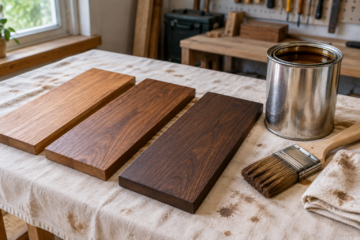
Use offcuts from the same batch, sand them with the same sequence, and apply the complete finish schedule. Make at least two samples if you are choosing between cherry and maple, and compare them beside the cabinet boxes, countertop, and floor. Check in daylight and under the room’s evening lights. A small sample won’t show every board variation, but it can reveal the biggest mistake: expecting pale maple to look like cherry, or expecting new cherry to match aged cherry immediately.
If budget is tight, plain maple with a clear water-based finish is a reasonable, often less expensive option for a light cabinet. If the goal is a naturally warm panel with minimal color work, cherry may save time and look richer, but it costs more in some markets and will continue to change color. Buy the species whose natural color you like before finishing; clear coat can refine that color, not replace it.
0 Comments