What's inside
As an Amazon Associate I earn from qualifying purchases. This post may contain affiliate links at no extra cost to you.
Our Top Picks
 Zinsser Bulls Eye Water-Base Primer & Sealer32 Fl Oz (Pack of 1)4.25 x 4.25 x 4.85 inches0 PoundsCheck on Amazon

The short answer
For smooth painted molding, MDF is usually the better value. It machines cleanly, has no grain to telegraph through paint, and is widely available in primed profiles. HDF is denser and harder, so it can produce crisper edges and resist small dents better, but it costs more and is not automatically easier to finish.
Choose MDF for most interior baseboard, casing, crown molding, and wall trim. Choose HDF when the molding will receive heavy abuse, needs especially sharp detail, or comes factory-primed with a noticeably better surface. The quality of the specific board, primer, machining, and installation matters at least as much as the MDF-versus-HDF label.
As an Amazon Associate we earn from qualifying purchases at no extra cost to you.


What MDF and HDF are
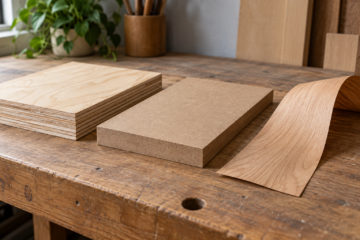
Both materials are made from refined wood fibers combined with resin and pressed into panels or molded profiles. MDF is generally less dense than HDF, although density varies by manufacturer and product. HDF uses more fiber and pressure, producing a harder, heavier board with a tighter surface.
Neither material has a natural wood grain, which is a major advantage for painted work. You do not have to fill open pores as you would with oak or ash, and there is no grain direction to emphasize accidentally with sanding. However, cut ends and routed areas are more porous than the factory face and need extra preparation.
| Characteristic | MDF | HDF |
|---|---|---|
| Typical cost | Lower | Higher |
| Surface smoothness | Very good when factory-primed | Very good, often slightly harder |
| Resistance to dents | Moderate | Better |
| Cutting and routing | Easy, but dusty | Harder on blades and cutters |
| Weight | Lighter | Heavier |
| Moisture tolerance | Poor unless specifically treated | Still poor unless specifically treated |
Choosing for painted molding
MDF is the practical choice for most rooms. A good primed MDF profile can be painted to a smooth, uniform finish with minimal filling. It is also easier to find in common thicknesses and decorative shapes. For a typical living room or bedroom, the extra hardness of HDF rarely changes the finished appearance.
HDF earns its higher price in high-traffic areas such as hallways, playrooms, commercial interiors, and homes where furniture frequently contacts the baseboard. It is less likely to show a shallow impact mark, though it can still chip at corners. HDF is also useful for narrow, highly detailed trim where crisp machined edges are important.
Do not assume HDF solves movement or moisture problems. Both materials can swell when exposed to water, and swollen fibers do not sand back to their original shape. For bathrooms, laundry rooms, and areas likely to receive wet mopping, consider moisture-resistant MDF or a different material such as PVC, polyurethane, or properly sealed solid wood.
Surface preparation that prevents failures
Start by inspecting the molding under strong side lighting. Reject pieces with swollen edges, crushed corners, loose primer, or visible waviness. A smooth painted result cannot hide a bowed board or a damaged factory surface. Store the molding flat and allow it to acclimate indoors for at least 48 hours before installation.
Lightly sand factory-primed faces with 180- or 220-grit paper. The purpose is to remove raised fuzz and dull the sheen, not to strip the primer. Sanding aggressively can expose porous fibers, especially along routed details. Use a sanding sponge or folded paper on profiles rather than forcing a flat block into curves.
After cutting, sand the ends with 150- or 180-grit paper. End grain in MDF and HDF absorbs primer quickly and can remain visibly rough after one coat. Brush on a thin coat of water-based wood primer-sealer or a dedicated MDF edge sealer. Let it dry, sand with 220 grit, and apply a second coat if the fibers still look thirsty.
Fill nail holes and small gaps with a paintable filler. For larger dents or chipped corners, use a two-part filler rather than relying on latex caulk. Caulk is flexible and useful at the wall-to-trim joint, but it is not a durable repair for missing material. Sand filler flush after it dries, then spot-prime those areas.
Painting MDF and HDF cleanly
Use a quality acrylic or waterborne enamel intended for trim. Thin paint can raise the surface slightly and may require another sanding pass, while very thick paint can obscure crisp molding detail. Apply two modest coats instead of one heavy coat. A high-quality 2-inch angled brush works well for profiles; a small microfiber or foam roller can improve coverage on broad flat sections.
Follow the paint label for recoat time, but do not judge dryness only by touch. Trim paint may feel dry while remaining soft underneath. Sanding or stacking pieces too soon can leave fingerprints and dull patches. In normal indoor conditions, allowing 24 hours before handling aggressively is a safer target.
For the smoothest result, lightly sand between coats with 320 grit after the first coat has hardened. Remove dust with a vacuum and a clean, slightly damp lint-free cloth. Do not use tack cloths that leave oily residue unless the manufacturer specifically recommends them.
Installation and long-term trade-offs
MDF and HDF hold finish nails well, but neither is as forgiving as solid wood near an edge. Keep nail holes at least 1/2 inch from the end when possible, and drill a pilot hole for delicate narrow returns. A nail driven too close to an end can split or blow out the profile.
HDF is noticeably heavier. Long lengths can sag or twist while you are positioning them, and large crown molding may require an extra set of hands. MDF is easier to carry and cut, but its softer edges are more vulnerable during transport. Whichever material you buy, support long pieces every 16 to 24 inches and protect finished faces from grit on the floor.
For a normal interior repaint or new trim project, buy well-primed MDF and spend the savings on better filler, primer, and paint. Move up to HDF when dent resistance, sharp detail, or a particularly durable factory surface justifies the added cost. Either material can produce professional-looking molding, but careful edge sealing and patient sanding determine whether the finish stays smooth.
0 Comments