What's inside
As an Amazon Associate I earn from qualifying purchases. This post may contain affiliate links at no extra cost to you.
For a painted cabinet door, solid wood is not automatically the premium choice. In many kitchens and built-ins, veneered MDF produces a flatter, more predictable painted surface for less money. Solid wood still has important advantages, especially for traditional raised-panel doors, exposed edges, and rooms where dents and future repairs matter.
The right choice depends on the door design, the quality of the substrate, and how carefully the surface is prepared. Paint hides color differences, but it does not hide movement, poor glue joints, soft edges, or sanding scratches.
As an Amazon Associate we earn from qualifying purchases at no extra cost to you.

How the Materials Differ
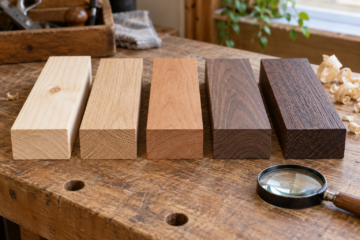
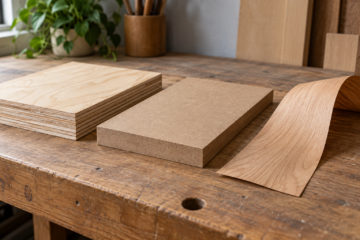
Solid wood is cut from boards of one species, such as maple, poplar, oak, or walnut. Its grain runs through the entire part. Veneered MDF consists of a stable medium-density fiberboard core covered with a thin layer of real wood. For a painted door, the veneer is often a minor visual feature because the primer and paint cover it, but it can still matter at exposed edges or if the finish becomes damaged.
MDF is made from refined wood fibers and resin pressed into a uniform panel. It has no grain direction and expands and contracts less across its face than solid lumber. That stability is the main reason it performs well as a flat painted door material.
| Factor | Solid wood | Veneered MDF |
|---|---|---|
| Flat painted surface | Can move or cup, especially in wide panels | Usually very flat and stable |
| Edge durability | Excellent; edges can be rounded and repaired | Good on the face, but MDF edges are softer and need sealing |
| Machining profiles | Works well for traditional rails, stiles, and raised panels | Works well for routed profiles, but thin areas can chip |
| Moisture tolerance | Can be repaired and refinished, but may swell or warp | Standard MDF swells badly when soaked |
| Cost and yield | Higher cost and more waste from knots and defects | Usually cheaper, with consistent sheet yield |
| Best use | Durable traditional doors and exposed woodwork | Flat, shaker, and painted routed doors |
When Veneered MDF Is the Better Buy
Choose veneered MDF for slab doors, simple shaker doors, and most modern painted cabinet work. A 3/4-inch panel remains flat more reliably than a wide solid-wood board, provided the cabinet is kept reasonably dry and the panel is sealed on every surface.
MDF is also easier to machine consistently. A sheet can produce many doors with matching dimensions, while solid lumber requires milling, acclimation, grain matching, and careful allowance for seasonal movement. The savings are real when you are building a full kitchen rather than one replacement door.
Do not confuse veneer-covered MDF with a finished, waterproof product. Standard MDF edges are porous. If an unsealed edge contacts a wet countertop or receives a leak, it can swell permanently. Use a moisture-resistant MDF panel where appropriate, but do not treat it as waterproof. A sink cabinet still needs good caulking, a protective topcoat, and prompt cleanup of standing water.
For a smooth painted result, inspect the panel before cutting. Reject sheets with swollen corners, damaged veneer, or loose surface fibers. A dedicated MDF edge sealer or high-build primer is useful on routed and cut edges.
When Solid Wood Is Worth It
Solid wood makes more sense for doors with substantial raised panels, bead details, or narrow rails and stiles that need crisp, durable edges. It is also the better repair material. A dent can often be steamed, sanded, filled, and repainted; a deeply swollen MDF edge generally must be cut away or replaced.
Use stable species for painted doors. Poplar is a common economical choice because it machines well and takes primer readily, although it is relatively soft and may dent. Hard maple gives tougher edges but costs more and can show uneven primer absorption. Pine is inexpensive, but knots, resin, and movement make it more demanding under a light-colored paint finish.
Solid wood is not a single, stable block. A wide solid panel can cup or split as its moisture content changes. In a frame-and-panel door, the panel should usually float in grooves rather than be glued rigidly into the frame. Leave roughly 1/8 inch of total movement allowance in the panel groove for a typical cabinet-sized panel, then confirm the design against the panel’s width, species, and indoor humidity.
Surface Preparation and Painting
Preparation determines the result more than the label on the sheet. Sand raw MDF faces lightly with 150-grit paper, then remove dust. Do not aggressively sand through a thin veneer; once the wood layer is breached, the exposed MDF will absorb primer differently and may telegraph through the paint.
Seal MDF edges before final sanding. Two or three thin coats of primer are safer than one heavy coat. Let each coat dry according to its label, then sand lightly with 220-grit paper. If the edge still looks fuzzy or drinks in primer, apply another coat rather than sanding harder.
On solid wood, sand progressively through 150 and 180 grit, stopping at 180 or 220 grit for most painted work. Fill nail holes and minor defects with a paintable filler, then sand them flush. Seal knots with a stain-blocking primer; ordinary water-based primer may not stop pine resin from bleeding through.
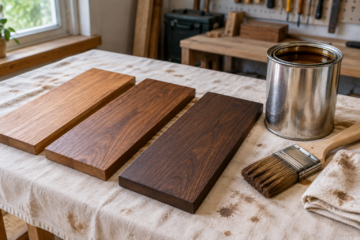
For either material, use a high-build cabinet primer when the surface has open grain, routed edges, or small scratches. Apply paint with a fine microfiber or foam roller, or spray if you can control dust and overspray. Two finish coats are typical. Lightly sand between coats only when the surface needs it; unnecessary sanding can create flat spots on profiles.
Common Failure Modes
Painted solid-wood doors commonly fail when end grain is left unsealed, boards are glued with mismatched moisture content, or a floating panel is accidentally glued in place. The symptoms are cracked joints, split panels, and visible seams after a heating or cooling season.
Veneered MDF doors commonly fail at exposed corners and bottom edges. A dropped door can chip the veneer, while water can raise the MDF core. Ease sharp corners with a small sanding block, seal all cut edges, and leave a consistent finish around the entire door rather than painting only the visible face.
If the door is a simple painted slab or shaker style, veneered MDF is usually the sensible purchase. Choose solid wood when you need traditional construction, tough repairable edges, or a substantial profiled door. In both cases, careful sealing and primer work will matter more than paying for a premium species that the paint completely hides.
0 Comments