What's inside
As an Amazon Associate I earn from qualifying purchases. This post may contain affiliate links at no extra cost to you.
For a pale, evenly stained project, birch is usually the more practical choice—but not automatically the easier one. Both sycamore and birch are light-colored hardwoods with relatively fine grain, and both can produce a clean contemporary finish. The difference is that birch tends to absorb stain unevenly unless it is carefully prepared, while sycamore is often more forgiving in appearance but can be harder to find in wide, clear boards.
The final result depends as much on board selection, sanding, and stain choice as on species. A dark or heavily pigmented stain will expose defects in either wood. For the most uniform pale color, use a light dye or a thin, low-pigment stain rather than trying to force a dark color into naturally pale timber.
As an Amazon Associate we earn from qualifying purchases at no extra cost to you.

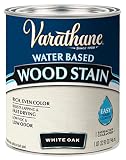


Our Top Picks
 Varathane Total Control Ipswich Pine Gel StainHalf Pint (Pack of 1)2.88 x 2.88 x 2.97 Inches0.7 PoundsCheck on Amazon
 Varathane Premium Fast Dry Western Oak Wood StainQuart (Pack of 1)4.25 x 4.25 x 4.9 inches2 poundsCheck on Amazon


Appearance and grain
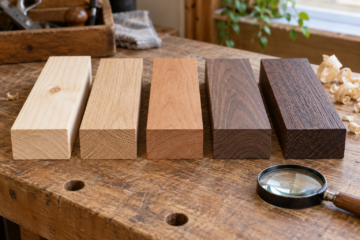
American sycamore has a creamy white to pale tan color, often with subtle gray or pink tones. Its grain is usually interlocked or irregular, with a fine to medium texture. Quarter-sawn sycamore can show a distinctive flecked figure, while flat-sawn boards are comparatively quiet. That variation can be attractive, but it means a large panel may not look perfectly uniform from board to board.
Birch is generally pale cream to light yellow, sometimes with a faint reddish or brown cast. Its grain is usually straight and fine, though curly or figured birch is also sold. Birch plywood has a particularly consistent surface when the veneer is good, which is one reason it is common in cabinets, furniture parts, and painted or lightly stained projects.
| Characteristic | Sycamore | Birch |
|---|---|---|
| Natural color | White to creamy tan, sometimes gray or pink | Cream to pale yellow, sometimes reddish |
| Typical grain | Fine to medium, often interlocked | Fine, usually straight and visually calm |
| Stain behavior | Moderate absorption; figure can vary across boards | Prone to blotching, especially on end grain and flatsawn stock |
| Hardness | About 770 lbf on the Janka scale | About 1,260 lbf, depending on species and source |
| Best fit | Solid furniture and panels where subtle variation is acceptable | Cabinet parts, plywood, and projects needing better dent resistance |
Which one stains more evenly?
Sycamore has the edge if you are using a conventional penetrating stain and want fewer abrupt dark patches. It still needs careful sanding, but its absorption is often less dramatic than birch’s. The trade-off is that sycamore’s interlocked grain and natural color differences can create a surface that is evenly colored but not perfectly uniform.
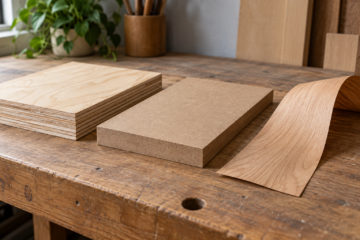
Birch is notorious for blotching. Soft areas can absorb stain quickly while denser areas remain pale, producing cloudy patches or dark stripes. This is most obvious with oil-based stains containing a lot of pigment. Birch plywood can be more predictable than solid birch, but the thin face veneer can sand through easily, especially around edges.
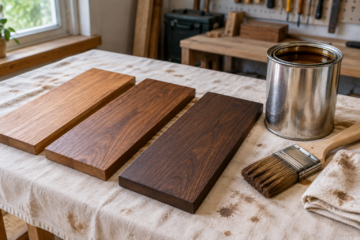
For either species, test the complete finishing schedule on an offcut. Sand it exactly as you will sand the project, apply the same conditioner, stain, and topcoat, and inspect it in daylight. A test that looks acceptable under a workshop’s warm lighting may appear noticeably yellow or patchy near a window.
Surface preparation that prevents patchiness
Start with sharp abrasives and remove mill marks progressively. For most furniture surfaces, sand through 120, 150, and 180 grit. Stop at 180 grit for a penetrating stain unless the product specifically recommends finer sanding. Sanding to 220 grit can close the surface enough to reduce absorption, creating a lighter result and sometimes more uneven color between faces and edges.
Break sharp edges with one or two light passes by hand. Do not round them heavily; just remove the knife edge. End grain absorbs stain much faster than face grain, so it will usually turn darker. On visible end grain, sand to 180 or 220 grit and apply fewer stain coats. Some woodworkers use a thin coat of finish or diluted glue sizing to reduce end-grain absorption, but that must be tested because it can create a visibly pale border.
Remove dust with a vacuum and a clean, lightly damp microfiber cloth. Avoid soaking the surface. Water can raise the grain, and aggressive wiping can move fine dust into pores or leave contaminants behind.
Conditioner, dye, and stain choices
A pre-stain conditioner can reduce blotching on birch, but it also reduces color strength. The result may be more even yet too pale. Follow the can’s timing instructions closely; applying stain after the conditioner has dried for several hours can behave differently from applying it within the stated window. Pre-stain wood conditioner is most useful when you want a conventional stain color and can accept some loss of contrast.
For the most even pale color, consider a water-based dye or a lightly tinted water-based finish. Dye colors the wood more uniformly because the colorant is finer and less dependent on the wood’s pores. Dye can also make birch look flat if applied too heavily, so start with a weak mix or a single thin coat. Water-based products raise the grain; pre-raise it with a damp cloth, let it dry, and sand lightly with 220 grit before coloring.
Gel stain is another option for birch because it stays closer to the surface. It is less likely to flood soft areas, but it can look painted or muddy on fine-grained wood if brushed too heavily. Use a thin coat, wipe consistently, and avoid overlapping wet edges. For a nearly natural finish, a clear water-based polyurethane with a satin sheen may be enough after sanding, especially on sycamore.
Buying and finishing recommendations
Choose sycamore when the project uses solid boards, a softer tactile surface is acceptable, and you prefer subtle natural variation over a perfectly controlled color. It is a good choice for table parts, drawer fronts, and decorative panels where the grain can remain visible. Inspect boards for broad color changes and lay them out before glue-up.
Choose birch when dent resistance, availability, or plywood construction matters. It is often the cheaper and more convenient option, and it is perfectly adequate for shelves, cabinet interiors, painted furniture, and utility pieces. If the project will be painted rather than stained, birch’s blotching tendency matters far less. For solid birch, plan on using stain application pads or a clean lint-free cloth so you can spread a thin, controlled film.
Protect the finished surface with two or three thin coats of clear finish, sanding only as directed between coats. A water-based topcoat preserves a pale appearance better than many oil-based finishes, which add an amber cast. If you want the least yellowing and the most predictable result, use a water-based satin finish and judge the sample after it has fully cured—usually several days, not immediately after the last coat.
0 Comments