What's inside
As an Amazon Associate I earn from qualifying purchases. This post may contain affiliate links at no extra cost to you.
Our Top Picks
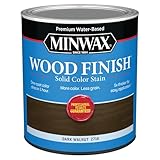
 Minwax Wood Finish Water-Based Semi-Transparent Color Stain32 Fl Oz (Pack of 1)4.25 x 4.25 x 4.88 inches2.47 poundsCheck on Amazon
 Varathane Dark Walnut Wood Stain1 Quart (Pack of 1)4.25 x 4.25 x 4.9 inches2.4 poundsCheck on Amazon

The short answer
White oak usually gives the more predictable water-based stain result. Its open, ring-porous grain shows stain strongly, but the pattern is relatively easy to anticipate: darker bands form around the earlywood pores. Beech has a fine, even texture, yet it can absorb water-based stain unevenly and develop cloudy patches, especially with dark colors or inconsistent sanding.
That does not make beech a poor choice. For pale, natural-looking finishes, or when you are willing to test and prepare sample boards, beech is often the cheaper, practical option. If the goal is a deep, uniform color with less trial and error, white oak is generally the safer starting point.
As an Amazon Associate we earn from qualifying purchases at no extra cost to you.


Why they stain differently
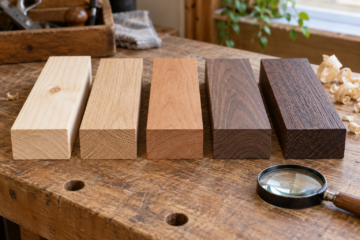
White oak is ring-porous: its large pores are concentrated in the earlywood bands, with denser latewood between them. A penetrating stain makes that structure more visible. The result is usually an obvious grain pattern rather than a flat, uniform color. Oak’s tyloses—structures that block many vessels—also help distinguish white oak from red oak, though they do not make its surface stain evenly in the sense of looking solid-colored.
Beech is diffuse-porous, with smaller vessels spread more evenly through the growth ring. That finer grain can look smoother under a clear coat, but water-based stain may highlight subtle differences in density, grain direction, or sanding. Beech can take on a blotchy, streaked appearance, and its pale color makes dark pigment differences especially noticeable.
Both species raise grain when exposed to water. A water-based stain can leave fibers standing after application, so a surface that felt smooth before staining may feel rough once dry. This is a preparation issue, not evidence that the wood is defective.
White oak vs. beech at a glance
| Factor | White oak | Beech |
|---|---|---|
| Grain appearance | Prominent pores and strong ring pattern | Fine, even grain with less obvious pores |
| Water-based stain behavior | Usually predictable, but stain accentuates grain | Greater risk of uneven or cloudy color |
| Best color direction | Medium to dark tones that suit visible grain | Natural, pale, or carefully tested light colors |
| Preparation sensitivity | Moderate; sanding marks can show across the grain | High; uneven sanding and absorption can show as patches |
| Good reason to choose it | Defined grain and a forgiving route to a consistent stained look | Lower cost, smooth appearance, or a light finish |
Choose by the finish you want
Choose white oak if you want the grain to remain part of the design. A medium brown or warm gray stain will typically make the earlywood pores stand out. If you want a nearly uniform, painted-looking color, neither species is the easiest route; use paint or an opaque finish rather than expecting stain to hide the grain.
Beech makes sense when price matters and the intended finish is close to its natural light color. A clear water-based topcoat may be enough. It can also work with tinted or light stains, but judge the result on an offcut from the same board. One sample from a different piece may not capture the variation in your actual stock.
For a dark color on beech, plan on more testing. A water-based pre-stain conditioner may reduce uneven absorption, but it can also make the final color lighter or less distinct. Follow the product’s timing instructions; applying stain too soon or too late can change the result. Conditioner is a control, not a guarantee.
Prepare the wood and test first
Sand both species evenly, typically finishing at 150 or 180 grit for a penetrating stain. Going much finer can reduce absorption and leave a lighter, less even color; stopping too coarse can leave scratches that dark stain makes obvious. Use the same grit and sanding method on every face. On oak, check across the grain under angled light for scratches. On beech, watch for shiny burnished patches from excessive pressure or dull abrasives.
Raise the grain before staining: wipe the surface lightly with clean water, let it dry completely, then remove the raised fibers with a gentle pass at the final grit. Do not scrub hard or round over edges. After sanding, remove dust with a vacuum and a clean cloth; avoid leaving a wet or oily residue that could interfere with the finish.
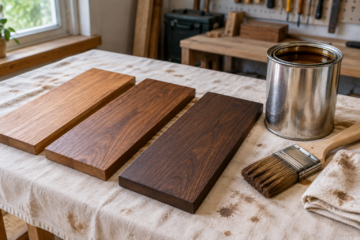
Make test pieces at least several inches wide and long enough to include visible grain. Sand them exactly like the project, apply the stain at the intended coverage rate, and use the same wiping method and drying time. For a large surface, test a second coat only if the stain instructions permit it. A water-based wood stain can look different after its compatible clear topcoat is applied, so evaluate the complete finish rather than the stain alone.
Application pitfalls that cause uneven color
Water-based stains often dry faster than oil-based stains. If you pause halfway across a tabletop, lap marks can form where the wet edge dried. Work in manageable sections, keep a wet edge, and apply at a consistent rate. On a broad panel, two people can help: one applies while the other wipes, if the stain directions call for wiping.
Do not let excess stain puddle in corners, end grain, or oak pores. Wipe it consistently with a clean cloth, using the same pressure and timing. Beech end grain may absorb more stain than its face grain; sealing end grain lightly or applying stain carefully can reduce a dark edge, but test first because spot sealing can create its own color boundary.
Finally, allow the stain to dry for the full time on the label before applying a topcoat. Trapped moisture or stain beneath the clear coat can cause poor adhesion, cloudy areas, or a tacky surface. A water-based clear coat keeps the overall color relatively light, while some other clear finishes can warm or deepen it. Confirm compatibility with the stain maker and test the full schedule.
A practical buying decision
Buy white oak when a visible, distinctive grain is desirable and you want a more predictable route to a stained finish. It costs more in many markets, and its pores make a perfectly flat-looking color unrealistic, but the grain character is consistent with what most people expect from oak.
Buy beech when the lower price, pale color, or fine texture matters more than effortless dark staining. It is a sound choice for light finishes and smaller projects where you can test the actual boards. If the project is large, the color is dark, and there is no room for sample work, paying more for white oak can be cheaper than redoing blotchy beech.
0 Comments