What's inside
As an Amazon Associate I earn from qualifying purchases. This post may contain affiliate links at no extra cost to you.
Our Top Picks
 Minwax 233334444 Polycrylic Protective Wood Finish8 fl oz2.9 x 2.9 x 3 inches0.66 poundsCheck on Amazon


Choosing Between Cherry and Alder for a Warm Water-Based Stain
Cherry and alder are both good choices when you want a warm, furniture-like finish without using an oil-based stain. They are relatively fine-grained hardwoods, easy to machine, and compatible with modern water-based stains and topcoats. The important difference is that cherry brings more natural color and figure, while alder is paler, softer, and more dependent on the stain for its final appearance.
For a cabinet door, table, or built-in, choose cherry when you want the wood itself to remain the main feature. Choose alder when you want a lower-cost blank canvas that can be pushed toward honey, caramel, walnut, or reddish-brown tones.
As an Amazon Associate we earn from qualifying purchases at no extra cost to you.


How the Two Woods Take a Warm Stain
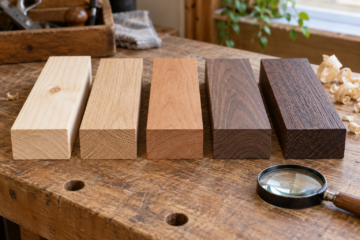
Fresh cherry is usually light pink, tan, or salmon-colored. It darkens substantially with age and light exposure, often becoming a deeper reddish brown over several years. A warm water-based stain can make new cherry look more immediately developed, but it can also obscure the subtle grain that makes cherry valuable.
Alder is generally pale tan to pinkish brown, with less dramatic color variation than cherry. Its grain is usually subdued, and some boards have a knotty or rustic appearance. Because alder starts lighter, it shows warm stains clearly. A honey, amber, golden oak, or light walnut color can look convincing on alder, but darker stains may expose blotchiness and uneven absorption.
| Characteristic | Cherry | Alder |
|---|---|---|
| Natural color | Pink, salmon, and reddish tan | Pale tan to soft pink-brown |
| Grain visibility | Moderate, often refined and understated | Subtle, sometimes rustic or knotty |
| Stain absorption | Usually fairly even, but end grain can darken | More likely to absorb unevenly, especially on broad panels |
| Hardness and dent resistance | Harder and more resistant to everyday dents | Softer and easier to dent or bruise |
| Typical cost | Higher | Lower |
Which Wood Is the Better Buy?
Cherry is the safer choice when the project will receive heavy use or when you want a naturally rich result with less dependence on pigment. It is harder than alder, although it is not immune to dents. It also tends to look better with a clear water-based finish alone or with a very lightly tinted washcoat.
Alder is often the better value for painted furniture, bedroom pieces, decorative trim, and cabinet work where the surface will not take severe abuse. It costs less, machines easily, and accepts warm color attractively when prepared properly. The lower price also makes it practical to buy extra boards for testing. That matters because alder can vary noticeably from board to board.
Do not buy alder simply because it is cheaper if the finished piece will be a dining table, desk, or busy kitchen island. A water-based stain and finish will not prevent dents from showing in a soft wood. For those uses, cherry costs more up front but can hold its appearance better.
Surface Preparation for Water-Based Stain
Sand both species consistently, but be especially careful with alder. Start at 100 or 120 grit if the boards are rough, then progress through 150 and 180 grit. For most water-based stains, 180 grit is a reliable stopping point. Sanding much finer than 220 grit can reduce absorption and make the color lighter or less uniform.
Remove mill marks before moving to the next grit. Random orbital sanding scratches that remain at 120 grit can become obvious after staining. Vacuum the surface, then wipe it with a clean, slightly damp cloth to raise loose fibers. Let the wood dry completely and lightly sand the raised fibers with 180 grit. Avoid using a dirty shop rag; oil, silicone, and polishing residue can cause fisheyes in the finish.
Ease sharp edges with a few hand passes of 180 grit. Stain tends to collect on crisp edges and end grain, producing dark lines. A small radius is not just a visual improvement; it also gives the finish a better chance of staying intact.
Preventing Blotchy Color
Alder is the greater blotching risk, particularly on wide flat-sawn boards and around knots. Cherry is usually more predictable, but it can still develop dark end grain and uneven color where sanding pressure varies.
Before staining, test the complete schedule on an offcut: sanding, conditioner or washcoat, stain, and topcoat. A pre-stain conditioner made for water-based products can help, but it may also make the color too weak. Another option is a thin washcoat of compatible water-based finish. A common starting point is one part finish to about three or four parts water, but the correct dilution depends on the product. Apply it lightly, allow it to dry, and test before committing to the project.
For reliable testing, make sample panels at least 12 by 18 inches. Small scraps can hide unevenness that becomes obvious on a cabinet side. Compare samples under the lighting used in the room, because warm indoor bulbs can make amber stains look much redder.
Applying a Warm Water-Based Stain
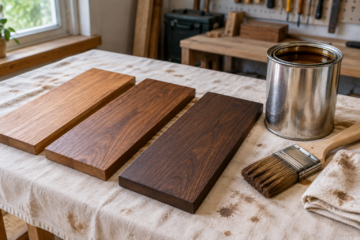
Stir the stain thoroughly rather than shaking it, which can introduce bubbles. Apply a controlled coat with a synthetic brush, pad, or spray system, then wipe off the excess according to the label. Water-based stain dries quickly, often within 5 to 15 minutes depending on humidity and airflow. Work in manageable sections and keep a wet edge; stopping halfway across a panel can create lap marks.
Use distilled water if your tap water is hard or heavily treated, particularly when diluting a product. Keep the shop between roughly 60 and 80 degrees Fahrenheit. High humidity extends drying time, while hot, dry conditions can make wiping difficult.
For cherry, start with a lighter warm stain than you think you need. Cherry’s natural color and later aging will deepen the result. For alder, a medium amber or honey stain may be appropriate, but use a conditioner or washcoat if the test board shows dark patches. If you need a very dark, uniform color, a tinted water-based finish or dye schedule may be more controllable than a heavily pigmented stain.
For the stain itself, compare several warm amber water-based wood stains rather than choosing by the color printed on the label. Color names are not standardized, and the wood species changes the result.
Choosing the Topcoat
After the stain has dried fully, apply a compatible water-based clear finish. A satin sheen is forgiving on furniture and hides minor surface defects better than gloss. Apply two or three thin coats, sanding lightly with 320 grit between coats only when the manufacturer permits it. Do not judge the final color until the clear finish is applied; water-based topcoats can slightly deepen or brighten the stain.
Use satin water-based polyurethane for general furniture protection. For a low-wear decorative project, a simpler clear acrylic finish may be enough. The best budget decision is usually alder with careful sample testing. The best long-term material decision for a frequently used piece is cherry, especially when a warm, natural appearance matters more than the lowest initial cost.
0 Comments