What's inside
As an Amazon Associate I earn from qualifying purchases. This post may contain affiliate links at no extra cost to you.
Our Top Picks
 Restore-A-Deck Semi-Transparent Wood Stain for Decks2.5 Gallons6 x 4 x 10 Inches9 PoundsCheck on Amazon
 ANCHORSEAL 2 Log and Lumber End Grain Sealer1 Quart4.15 x 4.2 x 4.95 inches2.18 PoundsCheck on Amazon


Larch vs Western Red Cedar for Transparent Exterior Finishes
Both larch and Western red cedar can look excellent under a transparent exterior finish, but they do not behave the same way. Cedar is lighter, softer, and usually more predictable to coat. Larch is harder and denser, with a stronger grain pattern and more variation between boards. It can last well outdoors, but it demands better surface preparation and a more carefully chosen finish.
The important distinction is that a transparent coating does not make either species maintenance-free. Sunlight breaks down exposed wood fibers, while rain and changing moisture cause boards to swell and shrink. A clear film may need attention every one to three years, depending on exposure. A penetrating stain usually wears more gradually and is easier to renew.
As an Amazon Associate we earn from qualifying purchases at no extra cost to you.


Quick comparison
| Characteristic | Larch | Western red cedar |
|---|---|---|
| Typical appearance | Yellow to reddish brown, often with strong contrast and knots | Light pink, red, or brown, generally more uniform |
| Density and hardness | Moderately hard and heavy | Light and soft |
| Coating difficulty | More demanding; resin, dense bands, and rough grain can interfere | Usually easier to wet with penetrating finishes |
| Dimensional movement | Moderate to high, especially in wide boards | Moderate, but still significant outdoors |
| Resistance to decay | Moderate; heartwood performs better than sapwood | Good natural decay resistance in heartwood |
| Best transparent finish | Pigmented penetrating stain or flexible exterior oil | Pigmented stain, oil, or a high-quality exterior clear coat |
Appearance and color retention
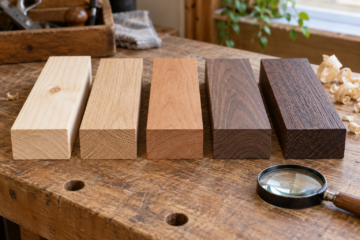
Larch is the better choice when you want a more pronounced, architectural grain. Flat-sawn larch can show dramatic earlywood and latewood bands, and knots are common in economical grades. Its fresh color ranges from honey yellow to orange-brown, but unprotected larch quickly turns gray outdoors. The gray is not necessarily a defect; it is the result of ultraviolet exposure and weathering.
Western red cedar has a quieter grain and a wider natural color range, from pale straw to chocolate brown. It also turns gray when left unfinished, but its softer surface can weather unevenly if one face receives more sun or rain. A clear finish preserves the original color only temporarily. If maintaining color matters, use a finish containing UV-blocking pigment rather than a completely colorless product.
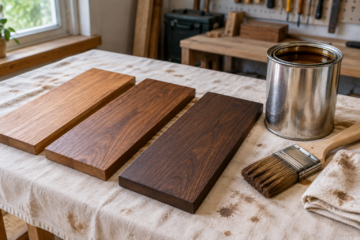
Expect transparent finishes to alter the wood. Oils usually deepen the color and make the grain look wet. Water-based products tend to change the color less, but they may raise the grain and can look slightly cloudy on very porous cedar. Always coat a scrap from the actual project, not a showroom sample.
Choosing the finish
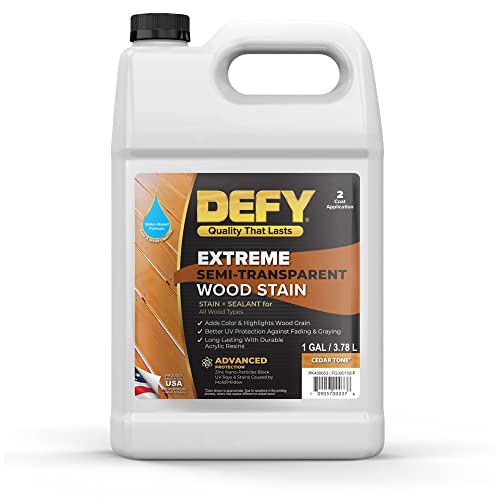
For siding, fences, soffits, and other broad surfaces, a penetrating exterior stain is normally the safest option. Choose a product labeled for exterior wood and containing some pigment. A lightly tinted cedar, honey, or natural-brown stain will provide more UV protection than a clear version while still showing the grain. These products do not form a thick surface film, so peeling is less likely and maintenance generally means cleaning and applying another coat.
For larch, look for a penetrating exterior wood stain with UV protection. Larch’s harder latewood bands may absorb less product than the softer bands, creating a patchy first coat. Applying two thin coats, if the label allows it, usually gives more even color than one heavy coat.
Clear film finishes can produce a sharper, more furniture-like appearance, particularly on cedar. They are a poor choice for a neglected or highly exposed wall, however. Once water gets behind a failing film, localized peeling and black staining can follow. Horizontal surfaces, south- and west-facing walls, and areas near sprinklers are especially hard on clear coatings.
Use a clear exterior wood finish with UV inhibitors only when you accept regular inspections. Plan to renew it when the surface looks dry or loses its water-shedding behavior, not after the coating has cracked and peeled.
Surface preparation and application
New wood should be clean, dry, and free of mill glaze. This is particularly important with planed larch, whose dense surface can resist absorption. Sand smooth boards with 80 or 100 grit, then finish with 120 grit. Going much finer than 150 grit can reduce penetration. Cedar is soft enough that aggressive sanding can create dips, fuzzy fibers, or shiny compressed areas.
Remove sanding dust with a vacuum and a clean brush. Do not leave wet wood under a finish. A moisture meter is useful; aim for roughly 12 to 15 percent moisture content, or follow the coating manufacturer’s limit. If the boards have been exposed to rain, allow several dry days before coating. Apply between about 50°F and 90°F (10°C to 32°C), avoiding direct hot sun, dew, and rain during the product’s stated drying period.
Coat all faces and especially end grain before installation when practical. End grain absorbs water many times faster than the board face. Apply two or three coats of an exterior wood end-grain sealer to cut ends, paying attention to joints, screw holes, and exposed tenons. Do not rely on finish alone to protect a cut end that sits against masonry or a wet horizontal surface.
Common failure modes
Uneven color on larch commonly comes from mixed board orientation, oily resin pockets, or applying stain over mill glaze. Test the stain, wipe off excess as directed, and keep a wet edge. On cedar, lap marks and dark sanding scratches are frequent because the soft wood absorbs finish quickly.
Peeling usually indicates a film finish applied to damp, dirty, weathered, or resinous wood. It can also result from coating too heavily. If the existing finish is already peeling, strip or sand back to a sound surface before recoating; do not simply brush a new clear coat over loose edges.
Black or green discoloration is often moisture-related mildew, but iron contamination can also darken cedar and larch. Keep steel wool, rusty tools, and metal sanding dust away from wet wood. Clean mildew with a suitable exterior wood cleaner, rinse thoroughly, and let the surface dry before sanding or coating.
Which wood should you buy?
Choose Western red cedar when low weight, easy machining, and straightforward finishing matter most. It is often the better value for siding, screens, and trim where you want predictable absorption and a softer, warmer appearance. The cheaper cedar grade is fine for many projects if you accept knots and sort out damaged boards before installation.
Choose larch when you want harder, more impact-resistant boards, a stronger grain pattern, or a lower-cost alternative to premium durable species. Buy carefully: clear, tight-grained larch can cost enough that its appearance advantage disappears. For either species, a lightly pigmented penetrating stain is usually the practical choice. It will not eliminate maintenance, but it gives the most forgiving balance of color retention, repairability, and resistance to peeling.
0 Comments