What's inside
As an Amazon Associate I earn from qualifying purchases. This post may contain affiliate links at no extra cost to you.
Our Top Picks
 ANCHORSEAL 2 Log and Lumber End Grain Sealer1 Quart4.15 x 4.2 x 4.95 inches2.18 PoundsCheck on Amazon

Choosing Between Larch and Cedar for a Stained Structure
Larch and cedar are both sensible choices for exterior garden structures, but they behave differently under stain. Larch is usually denser, harder and more affordable, especially when bought as locally grown European larch. Cedar is lighter, easier to work and generally more stable, but good clear or vertical-grain cedar can cost considerably more.
For a garden office, pergola, shed, screen or covered seating area, the best choice depends less on which species is “most durable” and more on the structure’s exposure, the quality of the boards and your willingness to maintain the finish. A well-prepared, regularly recoated larch structure can outperform neglected cedar.
As an Amazon Associate we earn from qualifying purchases at no extra cost to you.
| Characteristic | Larch | Cedar |
|---|---|---|
| Typical cost | Often lower, particularly in wider or standard construction boards | Usually higher, especially clear and vertical-grain grades |
| Hardness and strength | Harder and tougher; good for posts, frames and flooring | Soft and easy to cut, but dents and scratches more readily |
| Movement | Moderate; can check and split if poorly dried or restrained | Generally good dimensional stability, but still moves with moisture |
| Natural durability | Good heartwood; sapwood is much less durable | Good to very good heartwood durability; sapwood is not reliably durable |
| Stain behaviour | Can absorb unevenly and develop dark, resinous areas | Usually takes penetrating stain evenly, but can also blotch |
| Best fit | Robust structures where price and toughness matter | Lightweight, refined structures where stability and easy working matter |
What Larch Is Like Outdoors
Larch has a useful combination of strength, moderate natural durability and relatively low cost. Its harder surface stands up better to impacts from tools, garden equipment and everyday use than soft cedar. It is a practical choice for exposed pergola posts, shed framing, gates and structural cladding.
The drawbacks appear during drying and finishing. Larch often contains resin pockets, pronounced growth-ring variation and a mixture of dense and soft areas. These differences can make stain absorb unevenly. Resin may bleed through a film-forming coating, particularly on warm, sunny faces or around knots. Boards can also develop end checks and surface splits if their ends are left unsealed.
Buy reasonably dry stock rather than freshly sawn boards. For exterior joinery, aim for timber around 12–18 percent moisture content where practical. Stack it flat with spacers, keep it out of direct rain and allow it to acclimatise before coating. If larch is installed wet and then dries rapidly in the sun, boards are more likely to shrink, cup and open joints.
What Cedar Is Like Outdoors
Western red cedar is light, easy to plane and simple to cut by hand. It has good natural durability in its heartwood and is less demanding on hinges, brackets and wall fixings because it weighs less. Its low density also makes it a comfortable material for screens, roofed structures and decorative cladding.
That softness is a real trade-off. A cedar post can be crushed by an over-tightened bolt, and a bench or low rail can dent from ordinary use. Use washers under bolts and avoid pulling fasteners so tightly that they deform the wood. Cedar’s natural oils and extractives can also interfere with some coatings and may stain adjacent masonry when rain washes across unfinished surfaces.
Clear cedar looks attractive with a transparent stain, but clear grades have a high price and may be wasted if the structure will eventually receive an opaque finish. Knotty cedar is cheaper and perfectly serviceable for rustic work, although knots and contrasting grain will remain visible through translucent products.
Choosing a Stain
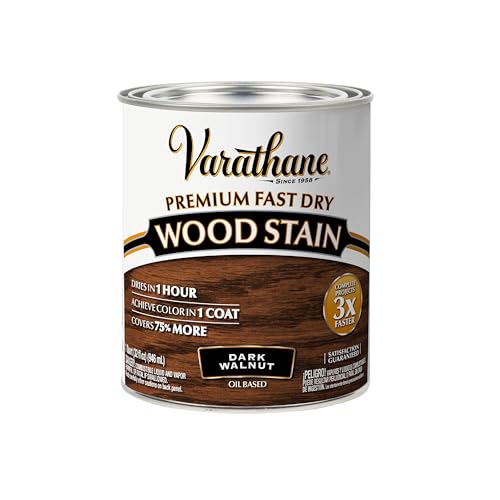
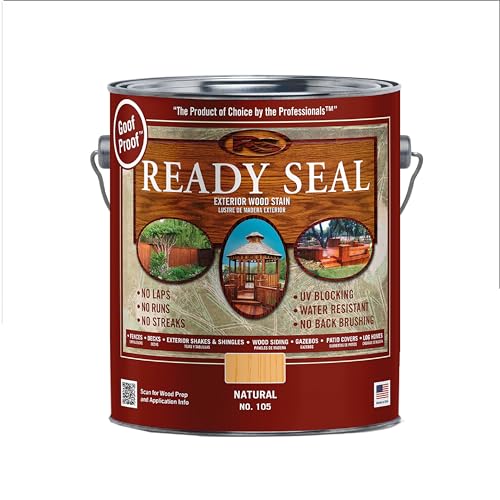
For most garden structures, use a penetrating exterior oil stain or a quality water-based exterior stain rather than a thick varnish. Penetrating stains are easier to maintain: when they weather, they usually fade rather than peel. This is important on larch, where resin, movement and uneven absorption can cause a rigid film to fail.
Choose a semi-transparent exterior wood stain with UV protection if you want the grain to remain visible. A mid- to dark-tone stain generally lasts longer than a clear finish because it contains more pigment. Clear exterior finishes offer limited UV protection and often require frequent renewal.
For maximum colour uniformity, especially on mixed-quality larch, an opaque exterior stain or paint is more forgiving. Use a compatible exterior wood primer where the coating manufacturer specifies one. On resinous knots, a stain-blocking primer can help, but no primer guarantees that resin will never bleed through in hot conditions.
Preparation Before Staining
Sand new timber only enough to remove mill glaze, raised fibres and handling marks. Start around 80 or 100 grit on rough-sawn or badly marked boards, then finish around 120 grit. Do not polish exterior wood to 180 or 240 grit unless the product instructions call for it; overly smooth timber can reduce stain penetration.
Round sharp exposed edges with a few sanding passes. Coatings are thin at sharp corners and fail there first. Pay particular attention to end grain. Apply exterior wood end-grain sealer to cut ends, notches and drilled holes before assembly or staining.
Remove dust with a brush or vacuum, then follow the stain maker’s cleaning instructions. Avoid staining damp wood. A simple moisture meter is useful; many products require the timber to be below 18 percent moisture, though the label is the final authority. Test the stain on an offcut from the same batch and check it after drying. Larch can become much darker over resin-rich areas.
Fasteners, Glue and Design Details
Use stainless-steel or hot-dip galvanised fasteners. Ordinary steel can rust and leave black streaks, particularly on cedar. Pre-drill near board ends in larch and near edges in cedar. Keep fasteners at least 50–75 mm from an end where the design allows, and stagger screws rather than placing them in a straight line close to the edge.
Do not rely on standard interior wood glue for an exposed joint. For sheltered joints, use a waterproof exterior-rated adhesive, but design the joint so it is held mechanically as well. Exterior glue does not compensate for end grain, standing water or movement. Keep posts off concrete with metal post bases, provide a roof overhang where possible and leave drainage gaps behind cladding.
Maintenance and Long-Term Value
Inspect the structure twice a year, especially horizontal rails, end grain and sunny south- or west-facing surfaces. Wash off dirt before recoating and lightly abrade glossy or weathered areas. A penetrating stain may need attention every two to four years, while an opaque system can last longer, but exposure and colour matter more than promises on the tin.
If budget is the main concern, choose larch and spend the saving on better preparation, stainless fasteners and end-grain protection. It is the better-value option for a sturdy, stained structure. Choose cedar when low weight, easy machining and dimensional stability justify the premium, or when you particularly want its colour and texture. In either case, buy sound heartwood, avoid trapped moisture and treat every cut surface before installation.
0 Comments