What's inside
As an Amazon Associate I earn from qualifying purchases. This post may contain affiliate links at no extra cost to you.
Walnut and cherry can both produce dark, low-sheen furniture, but they get there in different ways. Walnut starts darker and usually needs only a clear finish to look rich. Cherry begins lighter and warmer, then darkens with age and sunlight. It can also become blotchy or uneven when stained.
For a predictable dark finish with less work, walnut is usually the safer choice. Cherry is the better value when you want a reddish-brown result, already have the boards, or are willing to let the wood develop its color naturally. The finish matters as much as the species: a dead-flat coating can look cloudy, while a satin finish often gives the best balance of depth and low reflection.
As an Amazon Associate we earn from qualifying purchases at no extra cost to you.


Our Top Picks
 Minwax 233334444 Polycrylic Protective Wood Finish8 fl oz2.9 x 2.9 x 3 inches0.66 poundsCheck on Amazon

Color and grain differences
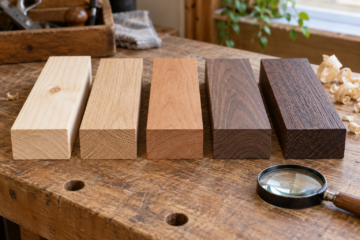
Walnut ranges from medium brown to chocolate brown, often with gray, purple, or nearly black streaks. Its grain is usually easy to read without looking busy. A clear finish deepens the color, but it will not make pale walnut dramatically darker. Sapwood is a major exception: the nearly white outer wood does not match the heartwood unless you dye or stain it.
Cherry starts pinkish tan to light reddish brown. Exposure to light gradually changes it to a deeper amber, reddish-brown color. This change can be substantial, especially during the first year. Parts covered by hardware, labels, or objects may remain lighter, leaving a visible “sun shadow” later.
Cherry has a generally fine, closed grain, but it can show blotchy color when stain is applied unevenly. Walnut usually accepts dye and stain more forgivingly, although large areas of sapwood can still look patchy. Both woods can develop dark end grain, glue spots, and sanding marks if preparation is rushed.
Which wood is better for a dark, low-sheen finish?
| Factor | Walnut | Cherry |
|---|---|---|
| Starting color | Medium to dark brown | Light tan to pinkish brown |
| Best path to dark color | Clear finish, dye, or light stain | Natural aging, dye, or carefully tested stain |
| Blotch risk | Moderate, especially on sapwood | Moderate to high with pigment stain |
| Grain character | More visible and varied | Finer and more uniform |
| Typical cost | Higher | Often lower, depending on grade |
| Long-term color | Usually stable, with some mellowing | Darkens noticeably with light exposure |
Choose walnut if you want dark furniture immediately and want the wood’s natural variation to remain visible. Choose cherry if a warm, red-brown tone suits the design and you can accept color changes. For a uniformly dark painted-looking result, the species matters less; a pigmented finish will cover most of the difference.
Prepare the surface before choosing the finish
Sand flat panels and assembled parts through the grits rather than jumping directly to a fine abrasive. A practical sequence is 120, 150, and 180 grit, using 220 grit only when the finish manufacturer calls for it. On walnut or cherry, stopping around 180 grit usually leaves enough tooth for a finish without creating obvious scratch lines.
Use a hard sanding block on edges and broad surfaces. Hand-sanding with loose paper can round edges and make them absorb more finish. Do not sand end grain as aggressively as the face grain; end grain absorbs color faster. On visible end grain, finish at least one grit finer or apply a thin coat of finish to reduce the contrast.
Remove glue squeeze-out completely. Dried glue can be nearly invisible on raw walnut but will appear as a pale, shiny patch after staining or finishing. A damp cloth is not a reliable test because water can temporarily hide contamination. Inspect under strong side lighting, and wipe the surface with mineral spirits if the finish system allows it.
Before committing to the project, make test panels from the same board or from matching offcuts. Test the entire schedule—sanding, conditioner or washcoat, color coat, and clear finish. A stain that looks good on a small sample can become much darker on a large tabletop.
Darkening walnut
Walnut often looks best with no color stain at all. Apply a clear oil-based finish, wiping varnish, or water-based clear coat to increase contrast and make the brown appear deeper. Oil-based products generally add more amber warmth; water-based finishes preserve a cleaner, less yellow color.
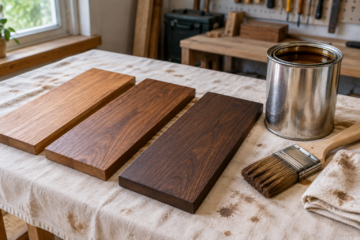
If you need darker walnut, use a dye or a compatible stain in a restrained concentration. Dark pigment can muddy walnut’s grain and hide the lighter streaks that make the species attractive. A dye gives more even color, but it also penetrates quickly and can make repairs harder. Apply thin coats and let each coat dry fully before judging the color.
Walnut sapwood requires a separate plan. You can leave it as a contrasting feature, apply a matching dye, or use a darker pigmented stain. Trying to force white sapwood to look exactly like dark heartwood often produces an artificial, opaque result.
Darkening cherry
Cherry can be finished clear if you like its gradual color shift. To speed up the darkening process, place the unfinished or clear-coated piece in indirect, controlled daylight, but rotate it regularly. Direct sun through glass can heat the surface and create uneven patches or excessive color change.
If the piece must be dark immediately, a dye is usually more predictable than a heavily pigmented oil stain. A light washcoat—roughly one part finish to one or two parts compatible thinner, if permitted by the product instructions—can reduce absorption differences before staining. Test this carefully: too much washcoat prevents the color from bonding evenly and can make the surface look flat.
Cherry’s end grain and softer areas can turn much darker than the surrounding face. Wipe stain evenly, avoid leaving puddles in corners, and do not judge the color until the sample has dried and received its clear topcoat.
Choosing a low-sheen topcoat
For most furniture, satin is safer than true matte. Satin typically reflects enough light to show the grain without producing a glossy highlight. A dead-flat finish can look excellent on a modern piece, but it may appear cloudy or slightly gray over very dark walnut.
Use a satin water-based polyurethane when you want low yellowing, quick recoating, and easy cleanup. Use an oil-based satin polyurethane when added amber warmth and longer open time are useful.
For a softer hand-rubbed appearance, a satin wiping varnish is easy to control, but it builds protection slowly. Apply at least three thin coats for normal furniture use, sanding lightly with 320 grit only when the previous coat is fully dry and the instructions allow it. Do not rely on wax alone for a tabletop or frequently handled cabinet; wax is easy to renew but offers limited moisture and abrasion resistance.
Common failures to avoid
Do not use a pre-stain conditioner automatically. Some conditioners help cherry accept pigment more evenly, but they can also weaken the color and create a washed-out appearance. A diluted washcoat or dye may be better, but only a test panel can confirm it.
Do not apply a dark stain over sanding dust, glue, or oily fingerprints. Do not judge sheen immediately after application; many finishes look glossier while wet and settle as they cure. Finally, allow the finish to cure for the product’s stated time—often several days before light use and up to a few weeks before heavy use.
If the goal is dark furniture with minimal risk, buy walnut with consistent heartwood and use a clear satin finish. If budget matters more, cherry is a sound choice, particularly when its natural aging is part of the design rather than a problem to control.
0 Comments