What's inside
As an Amazon Associate I earn from qualifying purchases. This post may contain affiliate links at no extra cost to you.
Our Top Picks
 Minwax 233334444 Polycrylic Protective Wood Finish8 fl oz2.9 x 2.9 x 3 inches0.66 poundsCheck on Amazon
 Minwax 622224444 Polycrylic Protective Wood Finish32 fl oz4.4 x 4.4 x 5 inches2.2 poundsCheck on Amazon
 Minwax Fast Drying Polyurethane Protective Wood FinishQuart4.1 x 4.1 x 5.1 inches1 PoundsCheck on Amazon
 Varathane Water-Based Ultimate Matte PolyurethaneQuart (Pack of 1)9.8 x 5.5 x 6.3 inches2.2 poundsCheck on Amazon
Choosing Between Mahogany and Walnut
Mahogany and walnut can both produce excellent low-sheen furniture, but they do not look or behave the same. Walnut is usually the better choice when you want a deep brown color, visible grain, and a modern satin or matte appearance. Mahogany is a better fit when you want a warmer red-brown color, a more uniform surface, and easier color matching across boards.
The finish itself matters as much as the species. A gloss film reflects light directly and can make grain look sharper, while a low-sheen finish scatters light and reveals more of the wood’s natural variation. For most furniture, a sheen between matte and satin—roughly 10 to 30 percent gloss—is practical. It looks soft without being difficult to clean.
As an Amazon Associate we earn from qualifying purchases at no extra cost to you.


Appearance and Color
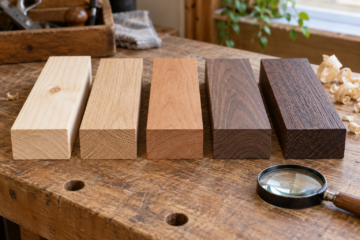
Walnut is naturally dark, ranging from chocolate brown to gray-brown, with occasional purple or olive tones. Its sapwood can be nearly white, so a walnut project may include strong light-and-dark contrast unless the boards are selected carefully. The heartwood usually needs little or no stain. A clear finish will deepen its color, especially during the first few weeks after application.
Mahogany is not one uniform material. Genuine Honduran mahogany, African mahogany, and several substitute species vary in color, density, and grain. In general, mahogany runs from pinkish tan to reddish brown and tends to become warmer and darker with age. Its grain is often straighter and less visually busy than walnut, although ribbon-like figure or interlocking grain can appear in some boards.
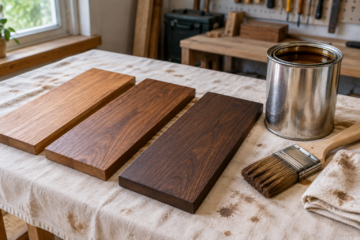
Do not choose stain from a label alone. Test the actual wood and finish on an offcut. Two pieces of mahogany can absorb the same stain differently, and walnut sapwood may remain noticeably lighter. If you need an even color, a light washcoat or wood conditioner can reduce blotching, but it can also make the final color lighter and less saturated.
Workability and Surface Preparation
Both woods machine well, but walnut is generally forgiving. Sharp cutters produce clean edges, though tear-out is possible around reversing grain. Mahogany is also easy to cut and plane, but interlocked grain can tear out suddenly. On either species, use a sharp blade and take light passes near end grain.
For a low-sheen finish, sanding quality is critical because a dull finish does not hide scratches. Sand flat surfaces through 120, 150, and 180 grit. Stop at 180 or 220 grit for most film finishes. Sanding much finer than 220 can reduce absorption and create uneven staining, particularly on dense walnut or smoother mahogany.
Remove dust with a vacuum and a clean, lightly dampened cloth appropriate for the finish system. Do not flood open pores with water. Let the surface dry fully, then inspect it under angled light. Scratches that are invisible straight on often show clearly after finish is applied.
Choosing a Low-Sheen Finish
A water-based polyurethane is a good choice when you want minimal ambering and fast recoating. It generally keeps walnut cooler and closer to its unfinished color, but it can look slightly plastic if applied too heavily. Oil-based polyurethane adds warmth and emphasizes both walnut’s darkness and mahogany’s red tones. It usually needs longer drying time and can amber further over the years.
For a more natural feel, consider a hardwax oil. It leaves a low-build surface and is easy to repair locally, but it offers less protection against standing water and abrasion than a conventional film finish. A dining table, desk, or heavily handled cabinet benefits from a stronger film finish unless you are willing to refresh it periodically.
For a low-sheen result, choose the finish by sheen rather than trying to dull a gloss product with random additives. A matte water-based polyurethane is useful when color retention matters. An oil-based satin polyurethane is a sensible lower-cost option when warmer color is acceptable.
| Factor | Mahogany | Walnut |
|---|---|---|
| Typical color | Warm tan, red-brown, or reddish brown | Medium to dark brown, sometimes gray or purple-brown |
| Grain character | Usually straight and relatively calm | More varied, with strong grain and figure possible |
| Staining | Often accepts stain evenly, but color varies by species | Usually looks best clear; sapwood may need separate treatment |
| Low-sheen appearance | Warm, understated, and uniform | Deep, contemporary, and more visually active |
| Typical cost | Ranges widely; some substitutes are economical | Often more expensive, especially wide clear boards |
Application Process for a Matte or Satin Finish
Apply the first coat thinly. Heavy coats are the most common cause of cloudy patches, runs, and a surface that feels soft days later. Follow the product’s spread-rate instructions; as a rough guide, many water-based finishes cover about 400 to 500 square feet per gallon per coat, while brush application often uses more.
After the first coat dries, sand lightly with 320-grit paper or a fine abrasive pad. The goal is to remove raised fibers and dust nibs, not to cut through the finish. Vacuum carefully and apply two or three additional thin coats. For a tabletop, three or four total coats provide a useful balance of protection and a subdued appearance.
Do not judge sheen immediately. Many finishes look uneven until fully cured. Wait at least 48 hours before placing objects on a water-based finish, and longer in cool or humid conditions. Oil finishes may require several days or more before they reach full hardness.
Common Failures and the Cheaper Choice
Cloudy white areas usually indicate moisture trapped in the finish or application over a damp surface. Dark rings can come from insufficient film thickness or standing water. A rough surface commonly results from inadequate dust control, while shiny patches usually mean uneven film thickness or poor stirring of the flattening agents.
Stir matte and satin finishes slowly from the bottom; never shake them, which introduces bubbles. Maintain roughly 60 to 75°F and moderate ventilation while applying. If the furniture will receive ordinary indoor use and the wood is already attractive, walnut needs no stain and can save both time and material. Mahogany is the cheaper option when you are painting part of the piece, using a tinted finish, or buying readily available narrower boards where walnut prices rise sharply.
Choose walnut for its natural color and expressive grain. Choose mahogany for warmth, consistency, and a calmer surface. In either case, careful sanding, thin coats, and a real test panel will affect the final result more than the name on the finish can.
0 Comments