What's inside
As an Amazon Associate I earn from qualifying purchases. This post may contain affiliate links at no extra cost to you.
Visible plywood panels are unforgiving. A rough core, open veneer seam, or shallow sanding scratch can remain visible through paint, stain, or clear finish. “Cabinet-grade” and “furniture-grade” are useful buying terms, but neither is a universal plywood standard. Sellers use them differently, so the face veneer, core construction, adhesive, and panel thickness matter more than the label.
As an Amazon Associate we earn from qualifying purchases at no extra cost to you.

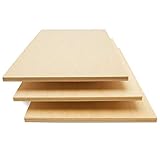

Our Top Picks

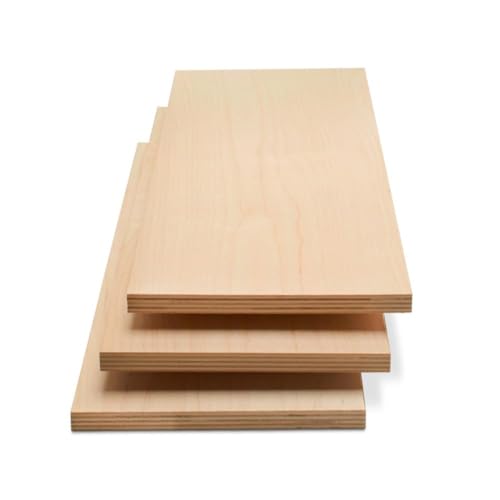
What the Terms Usually Mean
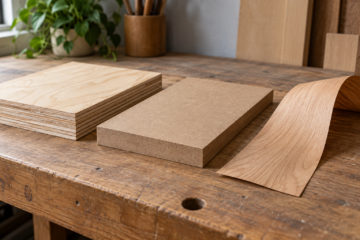
Cabinet-grade plywood generally has a better face veneer and a more consistent core than construction plywood. Common examples include birch plywood, maple plywood, oak plywood, and veneer-core hardwood panels. The face is usually made from a selected hardwood veneer with fewer patches and open defects. The inner plies may also have fewer voids, which helps when you cut an edge or route a profile.
Furniture-grade plywood is a broader, less precise term. It may describe the same type of hardwood plywood, but it can also refer to a panel with a good face and an ordinary softwood or mixed-wood core. Some furniture-grade sheets are excellent; others are simply marketed as suitable for furniture because the front veneer looks clean.
For a visible panel, inspect the actual sheet if possible. Look for a straight, evenly colored face, tight veneer joints, flatness, and clean edges. A premium label cannot compensate for a warped or poorly stored panel.
Comparison at a Glance
| Feature | Cabinet-grade plywood | Furniture-grade plywood |
|---|---|---|
| Face veneer | Usually selected for fewer defects and more consistent appearance | Can range from clean hardwood veneer to patched or mixed veneer |
| Core | Often more uniform, with fewer voids and better edge appearance | May be veneer core, composite core, or a less consistent inner core |
| Best use | Exposed cabinet sides, doors, shelving, and high-end built-ins | Painted panels, secondary surfaces, and budget furniture |
| Typical trade-off | Higher price and sometimes thinner face veneers | Lower cost, but more patching, edge work, or color variation |
Choose by the Finish You Plan to Use
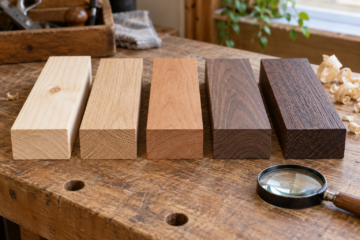
Clear finishing shows the plywood’s quality most clearly. For a stained or clear-coated panel, choose a face veneer with an attractive grain and minimal mineral streaks, patches, and color shifts. Birch is pale and consistent but can look blotchy with penetrating stain. Oak has stronger grain and usually accepts stain more predictably. Maple is clean and refined, but its tight grain can also develop uneven color if it is stained without a conditioner or washcoat.
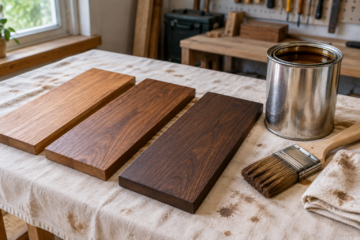
When buying hardwood plywood for stain or clear finish, a hardwood plywood sample and finishing test supplies can save an expensive mistake. Sand a scrap through the same grit sequence, apply the same stain, and judge it after the topcoat dries. The wet color is not a reliable guide to the final result.
Paint hides color differences, but it does not hide poor preparation. A good furniture-grade sheet can be a sensible choice for a painted cabinet side or bookcase panel if the face is flat and the defects are shallow. Deep football patches, loose veneer, and open seams still require filler and may telegraph through the paint.
Core and Edge Quality Matter
Examine a freshly cut edge before committing to a sheet. Voids inside the core can appear as holes after crosscutting, routing, or trimming. They also make narrow shelves weaker and complicate edge-banding. Cabinet-grade veneer-core plywood usually produces a cleaner edge, though even premium plywood may need a solid-wood edge strip for a finished appearance.
Composite-core panels, including medium-density fiberboard or particleboard cores, can have very smooth faces and excellent paintability. They are often flatter than inexpensive veneer-core plywood. However, they are heavier, can swell badly when exposed to water, and do not hold screws at the edge as reliably. Use them for dry interior work where weight and moisture are not major concerns.
For exposed plywood edges, apply a 1/8- to 1/4-inch solid-wood lipping, iron-on veneer edge banding, or a carefully sanded exposed edge. A wood veneer edge-banding roll is inexpensive and makes ordinary plywood look substantially more finished.
Prepare the Face Without Sanding Through It
Most hardwood plywood face veneers are thin. Start with 150-grit paper, sand with the grain, and finish at 180 grit. Use 220 grit only if the finish manufacturer calls for it. Aggressive sanding with 80- or 100-grit paper can expose the darker crossband or core in minutes, especially near edges.
Do not use a hard sanding block across a thin face veneer unless you are deliberately flattening a defect. A random-orbit sander with light pressure is safer, but stop as soon as machining marks disappear. Vacuum the surface and wipe it with a clean, slightly damp cloth or the solvent recommended for your finish. Avoid soaking plywood edges.
For painted panels, fill small face defects with a compatible wood filler, let it dry fully, and sand it level. Seal porous edges with primer or a thinned first coat of finish. End grain and exposed core absorb more material than the face and can produce dull stripes or swollen edges.
When the Cheaper Sheet Is Fine
Furniture-grade plywood is often the better value for painted interiors, drawer parts, closet components, and panels whose edges will be covered. It is also reasonable when the visible area is small and you can select the sheet yourself. A clean face with one or two repairable patches does not need cabinet-grade pricing.
Spend more on cabinet-grade plywood when both faces will be visible, the panel will be stained or clear-coated, edges will be exposed, or the piece will be inspected up close. For demanding work, consider 3/4-inch cabinet-grade birch plywood, but confirm the actual thickness. Nominal 3/4-inch sheets are commonly closer to 23/32 inch, which affects dados and edge alignment.
Buying and Storing the Panel
Check the sheet under angled light before buying. Reject panels with bubbles, lifted veneer, severe bowing, open plies, or inconsistent face joints. Store plywood flat on at least three evenly spaced supports, raised off a damp floor. Let it acclimate indoors for several days before cutting; rapid moisture changes can turn a straight panel into a warped one.
The right choice is the panel that matches the finish, edge treatment, moisture exposure, and viewing distance. “Cabinet-grade” is a useful starting point, not a guarantee. Face quality, core quality, and careful preparation determine whether the finished panel actually looks furniture-grade.
0 Comments