What's inside
As an Amazon Associate I earn from qualifying purchases. This post may contain affiliate links at no extra cost to you.
Cherry and beech can both produce a warm, clear-coated cabinet, but they do not look or behave the same. Cherry has a more varied grain and tends to deepen in color with light. Beech is usually paler, more even, and less expensive, but it can absorb stain unevenly. If you want the wood itself to provide the color, cherry is the safer pick. If you want a quiet, uniform look and are willing to manage color carefully, beech can be a good value.
As an Amazon Associate we earn from qualifying purchases at no extra cost to you.


Our Top Picks


Color and grain under a clear finish
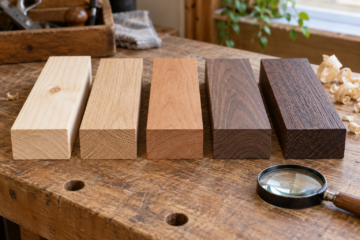
Cherry starts pale pinkish-brown and usually darkens toward a richer reddish brown as it ages. The change is gradual, but uneven exposure to sunlight can leave lighter patches beneath objects or inside cabinets. A clear finish does not stop that shift. For more consistent aging, avoid leaving one section in bright light while another stays covered.
Beech is generally cream to light pink-brown, with fine, fairly straight grain and occasional flecks or small rays. A clear coat keeps it lighter than cherry, though oil-based finishes add an amber cast. Beech’s restrained grain suits slab or simple-frame doors when you want the finish and shape to stay in the background.
Both species can vary from board to board. Select all the visible parts together, and arrange them before cutting so contrasting boards do not end up side by side by accident. A finish sample on an offcut is more reliable than judging raw lumber.
At a glance
| Factor | Cherry | Beech |
|---|---|---|
| Typical look | Warm, reddish, more visible variation | Pale, fine-grained, more uniform |
| Clear finish | Enhances warmth; color deepens with light | Remains lighter; oil finishes amber it |
| Staining | Can blotch, especially with dark stain | Can also blotch; test and prepare carefully |
| Cost and availability | Often costs more than beech, depending on region | Often a lower-cost option where locally available |
| Best fit | Cabinets where natural color is a feature | Simple, pale cabinetry or painted parts |
What to buy for cabinet parts
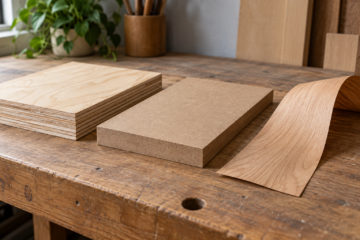
For face frames and door frames, choose straight, dry stock without checks at joints or large knots in visible areas. For wide panels, account for seasonal movement: solid wood expands and contracts across its grain. Use a panel construction that allows movement rather than trapping a solid panel rigidly in a frame. Plywood with a matching veneer is often more stable for large cabinet sides and shelves, if a close visual match is available.
Beech is hard and wears well, but its hardness makes clean machining important; dull cutters can burn it. Cherry is softer and dents more readily, so protect finished doors during installation. Neither species is a substitute for a water-resistant finish around a sink or dishwasher. Wipe spills promptly and seal edges as carefully as faces.
If you are buying boards online or from a yard, ask whether the lumber is kiln-dried and what moisture content is typical. For indoor cabinetry, stock around 6–8% moisture content is a useful target in many heated homes. Let lumber acclimate in the shop, stickered with air space between boards, and check it with a meter before milling.
Choose the finish before sanding
For transparent color, a clear waterborne finish keeps beech relatively pale and limits the amber shift. Oil-based varnish or oil-based polyurethane adds warmth to both woods, especially beech. Cherry already has warmth, so a naturally amber finish can make it look darker than intended. Compare samples under the room’s actual lighting, not just at the workbench.
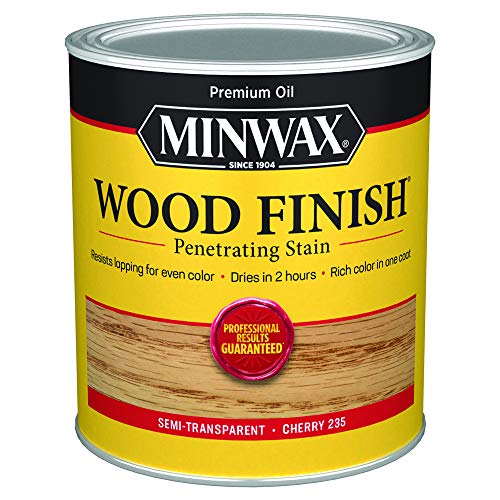
Use a durable cabinet-rated clear finish suited to your application, such as a waterborne polyurethane or a traditional oil-based varnish. Browse water-based polyurethane for cabinets or oil-based varnish by finish type and follow the label for coats, recoat time, and ventilation. Make a sample with the same sanding and application schedule planned for the cabinets.
Stain: the main risk is uneven color
Cherry and beech can both blotch because different areas absorb stain at different rates. Cherry is especially easy to make muddy with a dark pigment stain; beech’s pale, tight grain can also show patchy or streaky color. If you want a transparent, warm cabinet, a clear finish is usually simpler and shows more of the wood’s natural character.
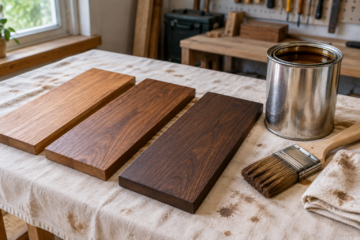
If you need more color, test a light stain or a dye on scrap from the same boards. Sand to 150 or 180 grit and keep the final grit consistent; sanding one door to 220 while another stops at 150 can change stain uptake. A washcoat or sanding sealer may reduce blotching, but it can also make color weaker or less even. Test the whole sequence, including the topcoat, before treating finished parts.
Sand and finish without surprises
Mill parts flat and square before final sanding. Sand visible faces through 120, 150, then 180 grit, removing each previous scratch before moving on. Going finer is not automatically better: very smooth sanding can reduce stain absorption, while missed coarse scratches may become obvious once finish adds contrast. Use a raking light to inspect the surface, and vacuum dust from corners and profiles.
Apply finish to an offcut first, including edges and end grain. End grain can darken more than face grain, so use light coats and inspect it before continuing. On doors, finish both sides and edges to reduce uneven moisture exchange. Do not rush between coats: trapped solvent, dust nibs, or recoating before the finish is ready can leave a cloudy or rough surface. Lightly scuff between coats only as the finish instructions specify.
Which one should you choose?
Choose cherry when its changing reddish-brown color and natural variation are part of the appeal, and the budget allows for it. Choose beech when you want a pale, quiet grain, especially if the cabinets will be painted or paired with other light materials. Beech is not automatically easier to stain, and cherry is not automatically too expensive; local prices and the finish plan matter. For either wood, a clear-finish sample is the cheapest way to avoid discovering the wrong color after the doors are built.
0 Comments