What's inside
As an Amazon Associate I earn from qualifying purchases. This post may contain affiliate links at no extra cost to you.
Our Top Picks


European Oak vs American Ash for a Matte Oil Finish
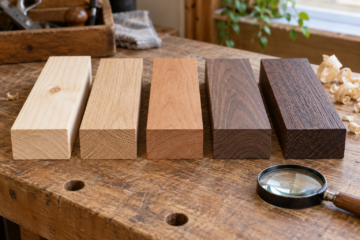
European oak and American ash can both produce a durable, attractive matte finish, but they do not look or behave the same under oil. Oak is warmer, darker, and more visually varied. Ash is paler, more uniform in color, and usually shows a stronger, straighter grain pattern. The better choice depends on whether you want the finish to emphasize character or keep the project light and understated.
For a matte result, the wood species matters almost as much as the oil. Oil does not hide uneven sanding, glue spots, or end-grain differences. It usually makes those defects more obvious by increasing contrast between earlywood and latewood.
As an Amazon Associate we earn from qualifying purchases at no extra cost to you.


At-a-glance comparison
| Characteristic | European oak | American ash |
|---|---|---|
| Natural color | Light brown to honey, often with gray or olive variation | Very pale cream to light tan |
| Grain | Open, ring-porous grain with prominent rays and fleck | Open, ring-porous grain with bold, generally straight lines |
| Effect of clear oil | Warmer and noticeably darker | Warmer, but usually remains lighter than oak |
| Hardness and wear | Hard and durable; approximately 1,100 lbf on the Janka scale | Hard and durable; approximately 1,300 lbf on the Janka scale |
| Common visual problem | Uneven color and tannin-related darkening | Strong grain contrast and a slightly bland or yellowed appearance |
| Best fit | Tables, cabinetry, flooring, and furniture where warmth is wanted | Contemporary furniture, shelving, worktops, and light-colored interiors |
How each species looks under matte oil
European oak has more natural color variation than ash. A clear oil will deepen the brown tones and highlight the medullary rays, especially on quarter-sawn boards. On flat-sawn oak, the earlywood pores can become dark lines, giving the surface a richer but busier appearance. A matte finish softens reflections, but it does not soften this grain contrast.
American ash starts much paler. Its grain often runs in long, dramatic lines, and oil makes those lines more visible without adding as much brown as it does to oak. This makes ash a good choice when you want a natural-looking surface that stays relatively bright. If you want ash to remain almost white, a clear oil may disappoint: most oils add at least some amber color.
For the least color change, look for a waterborne matte finish or a hardwax oil specifically described as “raw,” “natural,” or “non-yellowing.” These products still require a sample board. Marketing terms are not standardized, and two products labeled natural can produce noticeably different results.
Sanding and surface preparation
Sand both species evenly through 120, 150, and 180 grit. For most furniture and interior woodwork, 180 grit is a practical stopping point for oil. Sanding to 240 grit can reduce absorption and make the color lighter or less even, particularly on end grain. If you prefer a very smooth touch, sand the broad faces to 180, apply the first coat, then lightly remove raised fibers with 320-grit paper after the finish has dried.
Use a sharp scraper or well-tuned plane before sanding where possible. Deep sanding marks are easy to see after oiling. Vacuum the surface, then wipe it with a clean, lint-free cloth. Do not flood the wood with water unless you intentionally want to raise the grain and sand it back. A water wipe can be useful on ash if the surface feels fuzzy, but it adds an extra drying step.
Pay particular attention to end grain. It absorbs oil faster and can turn much darker than the faces. Sand end grain at least one grit finer than the surrounding faces, or apply a thin coat of finish to the end grain first and wipe it off thoroughly. Glue squeeze-out is another common failure. Oil will leave pale, obvious patches where glue has sealed the pores. A UV inspection light can help locate some adhesive residue, but careful raking light and a damp-cloth check are still useful.
Choosing a matte oil
For furniture, a hardwax oil is usually the simplest category to use. It combines penetrating oils with waxes, leaves a low-sheen surface, and can often be repaired locally. It is not maintenance-free: tabletops and work surfaces may need another thin coat after heavy use, usually when water stops beading consistently.
Pure oils such as tung or linseed oil can give attractive depth, but drying time and build vary. Some products need several coats over multiple days, and an inadequately wiped coat can remain sticky. Oil-varnish blends generally provide better water and wear resistance than straight oil, but their sheen and appearance vary by product.
Choose a matte hardwax oil for wood if you want a low-build finish that is straightforward to refresh. For a dining table or frequently handled cabinet, prioritize the manufacturer’s coverage and recoat instructions rather than choosing by the word “natural” alone. A matte finish is often less forgiving of lap marks because uneven absorption can show as dull and glossy patches.
Application method and drying
Apply a thin, even coat at roughly the coverage rate stated on the container. As a general guide, many hardwax oils cover about 250 to 500 square feet per liter, depending on how absorbent the wood is. Ash may absorb heavily along its open grain; oak can do the same on porous flat-sawn sections. Spread the finish, allow the recommended wet time—often 5 to 20 minutes—and wipe off every visible excess.
Leaving wet oil on the surface is the most common application mistake. It can create sticky areas, shiny streaks, and soft patches that remain for days. Use clean rags and change them when they become saturated. Allow ventilation and follow the label’s drying time; 24 hours between coats is common, but cool or humid conditions can extend it. Oil-soaked rags can self-heat and ignite. Store them submerged in water in a sealed metal container or spread flat outdoors to dry safely, following local disposal rules.
Which one should you buy?
Choose European oak if you want a warmer, more traditional appearance and do not mind visible variation between boards. It is the stronger visual choice for a statement tabletop or furniture with prominent rays and fleck. Buy ash if you want a lighter project, straighter grain, and slightly higher hardness at a comparable price. Ash is also the cheaper option in many markets, and it is perfectly adequate for shelves, cabinets, and everyday furniture when the pale color suits the room.
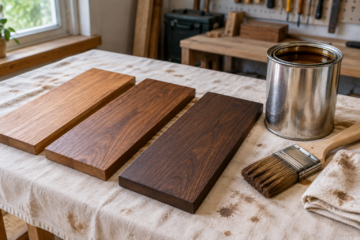
Before committing, make a sample using the actual boards, the same sanding schedule, and two coats of the intended finish. Include a piece with face grain and end grain. If oak turns too orange, try a neutral or raw-looking oil. If ash looks too yellow or contrasty, consider a non-yellowing waterborne matte finish instead. The sample will reveal more than the label—and can prevent an entire project from taking on the wrong color.
0 Comments