What's inside
As an Amazon Associate I earn from qualifying purchases. This post may contain affiliate links at no extra cost to you.
Ash and white oak can both produce a light, natural finish, but they do not look or behave exactly alike under oil. Ash is usually the cheaper, more open-grained choice with a brighter, less uniform appearance. White oak costs more, but its tighter grain, warmer color, and stronger figure often look more refined on furniture and visible cabinetry.
For a genuinely pale result, the wood itself matters more than the oil label. Many “natural” oils add an amber cast, especially on white oak. Test the complete finishing schedule on an offcut before committing to a tabletop, cabinet door, or built-in.
As an Amazon Associate we earn from qualifying purchases at no extra cost to you.


Our Top Picks


Appearance and Grain
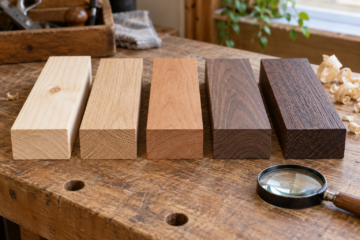
Ash has a pale cream to light tan background with prominent, straight, open pores. The earlywood and latewood contrast can be strong, so the grain often reads as bold and striped. Clear oil makes that contrast darker and more noticeable. On wide boards, ash can look bright and contemporary, but it may also appear visually busy.
White oak is naturally light brown to beige, with a warmer cast than ash. Its grain is usually less stark, though rift- and quarter-sawn boards can show attractive flecks and rays. Oil brings out those rays and gives the surface a deeper, more golden appearance. If your goal is “barely changed,” white oak is harder to keep pale than ash.
Board selection can outweigh species selection. Choose straight-grained, evenly colored boards and reject pieces with dark mineral streaks if you want a uniform pale surface. Quarter-sawn white oak is stable and distinctive, but its ray fleck is part of the look—not a defect to be hidden.
| Characteristic | Ash | White oak |
|---|---|---|
| Base color | Very pale cream to light tan | Light beige to warm brown |
| Grain character | Bold, open, and often high contrast | More controlled, with rays and fleck in some cuts |
| Effect of clear oil | Darkens pores and adds moderate warmth | Adds noticeable warmth and depth |
| Typical cost | Often the cheaper option | Usually more expensive |
| Best reason to choose it | Bright color and value | Refined grain, stability, and traditional appearance |
Choosing an Oil for a Pale Finish
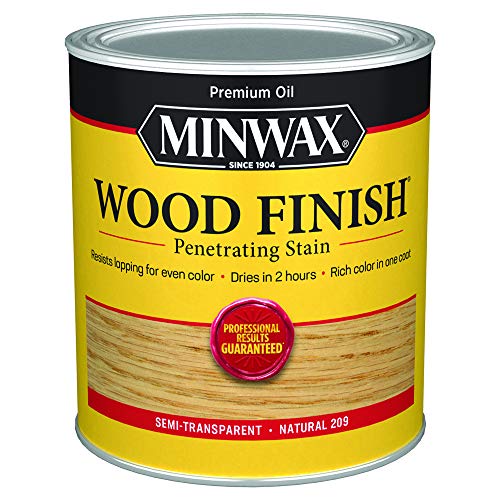
“Natural oil” is not a precise finishing category. Boiled linseed oil and many traditional oil blends deepen both species substantially. Tung oil can also warm the color, although fully cured products vary. Hardwax oils are easier to control and generally offer better wear resistance than plain oil, but some formulas still produce a yellow or amber shift.
For the lightest appearance, look for a hardwax oil or wood floor oil described as “raw,” “clear,” or “natural,” then check the manufacturer’s sample board. A product labeled clear may still make pale wood look wet and warmer. A “white” or “natural white” pigmented oil can offset ambering and keep ash or oak closer to its unfinished color, but too much pigment can make the grain look cloudy.
For a tabletop, desk, or frequently handled cabinet, choose a hardwax oil wood finish rather than an ordinary hardware-store oil. For a decorative, low-contact project, a less expensive penetrating oil may be adequate. The trade-off is lower surface protection and more frequent maintenance.
Surface Preparation
Sand ash or white oak evenly through 120, 150, and 180 grit. Stop at 180 grit for most oil finishes. Sanding to 240 or higher can burnish the surface and reduce absorption, producing uneven sheen or pale spots. Use the same final grit on every component; a door sanded to 180 will not match one sanded to 240.
Remove all glue residue before finishing. Dried glue in an end-grain joint or along a panel edge may be invisible after sanding but will repel oil and show as a light, irregular patch. Scrape squeeze-out while it is rubbery, then sand the area carefully. A wood glue scraper can help clean joints without spreading glue into the pores.
After sanding, vacuum thoroughly and wipe with a clean, dry cloth. Avoid soaking the surface with water unless you deliberately plan to raise the grain. Water-popping can increase color and absorption, but it often makes the final finish darker—usually the opposite of a pale oil schedule.
Application Method
Apply the oil thinly with a lint-free cloth, white synthetic pad, or the applicator recommended by the manufacturer. Flooding the surface is a common mistake. It can leave shiny patches, sticky areas, and uneven color, particularly in ash’s open pores.
Work in manageable sections. Spread the finish, allow the specified wet time—often 5 to 15 minutes—and then wipe off every trace of excess. The surface should look evenly damp, not wet or puddled. Inspect under angled light before leaving it to cure.
Most products need a second coat after roughly 6 to 24 hours, but follow the label rather than using a fixed schedule. Lightly abrade only if the product calls for it. A white nonwoven abrasive pad is less aggressive than sandpaper and can smooth raised fibers without cutting obvious scratches.
Which Wood Should You Buy?
Choose ash when maximum brightness, strong grain, and lower material cost matter most. It is the sensible choice for painted or lightly oiled projects where you need a large amount of hardwood without paying white-oak prices. Its open pores are not a practical problem if you accept a more pronounced texture.
Choose white oak when you want a warmer, more furniture-like appearance, better resistance to moisture and wear, or a specific rift- or quarter-sawn look. It is worth the premium when the grain is a major part of the design. It is not automatically the better buy for a pale finish: clear oil can make it considerably darker than expected.
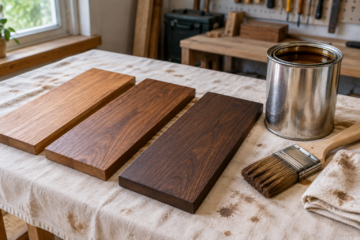
For either species, buy enough extra material to make a sample panel. Sand it exactly as you will sand the project, apply the same number of coats, and inspect it in the room’s actual light. That small test will reveal more than the word “natural” on an oil can.
0 Comments