What's inside
As an Amazon Associate I earn from qualifying purchases. This post may contain affiliate links at no extra cost to you.
Our Top Picks
 Polyurethane Wood Finish Water Based Polyurethane Clear Gloss100 ml1.6 x 1.6 x 4.7 inchesCheck on Amazon

The short answer
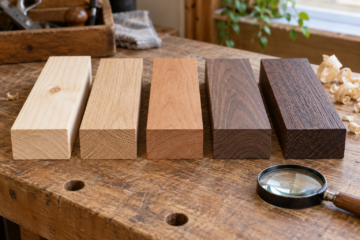
Ash and hickory are both hard, open-grained woods that can make durable workbench tops under a clear finish. Ash is usually the easier choice to buy, machine, sand, and finish evenly. Hickory is harder and more dent-resistant, but its extra strength comes with extra effort: it can be tougher to cut and sand, and its pronounced grain can look busy under a glossy clear coat.
For a general-purpose bench, choose ash if you want a practical, comparatively forgiving surface. Choose hickory if resistance to dents matters more than easy fabrication, and you have the tools and patience to work it cleanly. Either can be a poor choice if the top will take repeated hammer blows or heavy abuse without a replaceable sacrificial surface.
As an Amazon Associate we earn from qualifying purchases at no extra cost to you.


How the woods compare
Hardness figures are useful for comparing resistance to indentation, but they do not predict every aspect of bench performance. Janka hardness is measured by pressing a steel ball into wood; actual results vary with species, moisture content, grain direction, and board quality.
| Factor | Ash | Hickory |
|---|---|---|
| Typical Janka hardness | About 1,320 lbf | About 1,820 lbf |
| Working characteristics | Generally machines and sands more easily | Harder to cut and sand; sharp tools matter |
| Appearance under clear finish | Prominent, usually fairly regular grain | Strong grain and noticeable color variation |
| Best fit | Versatile bench with manageable fabrication | Extra dent resistance, if the look and workability suit you |
The Janka values are typical reference points, not a guarantee that a particular board will behave exactly as expected. Grain orientation and defects matter: a hard board with knots or runout may be less suitable for a top than a sound, straight-grained board of a slightly softer species.
Choose for the work you do
For assembly, layout, and hand-tool work, both woods can hold up well when the top is thick, flat, and properly supported. Ash is easier to bring to a smooth surface and is often a sensible balance of toughness and workability. Hickory’s hardness can help resist dents from tools and small parts, but it will not make a bench immune to gouges, dropped metal, or concentrated hammer blows.
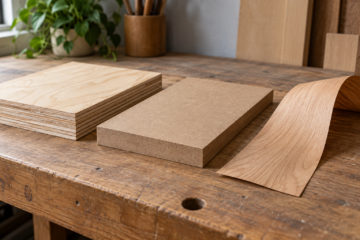
If you do frequent pounding or use chisels directly over the top, consider a replaceable hardboard or plywood cover instead of relying on clear-coated hardwood alone. A clear film finish can chip when struck; once it breaks, moisture and grime can get beneath the coating. For a bench expected to take that kind of damage, the protective layer should be easy to renew.
Buy the straightest, flattest stock you can reasonably afford. Avoid large knots, checks, severe grain runout, and boards that twist as they acclimate. For a laminated top, keep the strips similar in moisture content and thickness, and orient growth rings thoughtfully to reduce the chance of uneven movement showing up as a cupped surface.
Clear finish and grain
Both woods have open pores, so a clear film finish will not automatically produce a glass-smooth surface. If a level, pore-free look is the goal, plan on a grain-filling step or several coats followed by careful leveling. If the goal is simply a sealed, cleanable bench, a visible grain texture is often acceptable and takes less labor.
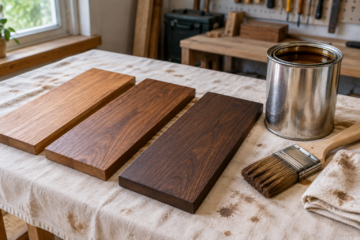
Clear coatings usually deepen the wood’s color. Test the full finishing schedule on an offcut from the actual boards, including sanding, any filler or sealer, and the chosen topcoat. Ash tends to show a strong, readable grain. Hickory can have pronounced contrast between light and darker areas, so board selection matters more if you want a uniform appearance.
For a workbench, prioritize a finish that is repairable and suited to the chemicals or spills it may encounter. A durable film finish offers better resistance to water and dirt than a simple oil finish, but a thick coating can chip under impact and can be awkward to patch invisibly. A penetrating oil is easier to refresh but provides less protection from standing liquids. Follow the finish maker’s directions for coats, drying time, and ventilation; do not assume a coating is ready for hard use just because it feels dry.
Sanding and finishing without trouble
Sand evenly and do not skip grits. For a typical clear finish, a sequence such as 80, 120, and 150 or 180 grit is a workable starting point, depending on how rough the stock is and the finish instructions. Sanding too fine can reduce absorption for some penetrating finishes; sanding too coarsely leaves scratches that become obvious once a clear coat highlights them. Use a raking light to find cross-grain scratches before applying finish.
Hickory’s greater hardness can make sanding slower and can expose worn abrasives quickly. Use fresh paper and keep the sander moving to avoid uneven patches or heat. Ash is generally less demanding, but its pores still collect dust. Vacuum thoroughly and use the finish maker’s recommended method for final dust removal. Avoid steel wool beneath water-based coatings because stray steel fibers can rust and leave dark specks.
Make a test panel before committing to the whole top. Check for blotchy appearance, raised grain, color shift, and compatibility between any stain, sealer, and topcoat. If you use a water-based finish, a light first pass can raise the grain; let it dry, sand lightly with fine paper, and remove the dust before continuing, following the product instructions.
What to buy
If you are still comparing stock, search for ash hardwood boards or hickory hardwood boards, but verify board dimensions, grade, moisture condition, and shipping cost before ordering. A supplier’s photos cannot show every defect, so ask about returns and inspect the lumber on arrival.
For the finish, choose by intended use rather than by the hardest-sounding label. A clear water-based polyurethane is one category to compare if you want a clear film and relatively low color change. An oil-based hardwax finish may be easier to renew, but check its spill resistance and cure time. Neither type is a substitute for a sacrificial cover where the bench will be struck.
Which one to buy
Pick ash when the price is better, the boards are sound, and you want a top that is less demanding to build and finish. Pick hickory when you specifically value added dent resistance and are comfortable with slower machining, more sanding effort, and a bolder grain pattern. If hickory costs substantially more or forces compromises in board quality, ash is the better buy for most clear-coated workbench tops.
Whichever species you choose, the finish schedule and the way you use the bench matter as much as the wood. A carefully prepared ash top with a maintained protective cover can outlast a poorly surfaced hickory top left exposed to impacts and standing liquids.
0 Comments