What's inside
As an Amazon Associate I earn from qualifying purchases. This post may contain affiliate links at no extra cost to you.
European beech and European ash can both make attractive dining tables with a clear finish, but they behave differently under use and during finishing. Beech is usually the quieter-looking, more uniform choice; ash has stronger grain and often costs less. Neither is immune to dents, scratches, or water marks, so the right pick depends on the look you want, the board quality you can buy, and how the table will be used.
As an Amazon Associate we earn from qualifying purchases at no extra cost to you.


Our Top Picks
 Varathane Water-Based Ultimate Satin PolyurethaneHalf Pint (Pack of 1)3 x 3 x 3 inches0.64 poundsCheck on Amazon
Quick comparison
| Factor | European beech | European ash |
|---|---|---|
| Appearance | Fine, even grain; pale cream to pinkish brown | Pronounced open grain; pale cream to light brown |
| Hardness | About 1,450 lbf Janka | About 1,320 lbf Janka |
| Workability | Machines and sands smoothly; can burn when cut carelessly | Works well, but open grain can need more preparation for a glass-smooth finish |
| Movement | Moves substantially with humidity changes | Also moves with humidity; sound, dry stock and correct joinery matter |
| Best fit | Restrained, clean-lined tabletops | Visible grain, a more rustic or lively look, and often tighter budgets |
Janka figures are approximate and vary by source and test sample. They give a useful comparison, not a guarantee that a finished table will resist every dent.
Appearance and board selection
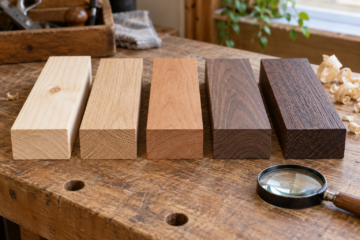
Beech has a fine, fairly subtle grain that gives a clear-coated top a calm, consistent appearance. Its color ranges from pale cream to light reddish brown, and steamed beech may have a more even pink-brown tone. Look at the actual boards before buying: color and figure vary, and sapwood, mineral streaks, and small knots can interrupt an otherwise uniform top.
Ash is more expressive. Its earlywood pores form visible lines, especially on flat-sawn boards, while quarter-sawn stock can show a straighter grain and occasional flecking. That texture suits a table where the wood itself should be prominent. It also makes mismatched boards more obvious, so lay out the top and check grain direction and color before gluing.
Buy kiln-dried furniture-grade stock rather than choosing on species alone. For a typical heated home, ask for wood around 6–9% moisture content, then let it acclimate in the shop or room where it will be worked. A moisture meter helps catch boards that are still too wet. Avoid pieces with checks, loose knots, or visibly twisted grain; a clear finish will not hide defects.
Durability and seasonal movement
Beech is slightly harder by common Janka ratings, but the difference is modest. Both can dent under dropped cutlery, chair impacts, or a heavy object dragged across the top. Use felt pads, lift appliances rather than sliding them, and expect a family dining table to acquire some wear.
Both species expand and shrink across the grain as indoor humidity changes. A wide solid-wood top must be fastened with buttons, clips, or slotted screw holes that let it move; rigidly screwing it to a frame can split the top or distort the base. Keep the room near 40–60% relative humidity when practical. The exact movement depends on board width, grain orientation, and moisture change, so do not treat that range as a substitute for a movement allowance in the design.
Neither species should be treated as water-resistant just because it has a clear coat. Wipe spills promptly, especially around joints and end grain. A film finish can slow moisture entry, but standing water, hot dishes, and repeated wet cleaning can still leave marks or damage the coating.
Sanding and finishing
For either wood, flatten and sand progressively rather than trying to erase deep marks with a fine grit. A practical sequence is 80 or 100 grit for flattening, then 120, 150, and 180. Start finer if the surface is already clean and flat. Sanding much beyond 180 can reduce finish adhesion for some products and may leave the surface too slick; follow the coating maker’s directions.
Beech sands to a smooth, even surface, but sharp cutters and a light touch help prevent burn marks. Ash’s open pores remain visible under most clear finishes. If you want a level, glass-like surface, use a compatible pore filler before the final coating, following its sanding and cure instructions. If you like the texture, skip the filler and accept that the finish will follow the grain.
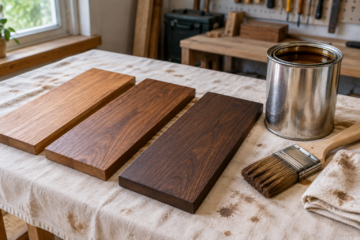
For a dining top that sees regular use, consider a durable clear furniture topcoat, such as a water-based or oil-based polyurethane. Water-based finishes generally preserve a pale look; oil-based products usually add warmth and ambering. Test the full sanding and finishing schedule on an offcut, since both color and sheen can differ from the can. A water-based polyurethane is a reasonable category to compare if keeping the wood light is important. Follow the label for coat count, recoat window, temperature, and cure time; dry to the touch does not mean ready for hard use.
Dust control matters. Vacuum the surface and use a clean, lint-free cloth before coating; avoid leaving sanding dust packed in ash’s pores. Apply thin, even coats rather than one heavy coat, which can sag, cure slowly, or trap defects. Between coats, scuff only as directed by the finish maker. If the table will be used daily, let the coating reach its stated full-cure time before putting it into service.
Which wood should you buy?
Choose beech if you want a pale, visually quiet top and can find well-dried boards with a consistent color. It is a good choice for a clean, modern table, but its seasonal movement deserves careful construction. It is not automatically the better value if the available boards are poorly matched or need extensive defect removal.
Choose ash if you want visible grain, a more textured appearance, or a lower-priced option in your local market. Ash is not a downgrade for a dining table: its hardness is close to beech, and its character can look excellent under a clear coat. Budget for pore filling only if you want a level surface; leaving the pores open is a sound choice and saves time.
Before committing, compare the actual cost of usable boards, not just the price per board foot. Include waste from knots and color matching, and inspect the faces under light similar to the room where the table will sit. For either species, good stock selection, movement-friendly joinery, and a fully cured finish will matter more than the small difference in hardness.
0 Comments