What's inside
As an Amazon Associate I earn from qualifying purchases. This post may contain affiliate links at no extra cost to you.
Our Top Picks
 Minwax Fast Drying Polyurethane Protective Wood FinishQuart4.1 x 4.1 x 5.1 inches1 PoundsCheck on Amazon
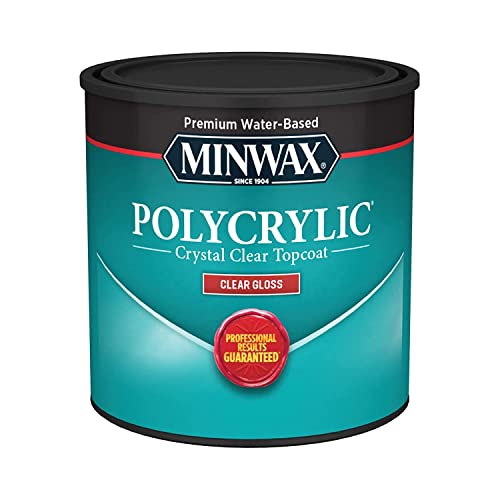 Minwax 1/2 pt 25555 Clear Polycrylic Water-Based Protective8 fl oz2.9 x 2.9 x 3 inches0.65 poundsCheck on Amazon
 Polyurethane Wood Finish Water Based Polyurethane Clear Gloss100 ml1.6 x 1.6 x 4.7 inchesCheck on Amazon
The short answer
For clear-coated drawer boxes, Baltic birch is usually the practical choice: it has a pale, fairly consistent face, a layered edge that looks intentional, and good screw-holding for typical drawer construction. Maple plywood can be the better choice when its face needs to match nearby solid maple, but the name alone does not guarantee a light, uniform sheet. Veneer quality, core construction, and the finish you apply matter as much as the species.
Before buying, check the actual panels available. Plywood sold as “maple” or “Baltic birch” varies by supplier, grade, thickness, and core. Bring a sample of the intended clear coat if appearance is important; bare wood color is not the finished color.
As an Amazon Associate we earn from qualifying purchases at no extra cost to you.

What the names mean in practice
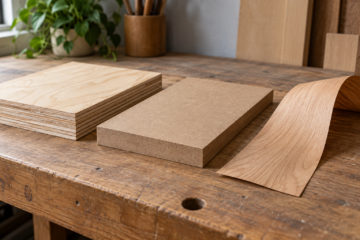
Baltic birch commonly has birch face veneers over a multi-ply birch core, with relatively few voids in better grades. Its exposed edge shows many thin plies, often a selling point on modern drawer boxes. Lower-cost birch plywood may have a different core, more patches, or voids that become obvious when you cut an edge.
Maple plywood usually means a maple face veneer, not an all-maple sheet. The core could be hardwood, poplar, or another material, and the edge may show contrasting layers. Some maple faces are pale and even; others have color variation, mineral streaks, patches, or a slight pink or brown cast. Inspect the sheet rather than assuming “maple” means uniformly white.
Side-by-side comparison
| Factor | Baltic birch | Maple plywood |
|---|---|---|
| Typical appearance | Pale cream to light tan; layered edge is often attractive exposed. | Light face that can pair with solid maple, but color and figure vary by sheet. |
| Core and edges | Quality panels often have many plies and few voids; verify the grade and actual edge. | Face veneer may be maple over a different core; exposed edges can look less uniform. |
| Clear-coat result | Usually warms toward a pale honey tone; grain is subtle. | Can also warm noticeably; veneer figure and color differences may stand out. |
| Best fit | Utility or contemporary drawers where clean construction and visible plies are welcome. | Drawers intended to coordinate with solid maple furniture or cabinetry. |
Choose for the drawer and the room
For a painted cabinet, either material may be unnecessary unless you want plywood strength or a particular edge detail. For clear-coated drawers inside a cabinet, Baltic birch is a sensible default, especially when the drawer sides and front edges will be visible. A 12 mm or 1/2-inch panel is common for drawer sides, while 6 mm or 1/4-inch plywood is often used for a captured bottom. Match thickness to the groove, drawer dimensions, and load rather than treating those sizes as rules.
Choose maple when the drawers sit in open cabinetry or are visible beside solid maple parts. Even then, compare the plywood face to the solid wood under the same finish. A sheet that looks close when bare may turn more amber after coating. If the match must be exact, buy enough material from one lot and make a finished sample before building the full set.
Cheaper hardwood plywood is fine for hidden drawer boxes, shop storage, or a project where the edges are covered. It can also work for clear-coated boxes if you inspect the veneer and accept patches or color variation. Pay for premium core construction only when you need clean exposed edges, consistent machining, or reliable screw placement.
Inspect the sheet before checkout
Look across both faces in raking light. Reject sheets with loose veneer, deep sanding-through, open splits, or patches in prominent areas. Check the cut edge if the store permits it, or ask for a cutoff: internal voids can break through when you cut narrow drawer sides. Confirm actual thickness with calipers if the groove fit is tight; nominal 1/2-inch plywood may not measure exactly 0.500 inch.
Also check flatness and storage condition. A bowed panel can make accurate drawer parts harder to cut, and damp or poorly stored sheets may move after they enter a dry shop. If you are comparing options, a Baltic birch plywood search can help you see available panel sizes, but verify the listed grade, thickness, and core before ordering.
Prepare for a clear finish
Sand faces lightly and evenly, usually starting around 150 grit and finishing at 180 or 220 grit. Do not keep sanding a thin face veneer in pursuit of a perfectly smooth feel: many plywood face veneers are thin enough that aggressive sanding can cut through to the core. Use a firm sanding block or random-orbit sander with light pressure, and inspect the surface after each pass.
Remove dust with a vacuum and a clean, dry cloth. Test the complete finish schedule on an offcut, including sanding, sealer, and topcoat. Water-based finishes often preserve a lighter look than oil-based finishes, which tend to deepen and warm the color, but the wood and specific finish product both affect the result. A water-based clear wood finish is worth considering when you want less ambering.
Apply the finish to all sides of each part, including inside faces and edges, to reduce uneven moisture exchange. Follow the product’s recoat instructions; rushing between coats can leave a rough or cloudy surface. On plywood edges, brush on a thin first coat because end grain and glue lines absorb unevenly. Sand only after it has dried, and avoid cutting through the veneer at corners.
Common failures to avoid
Clear coat does not hide face patches, glue spots, or color mismatch; it can make them more visible. Glue squeeze-out is particularly troublesome because finish may not penetrate the sealed area, leaving a pale or shiny patch. Use enough glue for a sound joint, wipe excess without smearing it across the face, and scrape or sand residue after it cures.
Do not assume that a clear finish makes either plywood waterproof. Drawer bottoms can still swell from spills, and unsealed edges are especially vulnerable. For kitchen or bathroom use, seal every surface and let the finish cure fully before loading the drawers. Baltic birch is the better all-around buy when clean edges and predictable construction matter; maple earns its higher cost when the visible face needs to coordinate with maple furniture, and the actual sheet proves the match.
0 Comments