What's inside
As an Amazon Associate I earn from qualifying purchases. This post may contain affiliate links at no extra cost to you.
Birch and beech can both make attractive clear-finished drawer fronts, but they do not look or behave quite the same. Birch usually has a quieter, more varied grain and can show noticeable color differences between boards. Beech tends to look more uniform, with fine pores and a pinkish or warm cast. Either can work well; the better choice depends on the look you want and how carefully you are willing to manage color and surface preparation.
Birch vs. beech at a glance
| Property | Birch | Beech |
|---|---|---|
| Typical appearance | Light cream to pale yellow; grain can vary by board | Light tan to pinkish brown; usually fine and even |
| Clear-finish look | Subtle grain, sometimes with stronger figure or color shifts | Quiet, consistent surface; often reads as warmer and more uniform |
| Hardness | Hard enough for normal drawer-front use; varies by species and stock | Hard and dense, with good resistance to everyday dents |
| Finishing concern | Uneven color or blotching, especially with stain | Color shift from finish; can move with humidity |
| Best fit | A pale, understated look, or a lower-cost choice when stock is sound | A more uniform, warm look and a dense, durable face |
Appearance under a clear finish
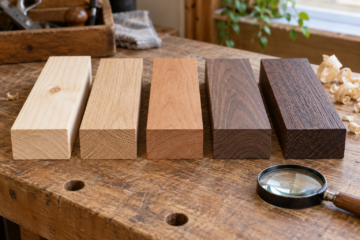
Birch is the safer pick if you want a light, restrained front and do not mind some board-to-board variation. A clear coat usually deepens its pale color slightly. The grain is often less prominent than oak or ash, but solid birch can show swirls and darker patches. Inspect the actual boards or veneer, not just a small sample: a drawer run makes differences between fronts easy to spot.
Beech has a tighter, more even grain and a warmer tone. Clear finish can bring out a pink or amber cast, particularly as the wood ages or the coating yellows. If you want a consistent row of fronts, beech can be easier to match visually, provided the pieces come from similar stock. If you want the palest possible result, test the finish on an offcut before committing.
Movement and durability
Both woods are suitable for drawer fronts in a dry indoor setting. Beech is hard and dense, so it resists small dents well, but hardness does not make a front immune to impact. Birch is also durable for ordinary use. For most kitchens and bedrooms, the quality of the joinery, the thickness of the front, and the finish matter more than a small difference in hardness.
Beech deserves extra care in rooms with large humidity swings. Like other solid woods, it expands across the grain when it gains moisture and shrinks as it dries; a wide, solid front can move enough to stress a rigid panel or a poorly designed attachment. Keep indoor humidity reasonably stable and use joinery that allows seasonal movement. Veneered plywood fronts are more dimensionally stable than wide solid-wood fronts, whether the face veneer is birch or beech.
Choosing stock and construction
For a painted or clear-finished project, buy straight, dry, well-machined stock with a consistent color. Check for end checks, knots, and grain runout near corners, where a front is most likely to be knocked. For slab fronts, compare every piece side by side and arrange them before finishing. For frame-and-panel fronts, match the rails and stiles as a group so the visible faces do not alternate sharply in color.
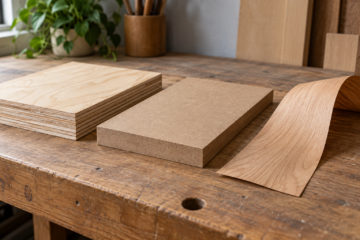
If you are comparing solid lumber with veneered panels, do not assume the species name tells the whole story. A birch-faced plywood panel may have a very thin decorative veneer, while solid birch varies in figure and color. Check the face quality and edge treatment. Beech plywood and matching solid edging may be harder to find locally, which can add cost or complicate a repair.
Sanding and surface preparation
Start with a flat, clean face. Sand through a sensible sequence such as 120, 150, then 180 grit; skip grits only if the surface is already smooth and machine marks are gone. For clear finish, sanding much finer than 180 or 220 can reduce absorption and make the result less even. Sand with the grain on the final pass, then remove dust with a vacuum and a clean, lint-free cloth. Avoid oily tack cloths if the finish maker warns against them.
Ease sharp edges slightly—about a 1/32-inch roundover or a few light sanding strokes helps finish stay on the edge. Sharp corners tend to shed coating and show wear first. Before treating all the fronts, finish an offcut using the full sanding and coating schedule. Look for scratches, glue smears, and color differences under the lighting where the drawers will be installed.
Choosing a clear finish
A clear water-based finish usually preserves a lighter appearance than an oil-based coating, though it can still add a subtle tone. Oil-based polyurethane often warms and darkens both woods. For drawer fronts that will be handled often, choose a furniture- or cabinet-rated clear coat and apply the number of coats stated on its label. A practical starting point is three thin coats, with light sanding between coats when the instructions call for it; thick coats are more likely to sag or look uneven.
For a low-odor, low-yellowing option, compare water-based polyurethane clear finishes. If you prefer a warmer tone, look at oil-based polyurethane clear finishes. Either way, test on the actual wood: “clear” describes the coating, not a guarantee that the finished wood will stay colorless.
If you plan to stain
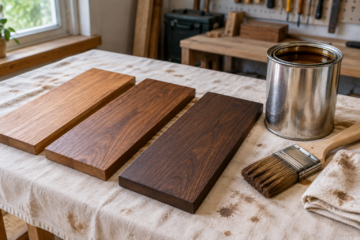
Staining increases the risk of uneven color, especially on birch. Beech can also take stain unevenly or become much darker than expected. Do not choose by the stain label alone: make sample boards from the same stock, sand them as planned, and test the full schedule, including any conditioner or sealer. A pre-stain conditioner may reduce blotching, but it can also make the color lighter or less distinct.
For a more predictable result, consider a light toner or tinted topcoat rather than a deep penetrating stain. If you want a natural clear finish, skip stain entirely; it is usually the simpler route and shows off the wood without amplifying patchiness.
Which should you buy?
Choose birch if you want a pale, understated front, can select and arrange boards carefully, and the price or availability makes it the practical choice. It is also perfectly reasonable for utility drawers where small color differences are not a concern. Choose beech if you prefer a warmer, more uniform face and have access to well-matched stock. If the fronts are wide solid panels or the room has unstable humidity, prioritize sound construction and moisture control over species.
0 Comments