What's inside
As an Amazon Associate I earn from qualifying purchases. This post may contain affiliate links at no extra cost to you.
Our Top Picks
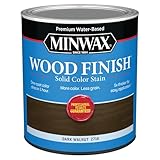
 Minwax Wood Finish Water-Based Semi-Transparent Color Stain32 Fl Oz (Pack of 1)4.25 x 4.25 x 4.88 inches2.47 poundsCheck on Amazon
 Varathane Dark Walnut Wood Stain1 Quart (Pack of 1)4.25 x 4.25 x 4.9 inches2.4 poundsCheck on Amazon
 Varathane Water-Based Ultimate Satin PolyurethaneHalf Pint (Pack of 1)3 x 3 x 3 inches0.64 poundsCheck on Amazon


The short answer
Red alder is usually the easier and cheaper choice for a warm water-based stain. Its pale, relatively soft wood takes amber, honey, caramel, and light walnut colors well, especially when you want a quiet grain pattern. Cherry costs more, darkens naturally with age, and gives warm stains a deeper, redder result. It can look excellent, but it is less predictable if you want the finished color to stay close to what you see immediately after staining.
For cabinet parts, shelving, trim, and furniture where the stain color matters more than the species, alder is the practical buy. Choose cherry when you specifically want cherry’s fine texture, richer figure, and gradual reddish-brown aging.
As an Amazon Associate we earn from qualifying purchases at no extra cost to you.


How the two woods respond to warm stains
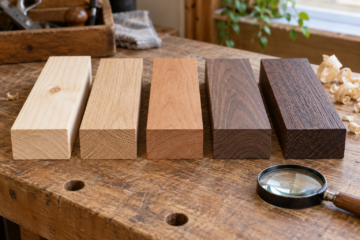
Red alder is light tan to pinkish brown with a subdued grain. It has relatively low natural contrast, so a warm water-based stain tends to produce an even, soft color. Golden oak, honey, amber, and light walnut shades generally remain recognizable instead of turning extremely dark. Alder can resemble cherry after staining, although it will not develop cherry’s same depth or aging pattern.
Cherry starts light pink to salmon and becomes redder and darker with exposure to light. A warm stain can push it toward orange, rust, or reddish brown. This can be attractive, but a stain selected from a color chart may look much stronger on cherry than expected. The color also continues changing for months or years, particularly near windows and in rooms with strong daylight.
Water-based stains usually keep more of the wood’s natural color than oil stains and dry quickly. That makes them useful when you want a clear, warm finish without a heavy amber cast. The trade-off is a shorter working time and more sensitivity to application marks.
Red alder vs. cherry at a glance
| Factor | Red alder | Cherry |
|---|---|---|
| Base color | Pale tan, pink, and light brown | Pink, salmon, and reddish brown |
| Grain appearance | Subtle, generally low contrast | Fine, smooth, with more natural depth |
| Hardness | Soft; dents and sands quickly | Harder and more wear-resistant |
| Warm stain result | Honey, amber, tan, or light brown | Richer orange-red, rust, or reddish brown |
| Blotching risk | Moderate, especially on end grain and soft areas | Moderate; uneven absorption can still occur |
| Natural aging | Some change, usually less dramatic | Noticeable darkening and reddening |
| Typical cost | Usually lower | Usually higher |
Blotching, sanding, and surface preparation
Neither species should be treated as completely blotch-proof. Alder’s soft earlywood can absorb stain faster than harder areas, producing cloudy patches or dark bands. Cherry is more uniform in texture, but it can still show dark spots around end grain, knots, mineral streaks, or unevenly sanded sections.
Sand through 120, 150, and 180 grit for most furniture and trim. Stopping at 220 grit is reasonable for a very smooth project, but sanding much finer can reduce absorption and make the stain appear lighter or uneven. Use fresh abrasive and sand with the grain. On alder, do not press hard with a random-orbit sander; the soft surface can develop shallow swirls or a slightly polished area that becomes obvious after staining.
Remove dust with a vacuum and a clean, dry cloth. Avoid soaking the surface with water before staining unless you are deliberately using a water-popping process. Water raises the grain, and an unevenly wetted surface can create its own color differences.
For an important project, test on offcuts from the same board or on hidden areas. Apply the complete system—stain, clear coat, and sanding between coats if required. Water-based stains often look dull or unexpectedly pale until the clear finish is applied. A clear coat can also add a slight amber shift, depending on its chemistry.
Applying warm water-based stain
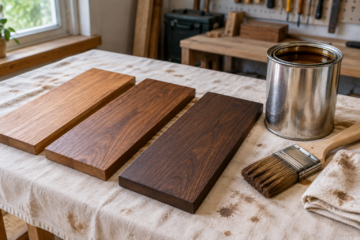
Use a synthetic-bristle brush, staining pad, or clean lint-free cloth. Work in sections that you can finish while the stain is still wet. Apply enough product to wet the surface, then wipe off excess consistently in the direction of the grain. On broad panels, maintain a wet edge and avoid stopping in the middle of a board.
Water-based stain can begin setting in a few minutes, especially in a warm, dry room. Do not keep rubbing a section after it starts to tack; that can lift color and leave shiny or light patches. If the color is too light, let the first coat dry according to the label—often roughly 1 to 3 hours—then apply another thin coat. Building color with two light coats is safer than leaving a heavy, wet coat that dries streaky.
On alder, a compatible wood conditioner or stain controller can reduce absorption differences, but it may also make the result lighter. Use it only after a test. A gel-style water-based stain or a product described as a wiping stain can offer more control than a very thin penetrating stain. Browse warm water-based wood stains by color family, then test the actual color on your wood.
Which wood should you buy?
Buy red alder if the project needs a warm, even appearance at a controlled price. It is a sensible substitute for cherry in painted or lightly stained cabinets, interior trim, drawer fronts, and furniture that will not receive severe abuse. Alder is also easier to cut and sand, although its softness means edges and corners need protection during assembly.
Buy cherry when the wood itself is part of the design. Its harder surface is better for tabletops, chair parts, and frequently handled furniture, though a clear finish is still needed to protect it. If you want a pale honey color that will remain pale, cherry is a poor choice; its natural darkening will eventually change the look.
For a warm but not overly red result on cherry, choose a neutral or lightly golden stain and keep the application thin. For alder, a warmer amber or medium-brown stain can add the depth the wood lacks naturally. In either case, compare samples after the clear finish has dried for at least 24 hours—not just immediately after wiping on the stain.
Topcoat and long-term color
Seal the stained surface with two or three thin coats of a compatible water-based clear finish. Lightly scuff between coats only as directed by the product, commonly with 320-grit abrasive after the first coat has dried. A water-based satin clear finish usually preserves a more natural appearance than gloss and adds less visual distraction to subtle alder grain.
Keep cherry samples near the intended installation area for several weeks if color matching is critical. Sunlight can create uneven aging when one section is covered by hardware, a rug, or another object. Alder will also change somewhat, but cherry’s color shift is the larger planning issue.
0 Comments