What's inside
As an Amazon Associate I earn from qualifying purchases. This post may contain affiliate links at no extra cost to you.
Our Top Picks
Short answer
For oil-finished outdoor decking, teak is generally easier to work with and maintain; ipe is usually harder, heavier, and more resistant to wear. Either can make a durable deck, but neither stays its original brown color outdoors without regular cleaning and oiling. If you are choosing mainly for low upkeep, consider leaving the wood unfinished and letting it weather gray instead.
Buy based on the deck’s exposure, your willingness to recoat, and the quality of the available boards—not species reputation alone. Poorly dried or uneven stock can cause trouble in either wood, and a thin coat of oil will not correct bad drainage or installation.
As an Amazon Associate we earn from qualifying purchases at no extra cost to you.


Teak and ipe compared
| Factor | Teak | Ipe |
|---|---|---|
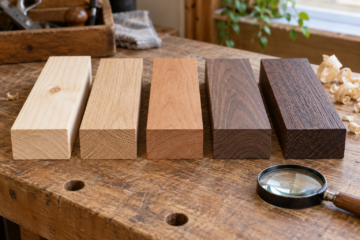
| Typical character | Golden to medium brown, with visible grain and natural oils | Dark brown to olive-brown, very dense and often visually uniform |
| Working and fastening | Dense, but generally easier to cut and drill | Extremely dense; predrilling and sharp carbide tooling are important |
| Oil upkeep | Needs periodic cleaning and recoating to retain a warm tone | Also needs periodic cleaning and recoating; oil can darken its color |
| Best fit | Someone who values easier handling and a lighter appearance | Someone prioritizing hardness and wear resistance, with tools and labor to suit |
Both species contain natural extractives that can affect coatings. The amount of color change and oil longevity depend heavily on sun, rain, foot traffic, and whether the deck is covered. Treat any published maintenance interval as a starting point, not a guarantee.
What an oil finish can—and cannot—do
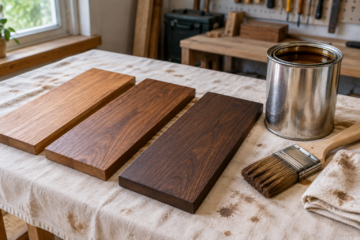
Penetrating deck oil helps slow moisture exchange and can deepen the wood’s color. Pigmented oils also reduce UV damage better than clear oil. But oil is not a durable film: it will not stop standing water, hide worn spots, or prevent the wood from turning gray indefinitely. On a sunny, exposed deck, color can fade in a few months; a sheltered deck may hold its appearance longer.
Choose a penetrating product explicitly labeled for exterior hardwood decking, preferably with pigment if retaining color matters. A pigmented hardwood deck oil is a more practical choice for color retention than a clear oil. Check that the label suits your wood and local conditions, and follow its spread rate and drying instructions. Do not assume that more oil means more protection.
Overapplication is a common failure. Excess oil can remain sticky, collect dust, or dry into shiny patches. Apply a thin, even coat and wipe or brush off any product that has not soaked in within the label’s stated time. Keep oily rags submerged in water in a sealed metal container until disposal; oil-soaked rags can heat up and ignite.
Preparation and application
Start with clean, dry boards. Remove dirt and mildew with a deck cleaner suitable for hardwood, then rinse thoroughly and let the wood dry as directed—often at least 24 to 48 hours, longer in cool or damp weather. Test the oil on an inconspicuous board: teak and ipe can change substantially in tone, and one test patch shows whether the color is acceptable.
If the surface is weathered or rough, sand only as needed. A typical starting point is 80-grit for a rough deck, followed by 100- or 120-grit; sanding too fine can burnish dense wood and reduce absorption. On ipe, use sharp abrasive discs and expect slower progress. A range of 80- and 120-grit sanding discs is useful for spot preparation. Vacuum or sweep off dust before coating, and do not sand away raised fasteners or round over board edges unnecessarily.
Apply oil in manageable sections, working along the grain and avoiding hot boards in direct sun. Follow the product’s instructions for temperature, rain-free time, and number of coats. Many deck oils call for one coat on dense hardwoods; a second coat should only be applied if the label allows it and the first has absorbed. Protect nearby siding and plants from drips.
Buying and installing the boards
Ipe’s hardness is a real advantage where furniture, grit, or heavy use would quickly mark softer decking, but it makes installation less forgiving. Use carbide-tipped saw blades, predrill screw holes, and use fasteners rated for exterior hardwoods. Stainless steel is a dependable choice near salt air; ordinary steel can stain surrounding wood. Teak is still dense enough to justify predrilling near ends, but it is generally less punishing to cut and fasten.
Inspect boards for twist, checking, uneven thickness, and inconsistent color before buying. Ask whether the stock is kiln-dried or air-dried and acclimate it on site according to the supplier’s guidance. Leave the specified drainage and ventilation gaps; oil cannot compensate for water trapped beneath the deck. Ipe can be expensive to cut and install, so include labor and tooling—not just board price—in the comparison.
Maintenance and the sensible choice
Inspect the deck each spring and after the first season. Clean away grime, then check a discreet area with a few drops of water. If the surface looks dry and absorbs water quickly, cleaning and another thin coat may be due. If oil is still present or the surface is greasy, do not add more; clean according to the finish maker’s directions first. Recoat when the deck’s appearance and water behavior call for it, commonly every 6 to 12 months on exposed decks, but less often under cover.
Choose teak if easier machining, a warmer and lighter look, or simpler repairs matter more than maximum hardness. Choose ipe if wear resistance is the priority and you are prepared for heavier handling, predrilling, and sharper tooling. The cheaper option is fine when its grade is sound and it suits the site; a covered, lightly used deck does not need the toughest wood available. And if you do not want recurring oil work, either species can be left to weather naturally—the trade-off is a gradual silver-gray surface rather than lasting brown color.
0 Comments