What's inside
- Short answer: teak needs less upkeep; white oak costs less
- How the woods compare outdoors
- Weather resistance depends on more than species
- Buy suitable stock and fasteners
- Choose an oil meant for exterior wood
- Prepare and apply the finish carefully
- Plan for maintenance—and know when oil is not enough
- Related Guides
- Short answer: teak needs less upkeep; white oak costs less
- How the woods compare outdoors
- Weather resistance depends on more than species
- Buy suitable stock and fasteners
- Choose an oil meant for exterior wood
- Prepare and apply the finish carefully
- Plan for maintenance—and know when oil is not enough
- Related Guides
As an Amazon Associate I earn from qualifying purchases. This post may contain affiliate links at no extra cost to you.
Our Top Picks
 Sunnydaze Wooden Outdoor Teak Bench with Backrest60 in24 x 59.25 x 36.75 inches52 poundsCheck on Amazon
Short answer: teak needs less upkeep; white oak costs less
For an outdoor bench finished with oil, teak is the easier choice if the budget allows. Its natural oils and durability help it handle wet conditions, and it can look good with relatively little maintenance. White oak is a sound lower-cost option when the bench is under a roof, can dry between rainstorms, and you are willing to inspect and refresh the finish.
Neither species stays protected just because it has oil on it. An oil finish is a water-repellent surface treatment, not a durable film or a substitute for good drainage. In full weather, both woods will need maintenance; if you stop applying oil, they will weather toward gray. Choose based on exposure, cost, and how much upkeep you will actually do.
As an Amazon Associate we earn from qualifying purchases at no extra cost to you.


How the woods compare outdoors
| Factor | Teak | White oak |
|---|---|---|
| Outdoor durability | Very durable in exposed conditions; naturally oily | Durable when heartwood is used, but benefits from shelter and careful detailing |
| Oil finish | Can be harder for oil to penetrate; wipe off excess thoroughly | Usually accepts penetrating oil readily, though end grain can absorb unevenly |
| Maintenance | Clean and re-oil when the surface looks dry or faded | Inspect more often, especially after prolonged wet weather |
| Cost and availability | Typically more expensive; quality and origin vary | Generally easier to source and less expensive |
| Best fit | Exposed bench or low-maintenance priority | Covered bench, tighter budget, or a project where regular upkeep is acceptable |
Weather resistance depends on more than species
Teak’s reputation comes from its natural durability, not from being waterproof. Standing water, trapped debris, and constantly damp joints can still cause problems. White oak is also a durable outdoor hardwood, especially when made from heartwood. Its closed cellular structure makes it more resistant to liquid movement than many woods, but that does not make every white oak board suitable for outdoor use.
Specify white oak rather than red oak, and avoid sapwood where the bench will see weather. Red oak is much less suitable outdoors because its open vessels can carry water readily. For either species, design the bench so water runs off: round over exposed edges, slope horizontal surfaces slightly, and leave gaps between seat boards. Keep the legs off soil and avoid joints that trap water.
Buy suitable stock and fasteners
Check boards for straight grain, sound ends, and minimal checks. For white oak, ask whether the lumber is heartwood and kiln-dried or otherwise suitable for the intended build; green stock can shrink and open up joints as it dries. Teak varies in color and quality, so inspect it rather than assuming every board is equally durable. For small parts, avoid narrow pieces with short grain at joints, where outdoor movement can lead to splits.
Use stainless-steel fasteners outdoors. Oak’s tannins can react with ordinary steel and leave dark stains around screws, so stainless is especially important with white oak. Predrill screw holes, and consider a slightly oversized clearance hole through the moving board where seasonal expansion could stress a joint. Teak can also be dense and oily, so predrilling helps prevent splitting and broken screws.
Choose an oil meant for exterior wood
Use an exterior penetrating oil intended for outdoor furniture, not interior Danish oil or a hardwax finish labeled for indoor use. A product marketed as teak oil is not necessarily made from teak; check the label for exterior use and any pigment or UV-protection claims. A lightly pigmented oil can slow the visual shift toward gray better than a clear oil, though it will not prevent weathering indefinitely.
Shop by finish type rather than brand: compare exterior penetrating oils for outdoor furniture and follow the selected product’s directions for coverage, coats, and recoat timing. Do not assume a thicker coat provides better protection. Oil left wet on the surface can turn sticky, collect dirt, or cure unevenly—particularly on dense teak.
Prepare and apply the finish carefully
Sand dry wood through about 120 or 150 grit for an outdoor oil finish. Going much finer can reduce absorption, especially on dense teak. Remove sanding dust with a clean brush or vacuum and let the surface dry fully. If you use a solvent to remove teak’s surface oils, check the finish maker’s instructions and allow the solvent to evaporate completely before applying oil.
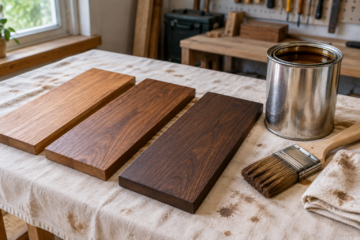
Test the oil on an offcut first. Apply a thin, even coat, allow the stated soak time, then wipe away all excess with a clean cloth. If the maker calls for another coat, apply it only as directed. Pay particular attention to end grain, but do not leave pools in joints or screw holes. Oily rags can heat up and catch fire as they dry; spread them flat outdoors to dry safely or dispose of them according to the product label and local rules.
Plan for maintenance—and know when oil is not enough
Check the bench each spring and after a season of heavy exposure. If water no longer beads and the surface looks dull or dry, clean it, let it dry, and apply a thin maintenance coat as directed. In a sheltered spot, this may be occasional; in full sun and rain, expect to inspect more often and follow the product’s stated interval rather than relying on a fixed annual schedule. Scrub off mildew or grime before recoating so you do not seal dirt into the surface.
If you want the bench to keep a fresh, oiled appearance, both woods require repeat work. If you are content with silver-gray weathering, you can let the oil wear away and concentrate on keeping the bench clean and the joints sound. For a bench that stays wet or sits in harsh weather, teak offers the safer margin. For a covered bench and a buyer comfortable with upkeep, white oak is a reasonable, often less expensive choice.
0 Comments