What's inside
As an Amazon Associate I earn from qualifying purchases. This post may contain affiliate links at no extra cost to you.
Our Top Picks


The short answer
For an oil-based interior finish, both white oak and European oak can produce durable, attractive results. The bigger differences are appearance, board-to-board consistency, and what the wood costs in your market—not a dramatic difference in how the finish performs.
Choose American white oak when you want a familiar, often more affordable domestic hardwood with pronounced grain and a broad choice of grades. Choose European oak when you want its characteristic grain and color, or have a specific project in mind that calls for it. Check the actual boards, though: “European oak” describes oak sourced from Europe, not a guarantee of a particular shade or grain pattern.
As an Amazon Associate we earn from qualifying purchases at no extra cost to you.


What the names mean
American white oak usually refers to Quercus alba and related North American white-oak species sold under the same trade name. European oak generally refers to Quercus robur or Quercus petraea. They are related hardwoods, but trees, growing conditions, grading, and milling all affect how a particular batch looks and behaves.
Both have open pores and prominent grain. Both can work for furniture, cabinets, trim, flooring, and other interior projects. Product descriptions sometimes use “European oak” loosely, so ask for the species, origin, grade, and finish samples if those details matter.
Appearance under oil
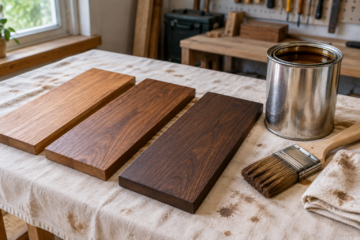
Oil-based finishes deepen color and emphasize grain. On either species, expect a warmer, more amber appearance than on bare wood. The exact change depends on the oil formulation, sheen, application thickness, and wood itself. Do a sample on the same stock you plan to use; a small offcut is more reliable than a photo or a sample from another supplier.
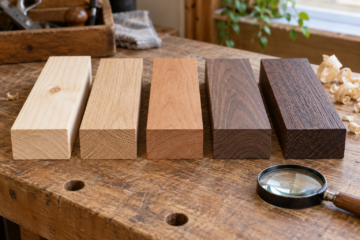
European oak is often selected for its distinctive cathedral grain and warm, natural color, but there is plenty of variation between boards. White oak can also show strong cathedral patterns, especially in plain-sawn boards. Quarter-sawn stock from either species has straighter grain and may show prominent rays. If a consistent look matters, buy enough material at once to sort and sequence the boards.
How they compare
| Factor | American white oak | European oak |
|---|---|---|
| Typical look | Strong grain; color varies by board and source | Strong grain; often chosen for a particular European-oak character, but still variable |
| Oil finish | Deepens color and highlights pores and grain | Also deepens color and highlights pores and grain |
| Availability | Often easier to source in North America | Availability and lead time depend on supplier and product form |
| Cost | Can be the economical choice where locally stocked | May carry a premium; compare quotes for the same grade and dimensions |
| Best reason to choose it | Value, local supply, or a familiar oak look | A specific appearance, origin, or design requirement |
What to check before buying
Compare boards with the same cut, grade, thickness, and moisture condition. A price comparison between quarter-sawn European oak and lower-grade plain-sawn white oak will not tell you which species is better value. Ask whether the material is solid lumber, veneer, or engineered flooring; those products have different construction and repair options.
For interior furniture and cabinetry, lumber is commonly acclimated to the room and brought to roughly 6–9% moisture content, though the right target depends on the building and region. Use a moisture meter where practical, and avoid mixing noticeably wetter boards into a finished assembly. Seasonal movement can open joints or stress panels regardless of species.
Inspect for sapwood, knots, mineral streaks, and color variation, then decide whether those features suit the project. If the supplier allows it, lay out boards in sequence before cutting. The cheaper white oak is a sensible buy when its appearance meets the brief and the stock is dry, straight, and sound.
Sanding and preparation
Plane or scrape first when you can; sanding alone will not reliably remove deep milling marks. A practical progression for many furniture surfaces is 80 or 100 grit to remove machining marks, then 120, 150, and 180 grit. Start coarser only when the surface needs it. Sanding much finer than 180 or 220 grit can reduce oil absorption and leave a less even-looking result, depending on the product.
Sand evenly with the grain and inspect under raking light. Missed cross-grain scratches can become conspicuous after oil darkens the surface. Vacuum the pores and wipe off dust using the finish maker’s recommended method. Do not use a damp rag unless the product instructions allow it; water can raise grain and change preparation needs.
Applying an oil-based finish
Choose a finish intended for the job: hardwax oil, wiping oil, and oil-based varnish are not interchangeable. They differ in protection, appearance, maintenance, and curing time. For floors or heavily used tabletops, check the product’s abrasion and water-resistance claims rather than assuming any oil is adequate. Compare suitable interior hardwax oil finishes or oil-based polyurethane finishes by their stated use and application instructions.
Apply a test coat to a sanded offcut, including the end grain if the finished project will expose it. Follow the label for spread rate, temperature, recoating, and cure time. A common failure is leaving excess oil pooled in pores or corners: it can remain tacky, collect dust, or cure unevenly. Wipe off surplus within the stated window, using clean cloths, and allow the full cure before heavy use. Oil-soaked rags can ignite through spontaneous heating; lay them flat outdoors to dry safely or store and dispose of them exactly as the product label directs.
Which one to choose
Pick white oak if it is easier to source, fits the budget, and its actual boards look right beside your other materials. Pick European oak when its particular appearance or specified origin justifies the added cost and sourcing effort. For either one, a carefully prepared sample is the best predictor of the final oil color. The species name narrows the choice; the boards and finish test make it.
0 Comments