What's inside
As an Amazon Associate I earn from qualifying purchases. This post may contain affiliate links at no extra cost to you.
Our Top Picks
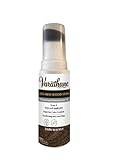
 Varathane Less Mess Dark Walnut Wood Stain &4 Ounce (Pack of 1)1.75 x 1.75 x 6.5 inches0.25 poundsCheck on Amazon


Choosing Between Hickory and Red Oak for Dark Cabinets
For dark cabinet finishes, red oak is usually the easier and more predictable choice. Hickory can produce a more distinctive result, but its wide variation in color, grain density, and sapwood makes dark staining less uniform. The right choice depends on whether you want a controlled, furniture-like finish or a cabinet face with strong natural character.
Both species are hard enough for cabinet doors and face frames. Red oak is generally cheaper, easier to source, and simpler to sand and stain. Hickory is often more expensive and requires more careful board selection, but it has harder wear resistance and a dramatic grain pattern that can remain visible under a dark finish.
As an Amazon Associate we earn from qualifying purchases at no extra cost to you.

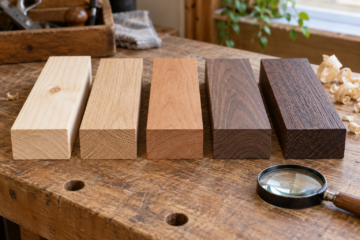
How Each Species Looks Under Dark Stain
Red oak has an open, linear grain and a fairly consistent base color. Its pores absorb stain readily, so dark brown, espresso, and walnut-colored products usually develop a strong, even tone after proper preparation. The grain stays visible rather than disappearing, which is useful if you want traditional oak cabinets with a darker color.
Hickory is much less uniform. Boards can contain pale sapwood, tan heartwood, mineral streaks, and abrupt transitions between light and dark areas. Its grain may run straight in one section and wavy or interlocked in another. A dark stain emphasizes these differences. That can look excellent on rustic or country-style cabinets, but it will not resemble a perfectly consistent painted or factory-stained door.
On hickory, the same stain may look medium brown on one rail and nearly black on another. A door made from several pieces can show stripes or patchy color. If that variation is part of the design, hickory is a good fit. If the cabinets need to match closely across a kitchen, red oak is the safer material.
| Factor | Red oak | Hickory |
|---|---|---|
| Dark-stain consistency | Generally predictable | Highly variable |
| Grain appearance | Open, regular, prominent | Bold, varied, sometimes irregular |
| Hardness and wear resistance | Good for normal cabinet use | Very good, but harder to machine |
| Cost and availability | Usually lower and widely available | Often higher, with more sorting required |
| Best visual match | Traditional, transitional, consistent | Rustic, high-character, natural |
Preparation Matters More Than the Stain
Dark finishes expose sanding scratches, glue residue, dents, and uneven absorption. Sand cabinet parts through 120, 150, and 180 grit, stopping at 180 unless the finish manufacturer specifies otherwise. Sanding much finer than 180 can burnish the surface and reduce stain penetration, especially on dense hickory.
Use a firm sanding block on flat panels and avoid rounding the edges. A random-orbit sander is useful on broad surfaces, but keep it moving and finish with the same grit by hand in the direction of the grain. Remove dust with a vacuum and a clean, dry cloth. Avoid soaking raw wood with water unless you are deliberately raising the grain and allowing it to dry fully.
Glue squeeze-out is a common failure point. Even a thin film around a door joint can resist stain and leave a pale outline. Scraping or sanding the area after assembly is not always enough. Check joints under a bright, low-angle light, and remove residue before final sanding.
Hickory deserves extra inspection because its hard and soft areas sand at different rates. Aggressive sanding can leave shallow dips in softer grain beside harder bands. Red oak is more forgiving, although its open pores can still show uneven sanding.
Choosing Stain, Dye, or Paint
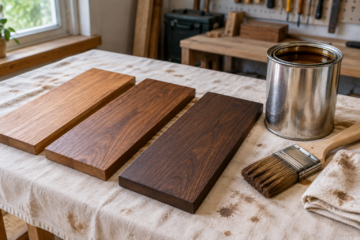
For a stained finish, test the entire finishing schedule on an offcut or spare door. Apply the same sanding grits, conditioner or washcoat, stain, and clear coat that you plan to use on the cabinets. A small sample on a different board is not reliable, particularly with hickory.
Oil-based wiping stains usually give red oak a rich, deep color and longer working time. They can also exaggerate blotchy areas and take 24 to 48 hours to dry in cool or humid conditions. Water-based stains dry faster and produce less odor, but they can raise the grain and may look harsher on hickory’s contrasting areas.
A wood conditioner for staining can reduce uneven absorption, but it may also make a dark stain less intense. On red oak, many people can skip conditioner after good sanding. On hickory, a conditioner or thin washcoat of finish can make the color more manageable, though it will not eliminate natural board-to-board variation.
For the most uniform dark color, consider a dye followed by a compatible stain or toner. Dyes color the wood more evenly but require careful measuring and testing. A tinted topcoat can also even out differences, but too much pigment may obscure the grain or produce lap marks.
If you plan to paint, species choice matters less visually. Red oak’s open pores can telegraph through paint, while hickory’s irregular grain can also remain visible. Use a high-build high-build wood primer, sand it smooth, and expect two primer coats if a flat painted surface is important. Grain filler is another option for a smoother result, especially on red oak.
Protecting a Dark Cabinet Finish
Dark colors show fingerprints, dust, and scratches more readily than natural or light finishes. Use a durable clear coat intended for cabinetry, such as a waterborne polyurethane or a professional conversion coating. Apply two or three thin coats rather than one heavy coat, sanding lightly between coats only when the product instructions call for it.
Do not judge the final color before the clear coat dries. Many finishes deepen or warm the color, especially over red oak. Oil-based clear coats can add amber tone, which may be desirable over a warm brown but can make hickory’s pale areas look yellow.
Which Wood Should You Buy?
Choose red oak when you want dark cabinets that match predictably, cost less, and require fewer finishing experiments. It is the better value for a large kitchen, replacement doors, or a project where several batches of lumber must look similar. Buying a red oak unfinished cabinet door or sample panel can help confirm the stain before committing.
Choose hickory when visible variation is a feature rather than a defect. Sort boards by color before construction, keep matching pieces together on each door, and accept that dark stain will highlight the species’ contrasts. If you want hickory’s durability but less color variation, select mostly heartwood and avoid boards with extreme white sapwood.
When budget is the main concern, red oak is the sensible choice. When the cabinet design depends on bold grain and natural differences, the extra sorting and finishing work of hickory can be worthwhile.
0 Comments